7 Months Abroad: The Practical
This year has been a whirlwind of travel. But last year was a whirlwind of planning. Let’s lay this first one down FAQ-style.
7 Months?! Do people really do that?

Yes! By now, my Youtube algorithm is full of families who take much longer trips to further-flung places. The question for us in 2025 was was whether to watch these families go on trips - or become one ourselves.
The book that ‘normalized’ the idea for us: At Home in the World by Tsh Oxenreider.
How did you pay for it?
Flights: For flights between the US and Europe, we used the well-worn Cards->Points->Tickets formula. Between European cities, Ryanair is a cheap and easy way for families to get around ($40–100/ticket).
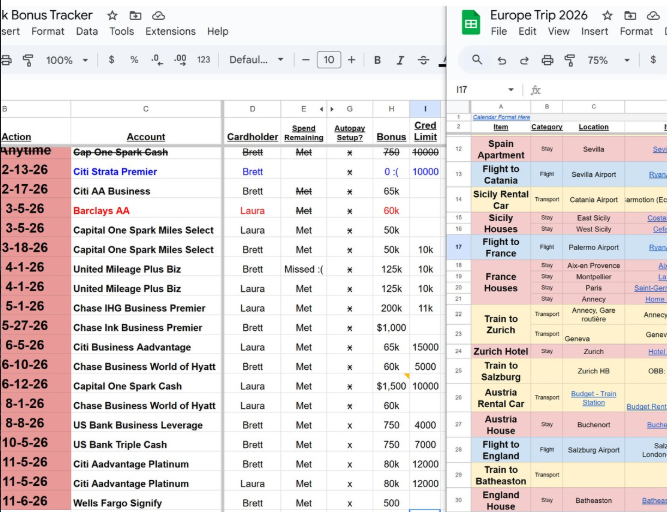
If credit card points can be called ‘art’, this is my ‘Statue of David’.
Lodging: To pay for lodging, we rented out our Minnesota house on Furnished Finder. We used the rent income as our Airbnb budget in Europe.
Rental Cars(!): The surprise expense that added up for us: rental cars! We lived most of our seven months car-free in Europe. That’s easy and preferable in the cities. The biggest lever to save money would have been to be more picky about our rural/remote stays.
Two rental car details we learned the expensive way:
The rental car insurance on your credit card won’t work in Ireland.
The Europcar desk at London Stansted will hose you- beware!
So what did it actually cost?
Just north of $20k.
The big drivers were the visa help, the delta between our Minnesota rent and monthly Airbnb costs, and those dang rental cars. Many things, like health insurance and food costs went the other way — we saved thousands of dollars there.
Let me be clear: $20k is a lot of money. It’s a lot of money to us.
But I tend to hold it next to the other things people spend $20,000 on without blinking. A newer car. A bigger house. A bathroom renovation. Heck, we did three $20k bathroom upgrades in a row on our rentals and getting out of those rentals last year cost us ten of these trips combined.
So yes. Twenty thousand dollars is real money and I’m not going to pretend otherwise. But money leaves your life in big chunks whether you decide anything or not. This was the rare one where we got to decide.
Didn’t you worry about your house burning down?
I did. But that’s why I got a big juicy landlord policy for the 7 months we were away. For peace of mind, I structured it so that if our house burnt down we’d make money.
What about school? Didn’t your kids fall behind?

We’ll see when school starts. My hunch? No, probably the opposite.
Laura had a great plan that she worked on with the kids’ teachers before we left. Our 7 and 9-year-olds got way more attention than they did in the standard classroom (1-3 adults for 3 kids). The benefit we can’t quite measure yet is the effect all of these places, people, and experiences will have as they move forward in life.
On Homeschooling: While my wife was a teacher once upon a time, that’s definitely not a requirement. We have many friends with no background in education who are homeschooling their kids as we speak and getting great results. And if they can do it in their house, why couldn’t you do it from the Alps? The resources online these days are ‘too abundant to fail’.
How did you stay in Europe beyond the three-month limit?
Normally, Americans are limited to 3 months in the “Schengen zone”.
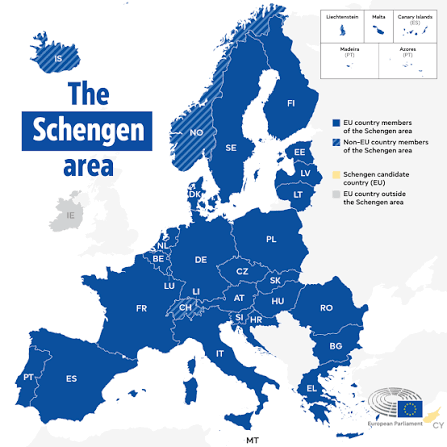
To get around it, we got ourselves a French Long-Stay Visa. We had Hector at Lexidy Law Boutique help us out. The visa involved a lot of paperwork and a trip to Chicago. The visa is cheap. The lawyer is expensive (~$5k).
Warning: there is risk and drama if you go the visa route. It has to do with timing. You have to book everything first— and then find out if you have been approved for a visa. Hence the willingness to pay big bucks for the law firm.
Pro-tip we learned: For most people, it will make more sense to simply plan a trip that doesn’t require a visa.
Simple ways to avoid the time, cost, and drama that we went through:
Easiest: Plan your Europe trip for < 3 months.
Longer Stays: Plan your Europe trip around Schengen limitations. Go to non-Schengen England and Ireland in the middle to ‘step out’, swap in Montenegro/Albania/Morocco as needed, etc.
How did you leave your life for 7 months?
Ah- this is a far deeper and more interesting question than that of paying for the trip. On a practical level, there are leaves of absence and people unenroll from school all the time (especially with younger kids). We did try to line it up with work and church sabbaticals.
On a deeper level, there is no “hack”. We built our life for this kind of freedom.
Here’s a laundry list of “weird life choices” we’ve made over the years:
Me taking a remote job in 2011 — and hanging onto it for over fifteen years!
Skipping the “dream house”
Instead, we’ve stuck with a simple, affordable house that we love but aren’t overly attached to. We don’t think twice about renting it out to make a trip happen.
Crappy cars
Our 2007 Honda Odyssey has a big ugly dent in the front. Our 2008 Cobalt is rusted out. While we wouldn’t mind a nice car, the reality is that American households spend $13,000+ every single year buying, fueling, insuring, and permitting the cars in their driveways. Skipping that to the extent we can funds our travel and more.
Stay-at-home momming vs. making more money (making both parents location independent)
Trying to keep a “stuff is just stuff” attitude
In short, when given the choice, we’ve choose freedom over more money and better stuff. We’ve done it for decades. That’s really what made this trip possible.

So that’s how we pulled it off. Let’s go a little deeper into the good and bad of taking a long trip. Let’s start with the hard stuff first.