
The Dumbing Down of America: An Intro to Neil Postman in 4 Quotes
“Push back against the age as hard as it pushes against you.”
-Flannery O’ Connor

Neil Postman doesn’t unveil a truth that you can’t unsee. Neil Postman gives you a set of glasses that you can’t take off.
For much of my life, I’ve felt like a fish out of water. It’s a feeling that started in high school and reached full germination in college and the years afterward. I’d had what most people would call “a religious experience” my sophomore year which set me on a deep, all-encompassing search for truth that would define the next decade of my life.
But while I set off to join the Great Conversation and hopefully figure out the meaning of life along the way, it seemed that nearly everyone around me was on a different path. Not that I didn’t enjoy a good movie or sporting event, but while I filled my time reading philosophy books and trying to understand the Bible and the Q’uran- I found that my friends were filling their free time watching NFL games and the Bachelor.
It wasn’t that we had different strategies- it was that we were playing a different game. I was simply optimizing my life for maximum understanding while they were optimizing for maximum entertainment.
Then I found Neil. His 1985 classic Amusing Ourselves to Death not only put words to what I was feeling- he gave me the cultural backstory, an expert’s diagnosis and more than anything Postman let me know that I wasn’t alone in the sea of American distractionism.
Let me introduce you to Neil Postman in four ideas through four quotes.
1. The Medium is the Metaphor
[My book] postulates that how we are obliged to conduct our conversations will have the strongest possible influence on what ideas we can conveniently express. And what ideas are convenient to express inevitably become the important content of a culture.

Imagine if Dave Chapelle went into a comedy club, got up onstage and instead of telling edgy, brilliant jokes- he read off a 10 page treatise on particle physics. Or flip it- imagine Stephen Hawking defending his PhD dissertation with one-liners on his professor’s poor haircut.
It doesn’t matter how funny Stephen’s jokes are or how penetrating Dave’s treatise is- they will both be booed off their respective stage.
In communication, the context (or the medium) defines everything.
Postman recognized this and more importantly he recognized that with the mass adoption of the television set, we had gone from the university lecture hall to the comedy club as an entire culture.
TV wasn’t an addition to our lives- it ushered in a completely new intellectual ecosystem- one that eventually produced a much different set of Americans.
2. The Peak of American Intellectual life (was 200 years ago)
“Americans no longer talk to each other, they entertain each other. They do not exchange ideas, they exchange images. They do not argue with propositions; they argue with good looks, celebrities and commercials.”
Abraham Lincoln met Frederick Douglas for a series of debates in the 1850s. The stakes were high and the debate would have been heated with the looming buildup to the civil war. For Postman, though, the stars of the show were not Lincoln and Douglas- it was the audience.
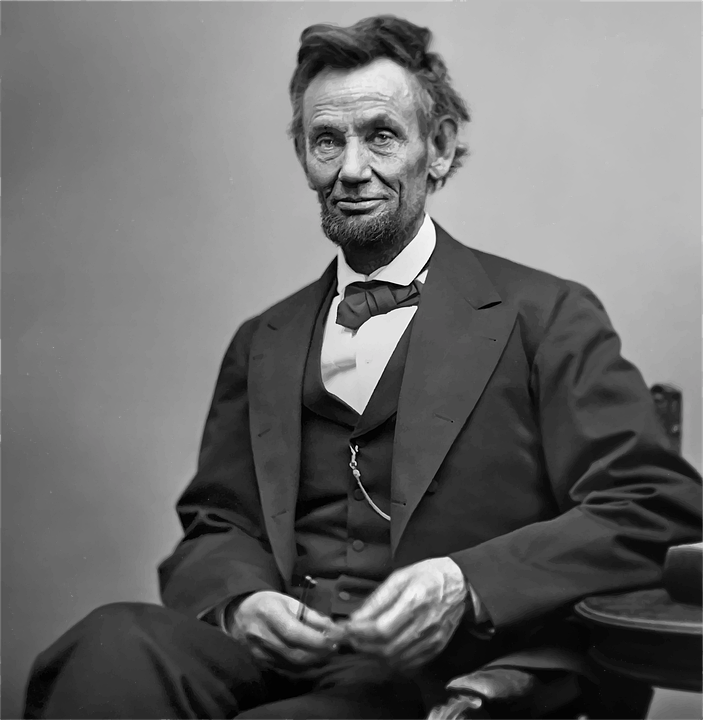
For instance, in 1854, after a 3-hour opening by Douglas:
“Lincoln reminded the audience that it was 5pm, that he would probably require as much time as Douglas and that Douglas was still scheduled for a rebuttal. He proposed, therefore, that the audience go home, have dinner, and return refreshed for four more hours of talk. The audience amiably agreed and matters proceeded as Lincoln had outlined.” (Amusing Ourselves to Death, p. 44)
What kind of audience was this? What kind of America was this where two educated men (not yet presidential or even senatorial candidates) could show up in a small Illinois town and farmers, butchers, and bankers would fill the seats so they could listen to complex oratory for seven hours (with zero pictures, of course).
While our Instagram generation glories in its chronological snobbery, a quick study of history or read of Postman, makes it clear that 19th and 20th century America was infused across class boundaries with a vibrant, literate intellectualism that hadn’t been seen before- and unfortunately- hasn’t been seen since.
3. The News Makes us Dumber
“Television is altering the meaning of 'being informed' by creating a species of information that might properly be called disinformation. Disinformation does not mean false information. It means misleading information - misplaced, irrelevant, fragmented or superficial information - information that creates the illusion of knowing something, but which in fact leads one away from knowing.”

We’re finally coming to grips with the idea that just because information exists does not mean we should take it in. While the science has just started coming in, Tim Ferriss has espoused his “low-information diet” for at least the last decade and Cal Newport has assembled a Digital Minimalist philosophy for our technological moment. While the sheer force of the digital information firehose has never been stronger, the seeds for information overload were planted centuries ago.
On May 24, 1844, Samuel Morse dispatched the first telegraphic message over an experimental line from Washington, D.C., to Baltimore. This ushered in a new age in American communication and facilitated a new connected age in American life.
For the first time a man in Iowa could get real time news of what was happening in Connecticut. The issue was that no one stopped to ask if Iowans needed to know what was going on in Connecticut.
Up until this point, the news and information available was regional and generally practical. The transition from the book to the telegraph introduced massive amounts of irrelevant, unactionable information. The resulting incoherence was not just a new practical problem but one that would alter Americans’ ideas about truth itself.
4. Technology as a Danger to Democracy
“If politics is like show business, then the idea is not to pursue excellence, clarity or honesty but to appear as if you are, which is another matter altogether.”

Where were you when Donald Trump won the US presidential election in 2016? The question on my mind as I sat in my apartment was: “what kind of country would elect Donald Trump?”
This wasn’t left-wing antagonism- it was a genuine question.
What were we looking for in a president? What value do we place on truth in our society? How has the internet age changed us?
That Donald Trump could have become president a hundred years ago- or even ten years ago- is laughable. But in the postmodern milieu of twitter, niche news, and all the rest- it makes perfect sense.
While republicans rejoiced and liberals sulked, my thoughts that election night were entirely on a question raised all the way back in 1985- have we amused ourselves to death?
Conclusion
After college, I tried to get my roommate to read “Amusing Ourselves to Death”. He couldn’t get through it. Too many arguments, not enough... pictures? I don’t know.
So, while the irony of a “quick blogpost” about the importance of medium and the supremacy of the book is not lost on me, perhaps it’s the appetizer our generation needs to the Neil Postman entree that just might keep us alive. Do yourself (and your country) a favor and pick up a copy.
As Neil’s son, Andrew, wrote in the 20th Anniversary edition:
“There’s still time.”
Comment
What role do you think technology / changing mediums has played in America?
Drop a thought below!
Subscribe
Share
Who might benefit from this post?
Images: Chappelle: John Bauld from Toronto, Canada, CC BY 2.0, via Wikimedia Commons | Tim Ferriss: Julia de Boer / The Next Web, CC BY-SA 2.0, via Wikimedia Commons

Biking: The Ultimate Life Hack
Extra money. Healthier body. Happier mood. Connectedness to our community. And throw in a healthier environment to boot. What if there was a tool that could achieve all of these at the same time?
It’s the ultimate life-hack, but it’s not a pill or a mantra or a diet plan. I submit to you the humble bicycle.

My $50 college bike, still rocking after tens of thousands of miles
You’re skeptical. I get it. Here in America, bike transportation is for kids, homeless people, and suburban white guys in spandex.
But functional biking- the kind where you’re actually running errands and living your life on a bike instead of a car- has the power to dramatically impact the most important parts of our lives.
Your Bank Account
Take finances. As a three-kid one-income house we know what it’s like to have a tight budget. And I know that with 40% of Americans living paycheck-to-paycheck I’m not the only one.
So check this out. The IRS (not typically known for lavish generosity) puts the cost of driving at .56/mile.
This means if your coffee shop is just 3 miles away, then according to the IRS you double the cost of the coffee by driving a car ($3 for the coffee, $3 for the ride there and back). Your 15 mile commute? That’s costing you $16 per day- that’s lunch, or a netflix subscription, or a new shirt- Every. Single. Day.

We drivers equate the cost of driving with the cost of gas- but that’s like saying the worst part of smoking is that your clothes smell a little funny. The cost of driving includes gas but it’s also the payments and interest, the oil change, the license and tabs, the parking, the parking ticket, the new tires, the timing belt and on and on and on that puts the cost at .56/mile or more in many cases.
Think of your bike as having an invisible money printer attached to it, printing off a $10 bill every time you hit the 18 mile mark (which for many people is just a daily commute or a trip to their friends’ place).
Americans on average spend $10,000 every year on their automobiles. What would you do with even half of those dollars back?
I’ll end this section with a quote from Mr. Money Mustache, a personal favorite and arguably the king of internet personal finance. Here’s how he would distill all of his personal financial advice spread across his hundreds of blog posts:
If I had to strip [the blog] down as far as possible, down to just one single action, and I wasn’t allowed to talk about anything else, the choice would still be simple: “Ride a Bike”.
Your Health
By now we know that Americans are growing more unhealthy every year. With a 40% obesity rate in the US and 3/4 of us not getting enough exercise it’s clear that modern life makes it hard to stay in shape.

I get it. With three kids, a full-time job, and multiple side hustles, I don’t often have the time and energy to get to a gym.
But I will go to a coffee shop to work. I’ll go to the doctor and the dentist and I’ll bring my kids to the park.
And I can bike to every one of those places.
By turning these car trips into bike rides, it’s not hard to get the 30 minutes of daily exercise that doctors suggest.
Can you sense how sneaky the power of biking is? Rather than trying to add in one more thing, you are building exercise into the fabric of your life.
Your Happiness… and Connection
When’s the last time you had a sense of childlike joy? Of freedom? Of connection with the world around you? If you’re like me, that sort of feeling can be hard to come by. “Adulting” is hard work- and with one in six Americans now getting help from psychiatric drugs (usually for anxiety and depression) it seems we could all use a boost in the happiness department.
I vividly remember my first “functional adult ride” when I pulled out my Peugot back in 2015. In that short ride to Redbox, it was impossible to miss the sheer childlike joy that was injected into this ordinarily-mundane trip. For 23 hours and 45 minutes that day, I was a full-fledged adult. But for 15 minutes I was a kid again.

I also noticed way more along the way. I nodded to neighbors in their yard or on the sidewalk. Instead of hopping into my giant steel box and magically popping out somewhere, I interacted with my route and each house, person, and business I passed.
It’s no wonder that biking is the happiest mode of transportation we have and that too much time in the car makes us miserable.
We’re made to be out there in the sun, wind in our face, lungs breathing deeply- present with our community and present with our world.
Seeing… and Removing The Obstacles
I’m sure you’ve got reasons why you don’t think you can bike- I know I’ve got mine (3 kids, chronic back pain, living in frozen Minnesota, etc. etc. etc.), but they all can be overcome- usually pretty easily.
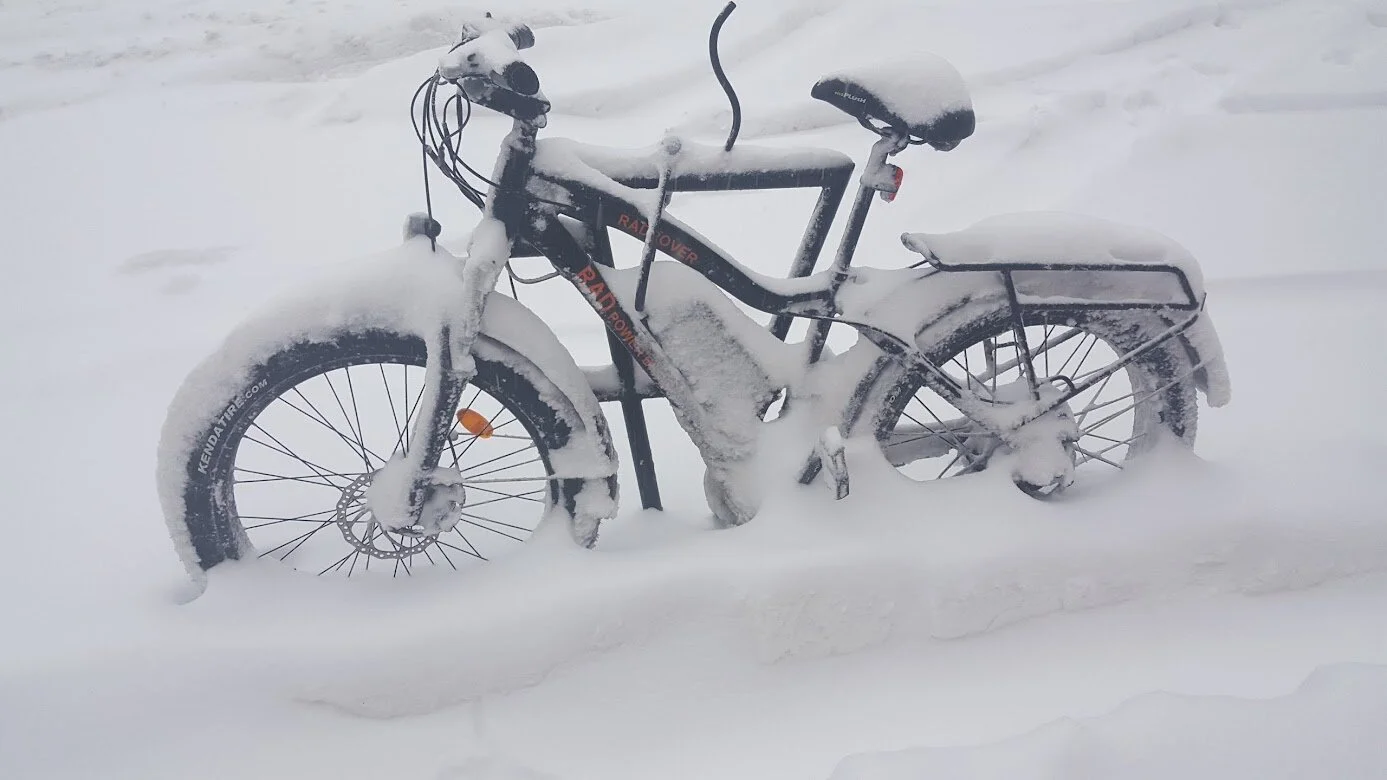
Just another January ride in Minneapolis
For me, my kids ride in a Burley that I got for $50. For cold weather, there’s another great invention called clothes that help you ride no matter the temperature. For you the excuse might be distance- and you’re in luck! You’re living at the dawn of the affordable ebike- which helps people blaze long distances in little time with literally no sweat.
Of course, my sneaky goal that I’d never tell you on this blog post is to get you to consider a more fundamental shift: living close to work, friends, groceries, and all the places you go. But we’ll save the exponential power of proximity for another post. First we’ve got to get that bike out of the garage.
Conclusion
For some, the benefits of biking are old news. For the rest, I’m hoping that you’re starting to see this two-wheeled throwback from your youth for the wealth-generating, gut-slimming, happiness factory that it is.
Ok- that’s enough sitting for both of us. It’s time to pull our bikes down from the rafters (or Craigslist) and blow off the dust. I’ll see you out there!
Comment
Are you a “functional” biker? Why/Why not?
Drop a thought below!
Subscribe
Share
Who do you know who might benefit from this post?

Rental Properties… What’s That Like?
My Investing Story: How one cup of coffee turned into six rental units
My life changed in a coffee shop in 2012.
I was fresh out of school and like any good millenial I was up to my eyeballs in student debt. But I had just taken a “Dave Ramsey'' finance class and for the first time I was thinking about money, work, and freedom.

I had also been on a kick of buying cups of coffee for people who were smarter than me - anyone who could teach me something. When I texted my old college buddy, Pat, to meet up, I had no idea that he was about to fundamentally alter the next decade of my life. As we sat down in our old college cafe, I started sharing about how I was slowly working through my student loans, how I was thinking about opening up a 401k at my job, and all the other standard “financial stuff” when he stopped me.
“Brett, we are in the middle of the biggest real estate clearance sale we will ever see in our life. Mutual funds are great and all, but you need to stop what you’re doing and start buying investment properties. Right now.”
Ok, Pat, I get it. Also… I think you’ve had enough coffee.
At the time I didn’t know that real estate consistently builds more wealth than any other asset class. I didn’t even know that my twenties were an excellent time to invest in real estate. All I had was my conversation with Pat echoing through my head along with an intense desire to kill my student debt so that someday I could start a family. And believe it or not, that was enough.
Six months later, with all of $12,000 to my name, I bought my first house on a 3.5%-down FHA loan. This would kick off a 4-properties-in-4-years buying binge, culminating in owning my own house along with six rental units.

So yeah. We’ve got properties. But that’s not what you’re wondering. What you’re wondering is:
Has real estate investing been worth it?
Benefits: Wealth Rocketship, Priceless Time
In my case, the benefits have been… astonishing.
Over the last nine years, the cash flow from our rental properties has been more than able to dig us out of our terrifying chasm of student debt. The appreciation on the houses rocketed our net worth higher than I ever thought possible. Due to market timing, a heaping pile of luck, and the magic of leverage, we’ve had an ROI on those down payments that would make Warren Buffett shoot Coca-cola out of his hundred-billion-dollar nose.

More important than the dollars we racked up, the modest cashflow from the rentals allowed my wife to quit her job and stay home with our kids through the first pivotal years of their lives. In between all the kid-craziness, she’s been able to nurture them through the baby and toddler years, walking with them through this brief phase that comes only once.
My story isn't an uncommon one. Now in my thirties, one thing I’ve consistently noticed is that the friends who were intentional with their finances in their twenties are seeing their life options increase as they enter their thirties- while at the same time my less intentional friends are seeing their options narrow as kids and mortgages start to cement both calendar and budget.
Now I could end my real estate story here and confirm the rosy story that the get-rich-quick gurus are so quick to tell- but that’s not the whole story.
The (Literal) Crap they Don’t Tell you About
What the books and the gurus won’t tell you is that rental properties aren’t just numbers on a page. You don’t just make a few mouse clicks and get a statement at the end of the month. The minute you buy a rental property you have become a business owner. You are solely responsible for the home of other humans. You need to find and manage tenants and contractors, you need to learn about building maintenance and business systems, taxes and insurance.

Over the years I have replaced toilets, ripped out moldy sheetrock, and installed flooring. I’ve buried dead animals and I’ve literally had to remove ankle-deep sewage from a crawlspace. I’ve met incredible people I’d trust with my life and worked with contractors who have made me question my faith in humanity.
360 days of the year, you’ll wonder why everyone doesn’t invest in real estate- the other 5 days, you’ll wonder why anyone invests in real estate.
But all that brings me to the ultimate benefit of real estate that doesn’t get enough airtime.
Real Estate’s Ultimate (Hidden) Benefit
After reading about all those literally crappy issues, you might be tempted to run back to the Vanguard account from whence you came. Before you do, though, ask yourself a question:
Who do you want to be in ten years?
Not just how much money or what stuff you want to have- what are you trying to do in life?
Are you looking for the easiest path you can find through life? Or are you looking to learn, to grow? To become a smarter, stronger version of yourself, ready to handle anything life throws your way (all while accelerating your financial returns dramatically)?
Over the years, I’ve picked up on a few common traits among the real estate investors I know. As a group, real estate investors are the people that go after the things in life that they want- they don’t just “wish”. They’re usually well-connected (real estate investing is a team sport after all). They’re opportunistic, they’re hard-working, and they’re smart across a huge range of subjects.
When I bought that 4-plex in 2012 I was a clueless 25-year-old kid- no practical skills, no financial literacy, little confidence and almost nothing by way of life experience.


In my nine years of being a landlord, I’ve learned and grown into a version of myself I couldn’t have imagined when I started. I’ve framed walls, replumbed houses, and wired basements. I’ve hired lawyers and battled with the city. I’ve learned the ins-and-outs of mortgages and the tax code. I’ve met lifelong friends and learned to work with people from all walks of life- rich and poor, contractor, tenant, zoning board member and neighbor. I’ve not only learned financial “savvy”- somewhere along the way I learned responsibility. Grit. Perseverance. Character.
Somewhere in those nine years, I became the person my friends come to for advice on everything from investing and finances to sheetrocking tips and even thorny people situations.
Conclusion
Like many others before me I got into real estate for “passive income”. I was wishing for an escape from work. But real estate tricked me. Through the ups and downs, the work, the growth- I’ve become someone who doesn’t want to spend the rest of his life sitting on the beach with a margarita. I want to learn. I want to grow. I want to provide value to my community.
Let’s shoot straight. Your question wasn’t about me, was it? It was about you. Should you invest in real estate? I say “yes”. If your time of life, your location, your personality, your finances, and your schedule allow, then this is a no-brainer.
I hope you make a ton of money. I hope you join the long line of ordinary people who utterly transformed their finances through real estate. More than that, though, I hope you grow into the most mature, confident, skilled, battle-tested version of yourself you can be.
Maybe the real question is: what would you stand to gain apart from the money if you entered this crazy rabbit hole we call investing?
Who could you become?
Comment
What have your thoughts / experiences been with owning rental property?
Drop a thought below!
Subscribe
Share
Who do you know who could benefit from this post?

Intro: Why I Am Starting a Blog
In my first post, I laid out all the reasons why I shouldn’t start a blog. It was a real downer- but it ended with the obvious question: So why do it? Why add to the cacophony? Well, in spite of all the reasons why I should just shut my big yapper- I’m going to give it a go. Here’s why:
Sanity
First things first. I’m weird. Imagine that you had a magical mind-reading machine that could read thoughts. What if you pointed it at people walking down the street. What might you hear?
• “I need to add bread and milk to my grocery list”
• “I can’t believe she said that! She is such a brat...”
• “3 more months of busting my butt at this job and I better get a raise”
But what if you took that magical mind-reading machine and pointed it at the tall brown-haired guy sitting on the bench? You’d probably pick up an altogether different set of thoughts. You might even wonder if your machine (or the brain in question) was broken:
“Was Augustine a pre-figure to our post-modern discontent- and does he hold the solution?”
“Is it worth developing a meditation habit- and if so, how would I make it o’bvious, easy, attractive, and satisfying’?”
“What are the real pros and cons of a smartphone and how easily could I mimic the functionality with a laptop?”
How do I say it?
In a world of thinkers, feelers, and doers- I am a thinker (for better-or-worse).
John Steinbeck would say: “Some men think big. Some men think little.” I think big.
David Allen would say I’m a “50,000 ft.” thinker.
Isabel Briggs-Meyers would say I’m an ENTP
Clifton would say my strengths are Input, Ideation, Strategic, Woo, and Connectedness
Most people would say I’m a bit of an absent-minded professor.
I remember one time a college roommate walked into my room, saw me on my couch staring out the window and after puzzling for a second, asked: “Are you just... thinking?”
Yes, Erich. Yes, I was.
If I’m honest, the allure of a blog is simply a place to get my thoughts out of my head. A real-life pensieve that alleviates the pressure of what feels like approximately ten trillion thoughts per day bouncing around between my ears with nowhere to go.
And if I’m lucky the ‘pressure release’ function of this blog could be two-fold by helping facilitate...
Better Conversations
Even if you’re not a ‘thinky’ person, I’m hoping you can at least empathize with this situation:

It generally takes two interested parties to have a conversation about something. But what if your mind is regularly in a different place than the people around you? This isn’t meant to be a sob-story and I actually have a number of people in my life with whom I have great, interesting conversations- but even there, I often find my capacity for exploring ideas is 10x that of those around me - and the overlap with an individual person is hard to encompass the breadth of all that I just find interesting.
I think the reality for people who think about ‘different stuff’ a lot is a sense of loneliness. It’s not a lack of great people in your life- it’s a loneliness of thought- a sense of only really sharing a small portion of who you are.
Even if you are intent on having a conversation of substance, there’s a whole slew of sticky social norms fighting against you. Conversations tend to rise to shallow levels to meet up at some shared common denominator. 2/3 people are generally not interested in abstract thought and even those that are abstract thinkers may not be interested in expressing those abstract thoughts via conversation.
And even if you do happen to be around someone who’s interested in something you’re thinking about- life may not give you the context, time, or energy to have the conversation you’d like to have.
But what if I had a blog? What if my friends and family, at their own leisure, could read with full context all about what is going on behind these eyes?
For one, I would just be thrilled that they read it and that they know. But the other thing that could happen (which would be incredible) would be something like this.
Instead of: “Hey man- how are the kids doing?” one of my friends could lead off the conversation like this:
“Hey man, I read that post on Atomic Habits- where you talked about setting up an environment that facilitates the person you want to be. Do you think that could that help me with my weight loss goal?”
or:
“I read that thing you said about secularization in America and I didn’t agree with that part you said about the differences between America and Europe. Here’s what I think.”
In my wildest fantasies, the presence of this blog would double down on the therapeutic aspect of getting thoughts out of my head. I wouldn’t just be writing my thoughts- but the arc of my conversations could change by giving people a free ‘pre-glimpse’ into who I am and what I think.
We are at a cultural turning point.
A lot of things are getting better and a lot of things are getting worse. Different people will have their opinions on which is which- but no one denies that the world is changing at an ever-increasing rate and that we are living- and will live through- things that our grandparents couldn’t even conceive of.
With all the that’s come in the last twenty years and all that it enables- we are changing- quickly- how we perceive and process the world. Some changes are good. Some are not. This blog could end up being a total dud- but as crazy as it sounds I want to attempt having some kind of positive influence on the conversations that we’re having as a culture.
I will not be around forever (but this blog could be)
What if I got hit by a bus tomorrow? It would be sad. It would be difficult for my wife and kids. And yet, one of the thoughts that strikes me as most sad is that my kids wouldn’t know me. Yeah, they’d have a few pictures and some stories that people would tell. But they wouldn’t know me- my thoughts, how I would have guided them or thought about all the things that life will throw at them. With a blog, they could read and then completely disagree with my take on life and go another way- but at least they would know.
Even if I am around for my kids, the reality is that when they are 18 I’ll be almost 50. But if I write- if I freeze my 33-year-old thoughts before I’ve forgotten what it’s like to be 33… or 18 for that matter- then my grown kids will have access not just to my present 50 year old thoughts, but also my 33 year old thoughts as well.
The reality is the metaphorical bus is heading for all of us- we will die whether it’s tomorrow or in seventy years. Writing and creating has the magical property of being able to transcend time to speak to people years- or generations- into the future.
I’m no Charles Dickens and so while high school classes probably won’t be reading me for 10th grade comp- it’s a crazy thought that my great-great-grandkids will be able to see my facebook profile, watch me grow from a kid to an elderly man through Google Photos and- if I write them down- know my very thoughts.
It might even help someone
Ok, so a lot of those reasons are about me. My desire to ‘express myself’, feel known, have better conversations, etc. etc. A hope, a wish, a prayer, though- is that my writing might help someone live a better life, make sense of things, or even just feel less alone.
So, there you go. Success? Failure? We will see.

Why I Shouldn’t Start a Blog
I’m Brett.
By day, I’m a 33-year-old husband and dad, working at a mid-size software company. By night... I’m trying my hand at writing- and maybe a little video-making too.
Great. Just what the world needs: Another Blog.
You’re right. I probably shouldn’t- and I know all the reasons why.
You’re already overloaded with information: At the time of writing, humans are creating 1.1 trillion MB and consuming 34 gigabytes of data- per day. Every day when you wake up and grab your smartphone you are turning on a full-blast fire hose of information pointing directly at your face. What brilliance do I have to add? Will I be helping make sense of all of this- or just adding to the noise?
I’m (definitely) not a professional: I am not a writer or even an English major. I am not a philosopher- heck I’m not even in MENSA. You read a book like East of Eden (obviously the greatest book in the English language) and you realize that there are humans like John Steinbeck or a thousand others who have both an insight into the human condition and an elegance in expressing that which you likely won’t approximate in your lifetime. Why try?
I don’t have time: Lord knows this dad of 3, full-time worker with rental properties on the side has no business starting a blog. Many days feel like full sprint from the moment I open my eyes to the second I shut them. Where will I squeeze in the time to write?
There’s nothing new under the sun: Even with the dizzying amount of thoughts that careen through my brain on a daily basis, I can say with some level of certainty that I will probably say nothing truly novel. Here we are a few thousand years into recorded history, in a world of eight billion souls. In this world, new thoughts are hard to come by- to say the least.
Even with all this, people every day start blogs, Youtube channels, and podcasts- for many great reasons. Many of those reasons, though, are not my reasons. In thinking through why I want to write, I should clarify why some of the common motivations just “ain’t” mine.
💰: I ain’t doing it for the money. Let’s be real here- if Google wants to send a check to this single-income three kid family I would not rip it up in the name of artistic purity. A side hustle income would of course be pretty sweet, but if I never made a cent I could still be extremely satisfied with this thing.
🤴: I ain’t doing it for the followers. I think that one of the worst things that could happen to someone in 2021 is becoming famous. In the age of always-on smartphones and social media- we are well-past the golden age of being famous (that age was actually pretty short in the history of the world).
🧠: I ain’t doing it because I’m the smartest person on the internet. I do consider myself someone who thinks a lot about what’s true and what living a good life might mean in light of that truth. But I’d be lying to you- and to myself- if I postured myself as someone who knows it all or has it all figured out.
“Ok,” you might be thinking, “This is the biggest bummer of a first post I’ve ever read. You’ve reinforced the argument for not starting a blog… So-why are you starting a blog?”