
Booking Italy
Some of our friends think we’re super rich.
And of course, by any global or historical metric, we are (we all are). In reality things are often tight for our one-income, three-kid family.
What these friends (who, for the record, actually make >2x our income with less kids!) are thinking is:
How do you guys take such bougie trips?
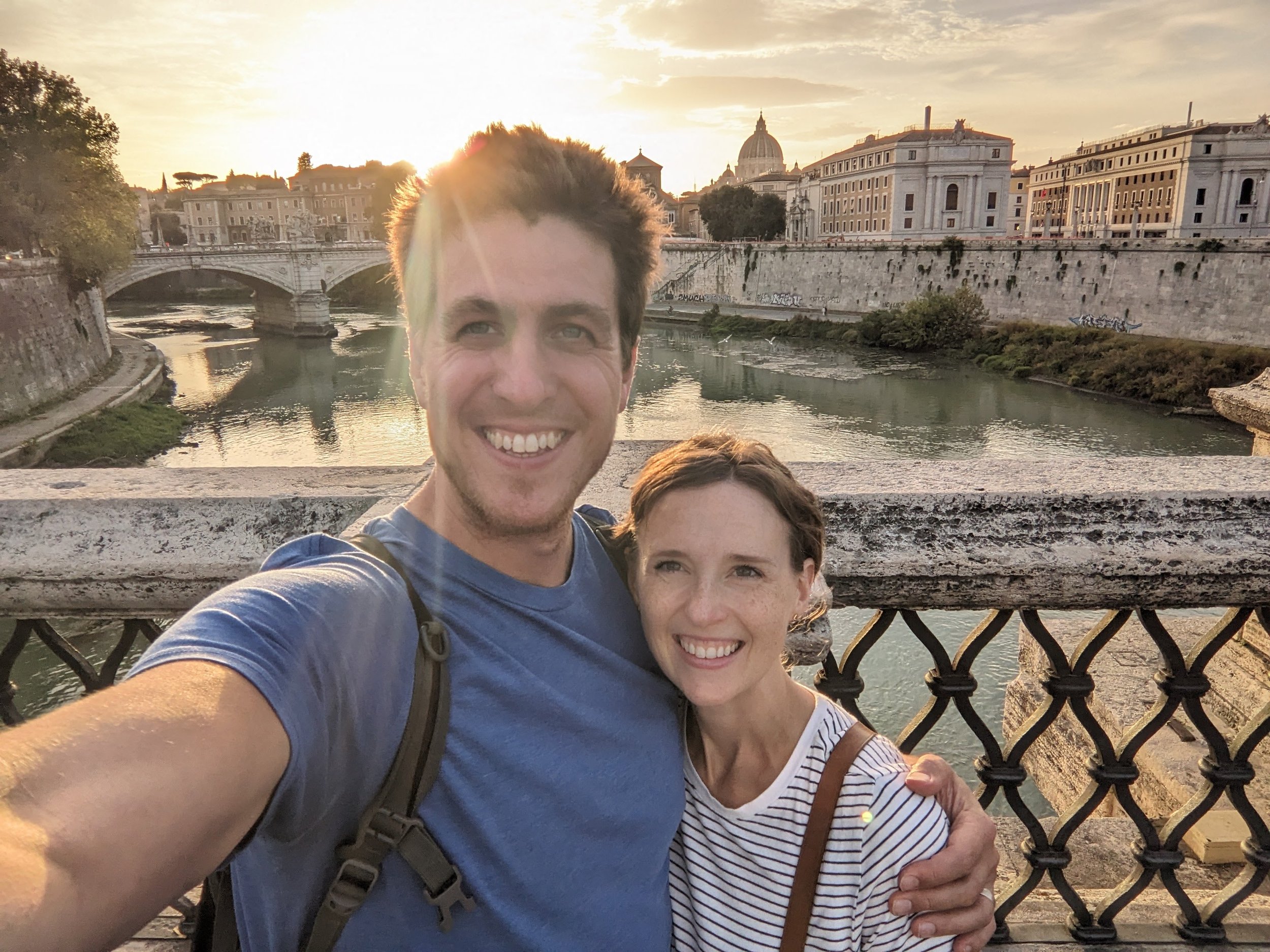
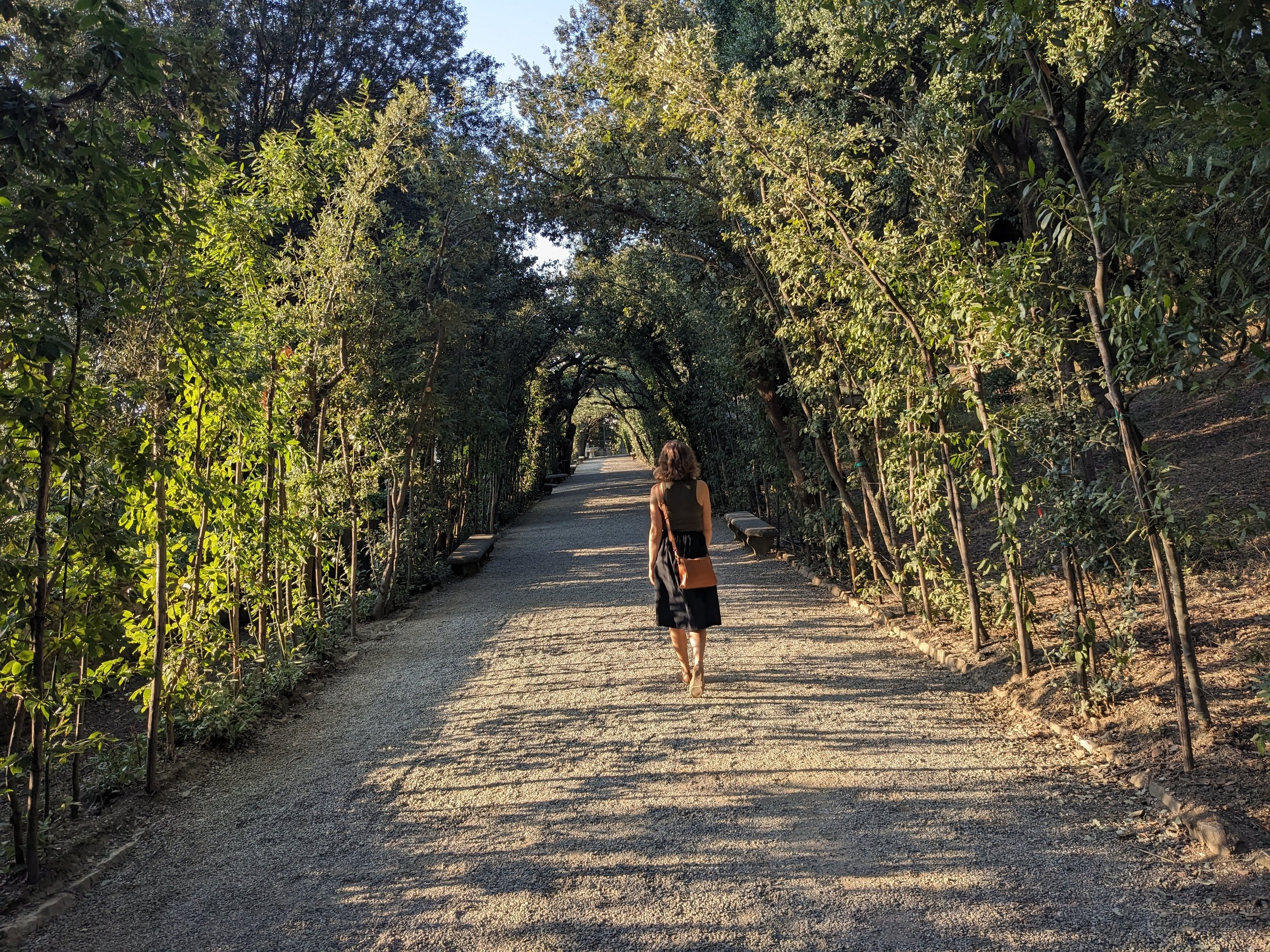
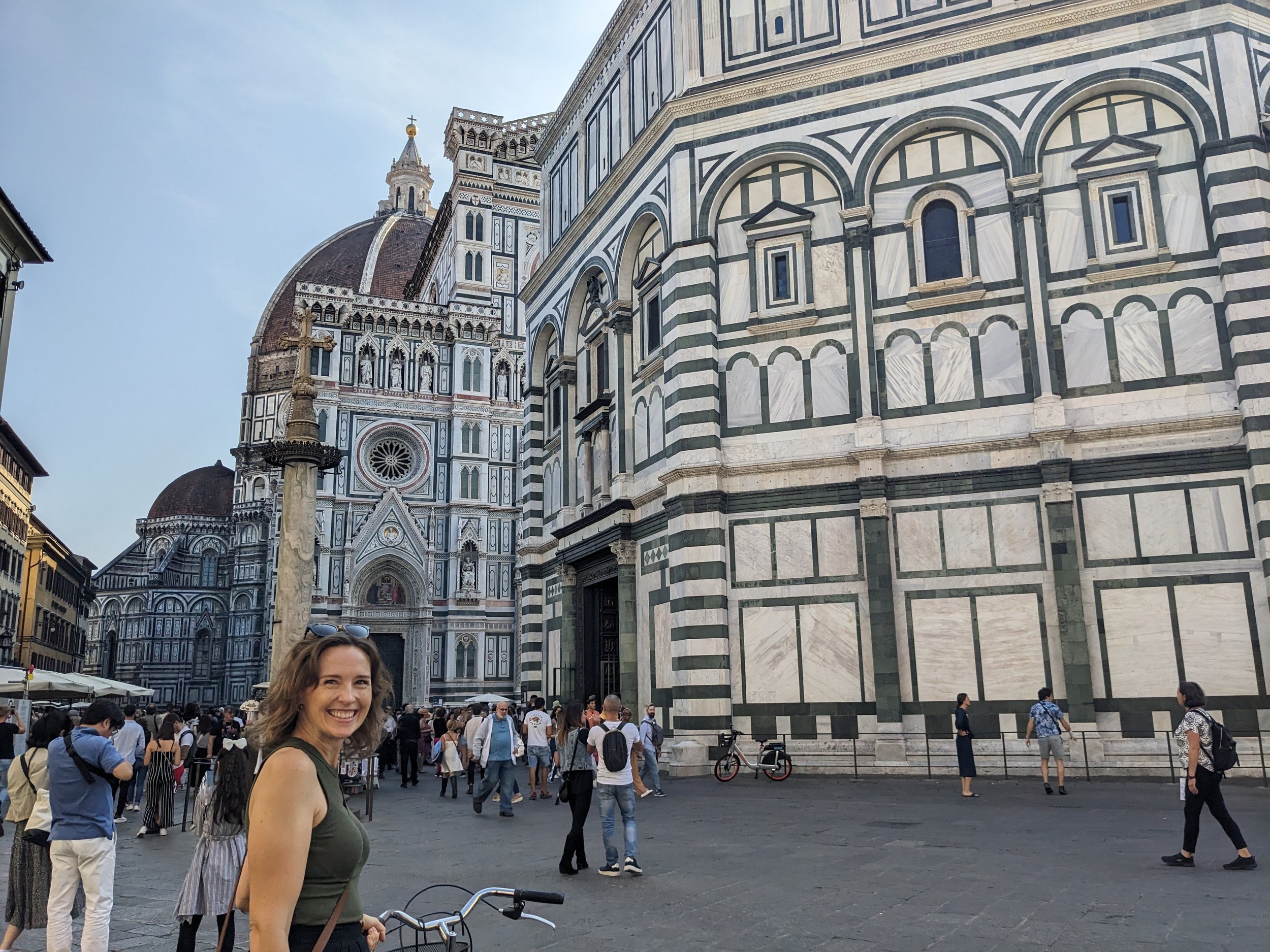
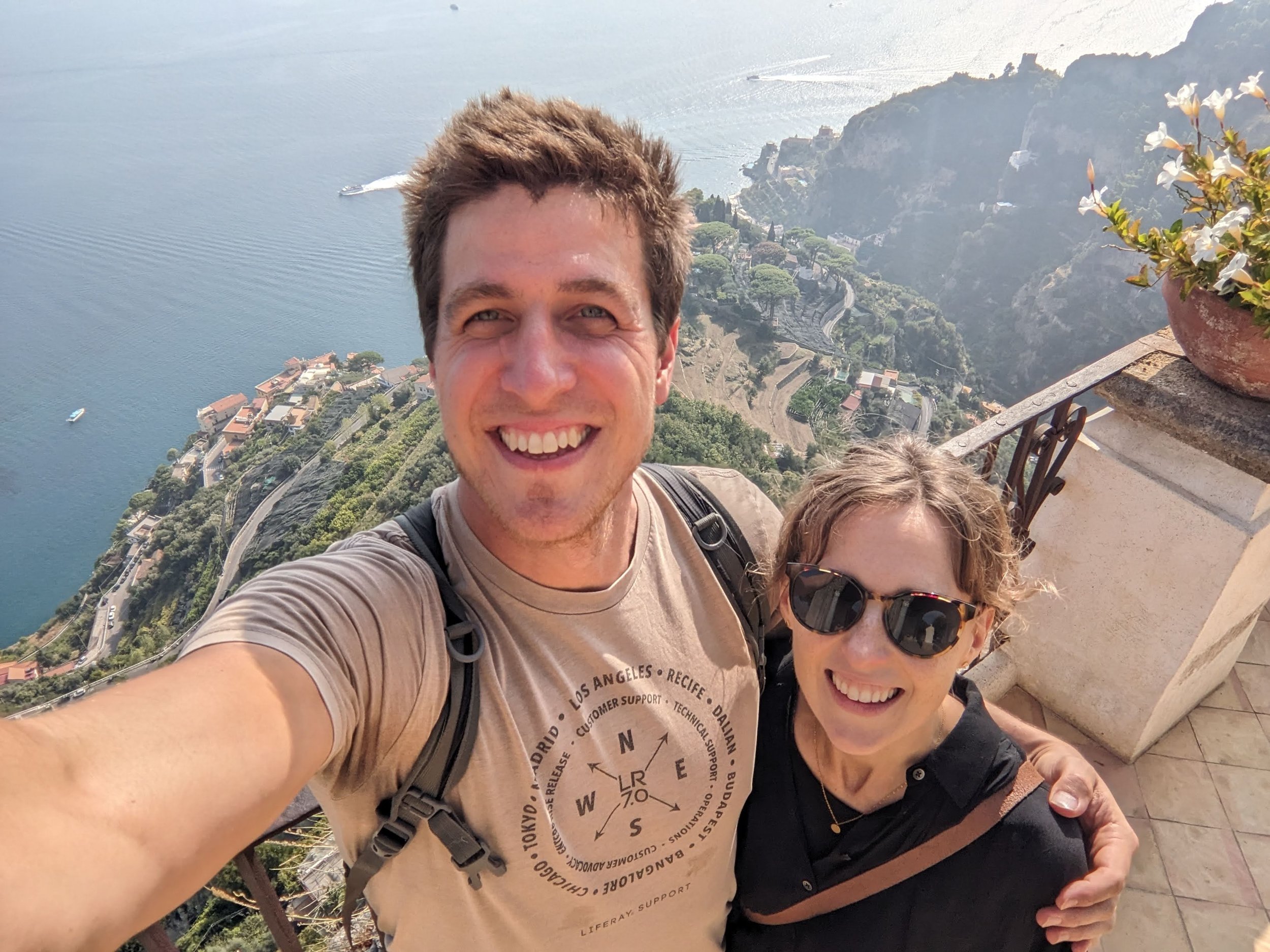
Let me give you a peek behind the curtain. As a case study, we recently took a luxury-hotel-filled ten-year anniversary trip to Italy.
Turn Big Spend into Points

In 2022, the silver-lining to the death of our air conditioner was the chance to purchase a replacement mini-split with a brand new credit card. So we applied for a new Amex Platinum card, and four days later bought our $6000 mini-split with it, netting us an instant 131,000 Amex points.
Later that fall when it came time to put some down payments on two roof replacements, we applied for the IHG Business Premier card, which gave us a quick 143,000 IHG points.
Those points sat idly in our rewards accounts until we had the spark of an idea: 2 weeks. No kids. Italy.
To do it, we just needed to turn those points into tickets.
Turn Points into Tickets
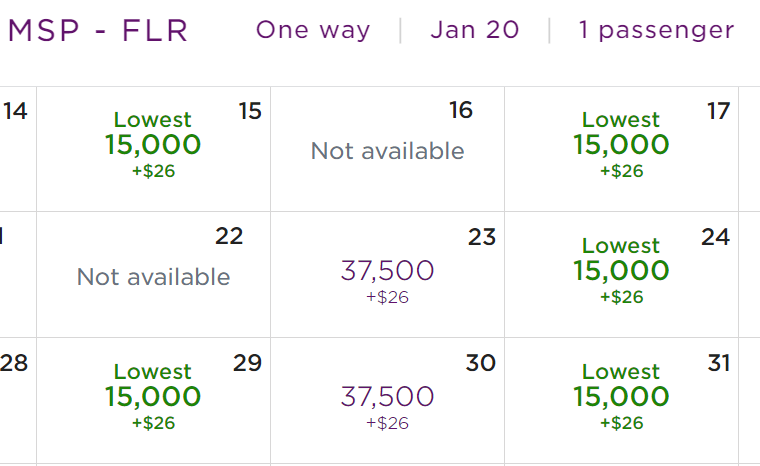
Italy costs more points than other European destinations, but the nudge that pushed us over the edge was a 25% transfer bonus to Air France that popped up in Fall of ‘22 - making the Italy flights more reasonable.


Once we found some flights and dates that worked w/ our backup-child-rearers, we transferred the points from Amex to Flying Blue (Air France’s mileage program) and for 92,000 points (RT) my wife and I were on our way to Italy. But we were still homeless.
Turn Points into Hotel Rooms
With a flight into Bologna and a flight out of Rome booked, we plotted a rough north-south itinerary. Where would we stay? We let the IHG travel portal guide the way. After some exploration we landed on a few “Mr. and Mrs. Smith” estates:

Three nights in Florence (Riva Lofts)

Two Nights in Tuscany (Fontelunga)

One Night in Umbria (Aethos Saragano)
Paying for roofs never looked so good. The IHG points landed us six free nights in some swanky villas.
We had to snag two AirBnBs for the last week, but at <$150/night (and with AirBnB gift cards regularly on sale for 10-15% off), we felt like we got some pretty good value.
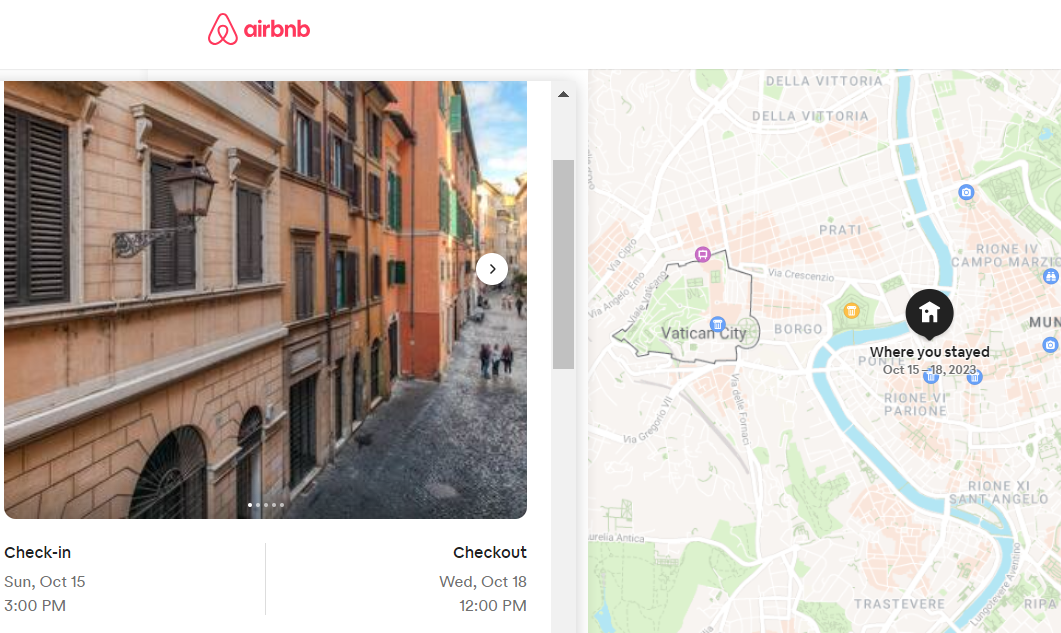
Beautiful Loft on the Tiber
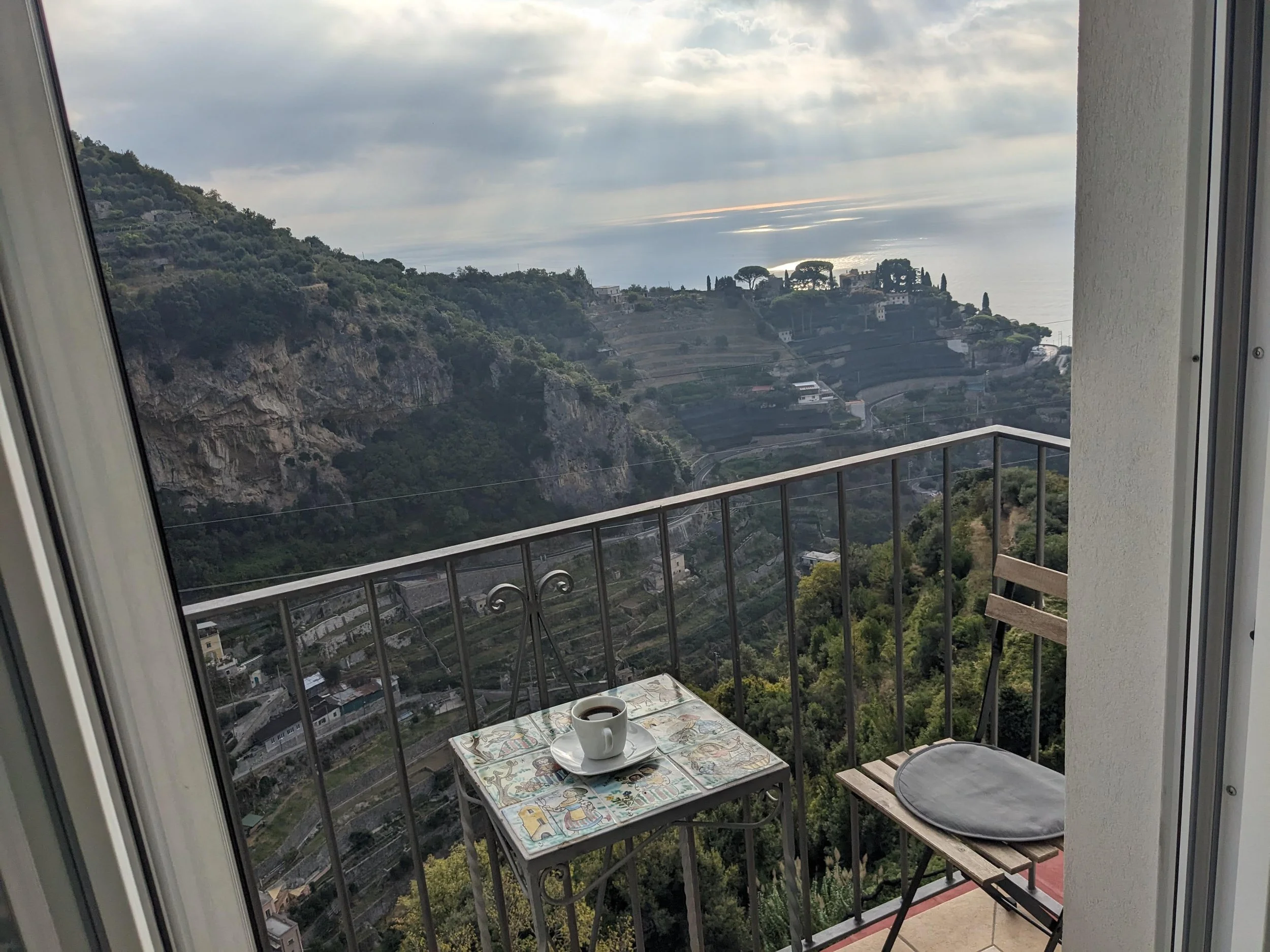
Morning Coffee from the Amalfi cliffs
Not Totally Free
In full transparency, money was still spent. Between car rental, gas, a sunset boat ride, credit card/ticket fees, and all the gelato and pasta in Italy, the whole thing was still over $2000. For us, that ain’t chump change.
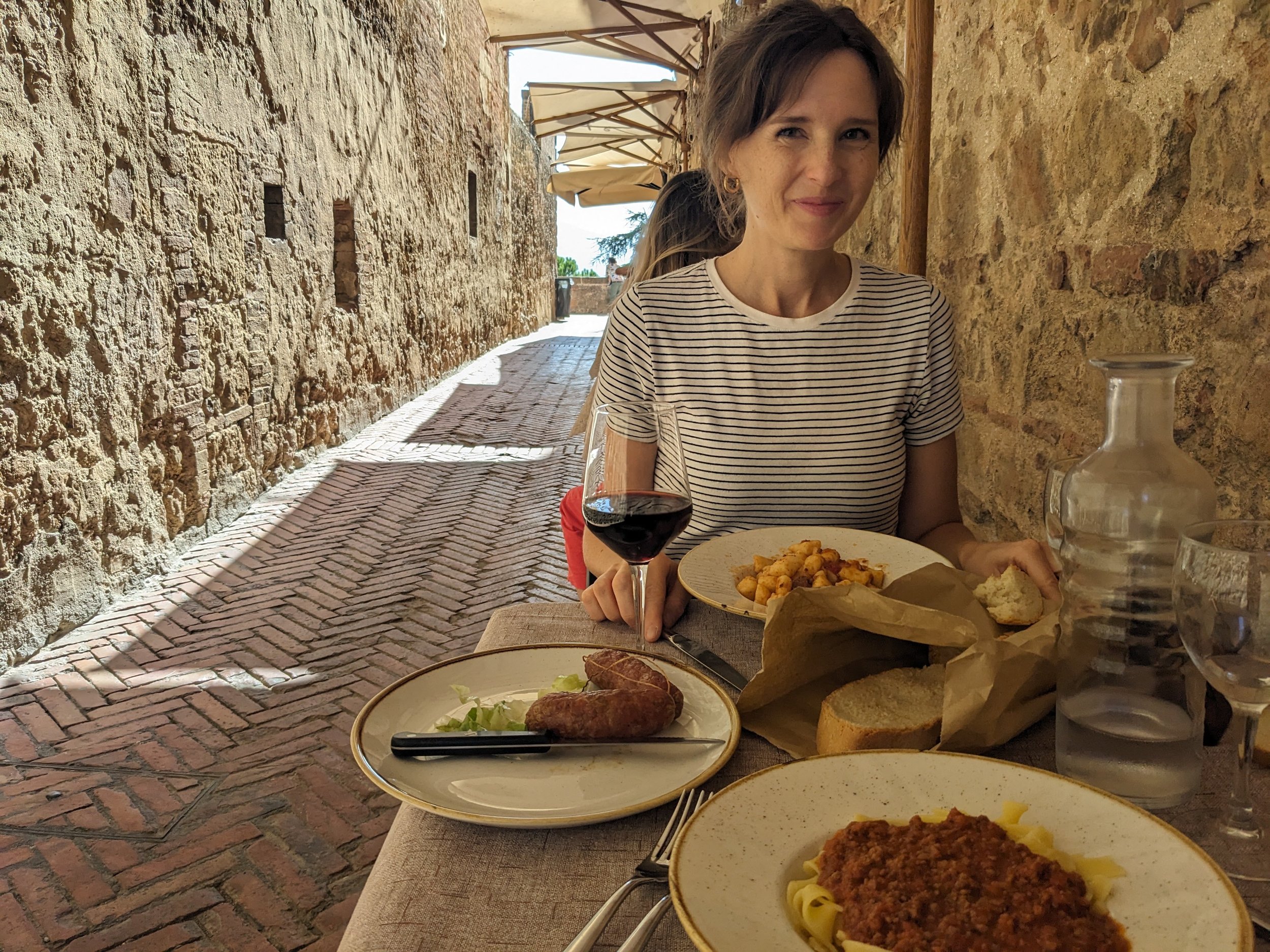
But be honest. If this girl was willing to stay married for ten years, wouldn’t you take her to Italy, too?!

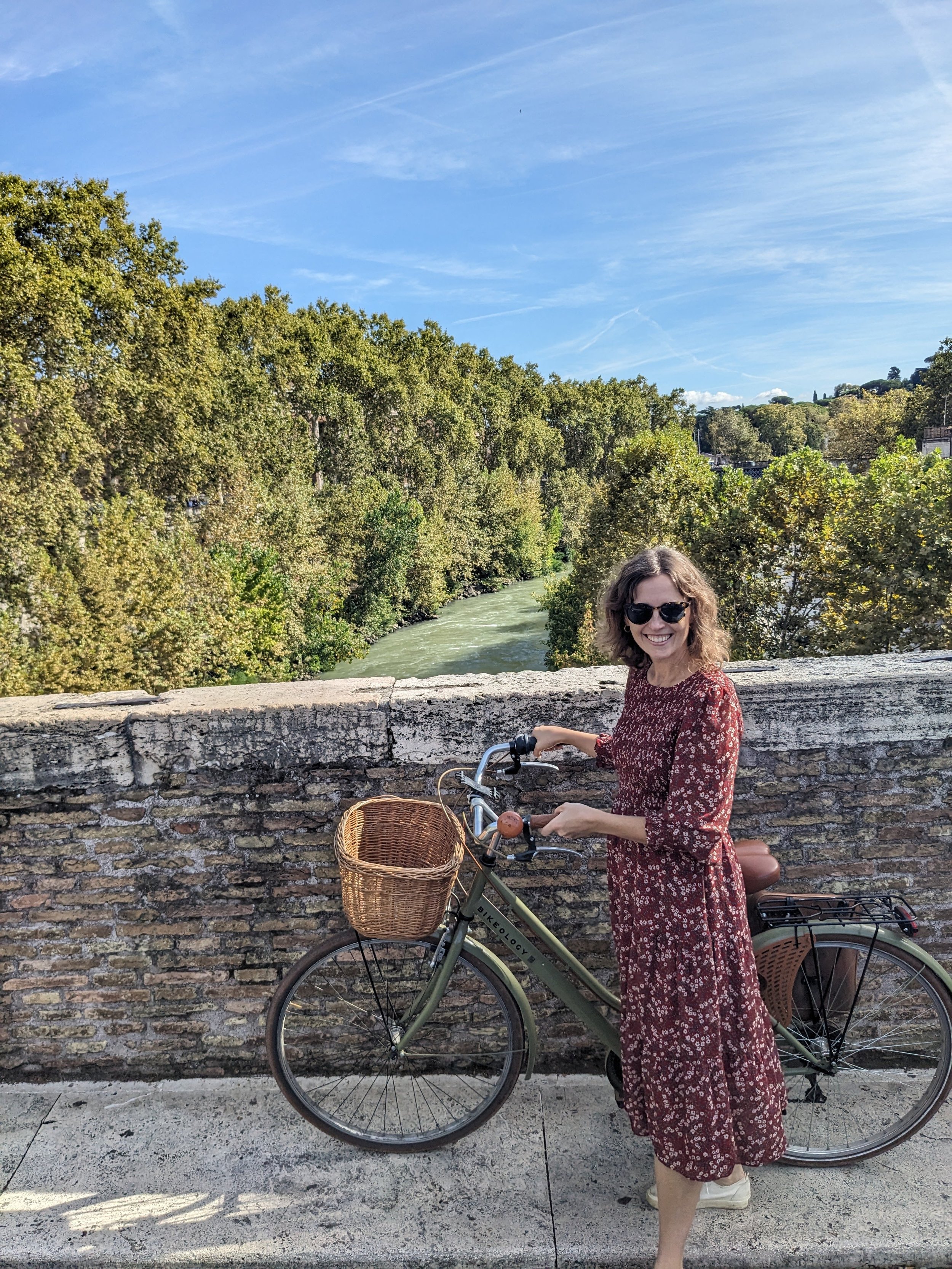
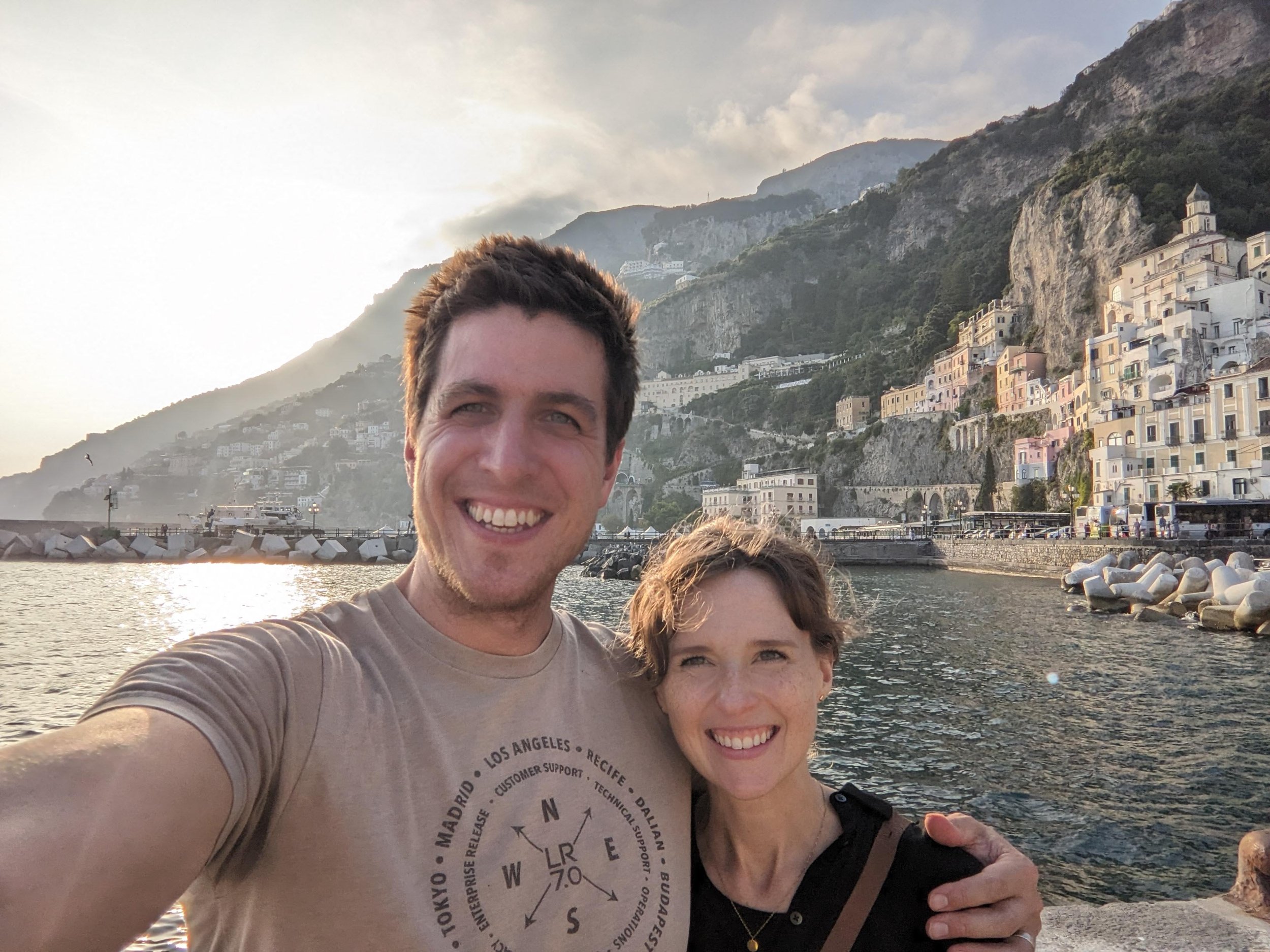
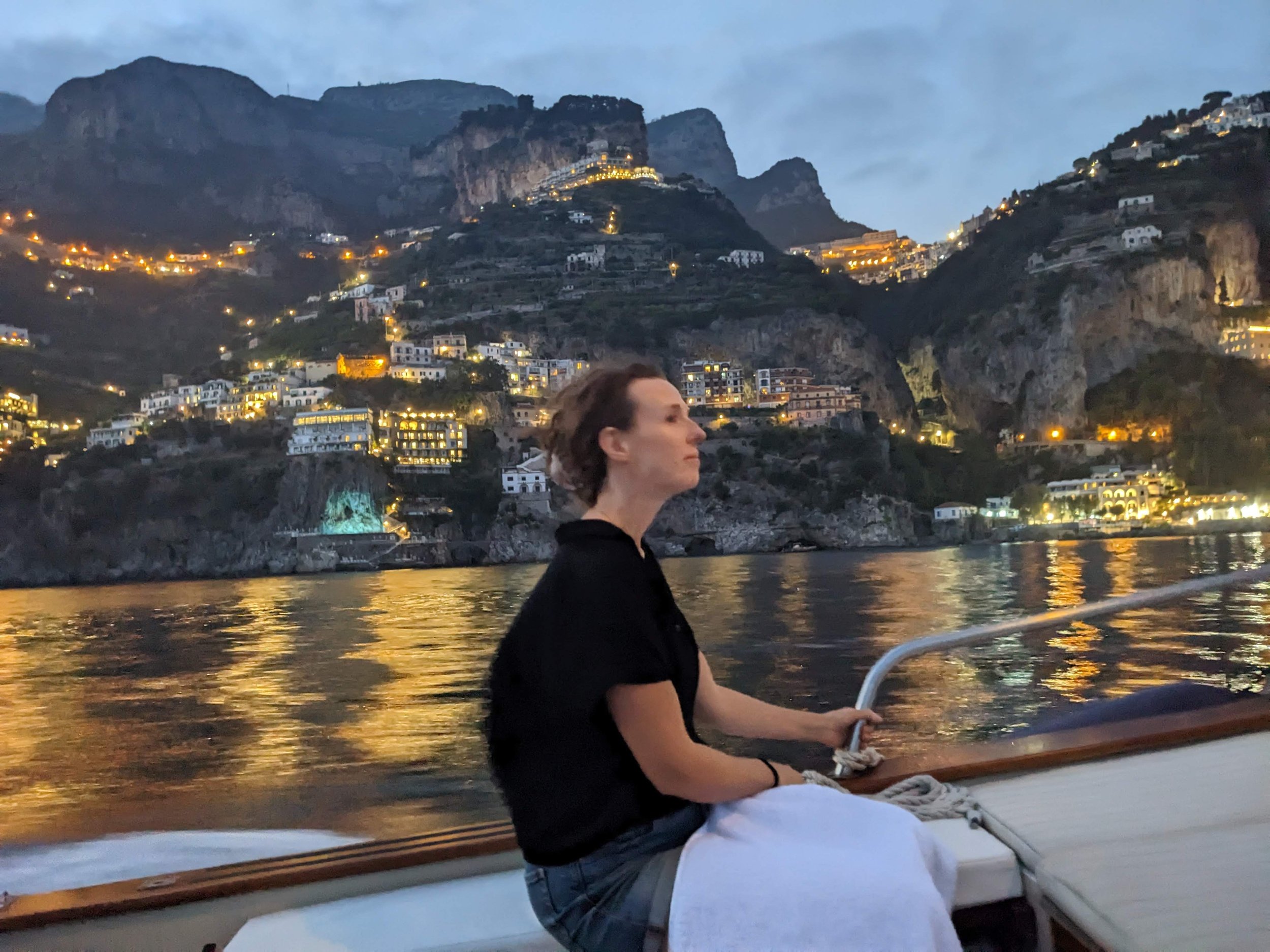
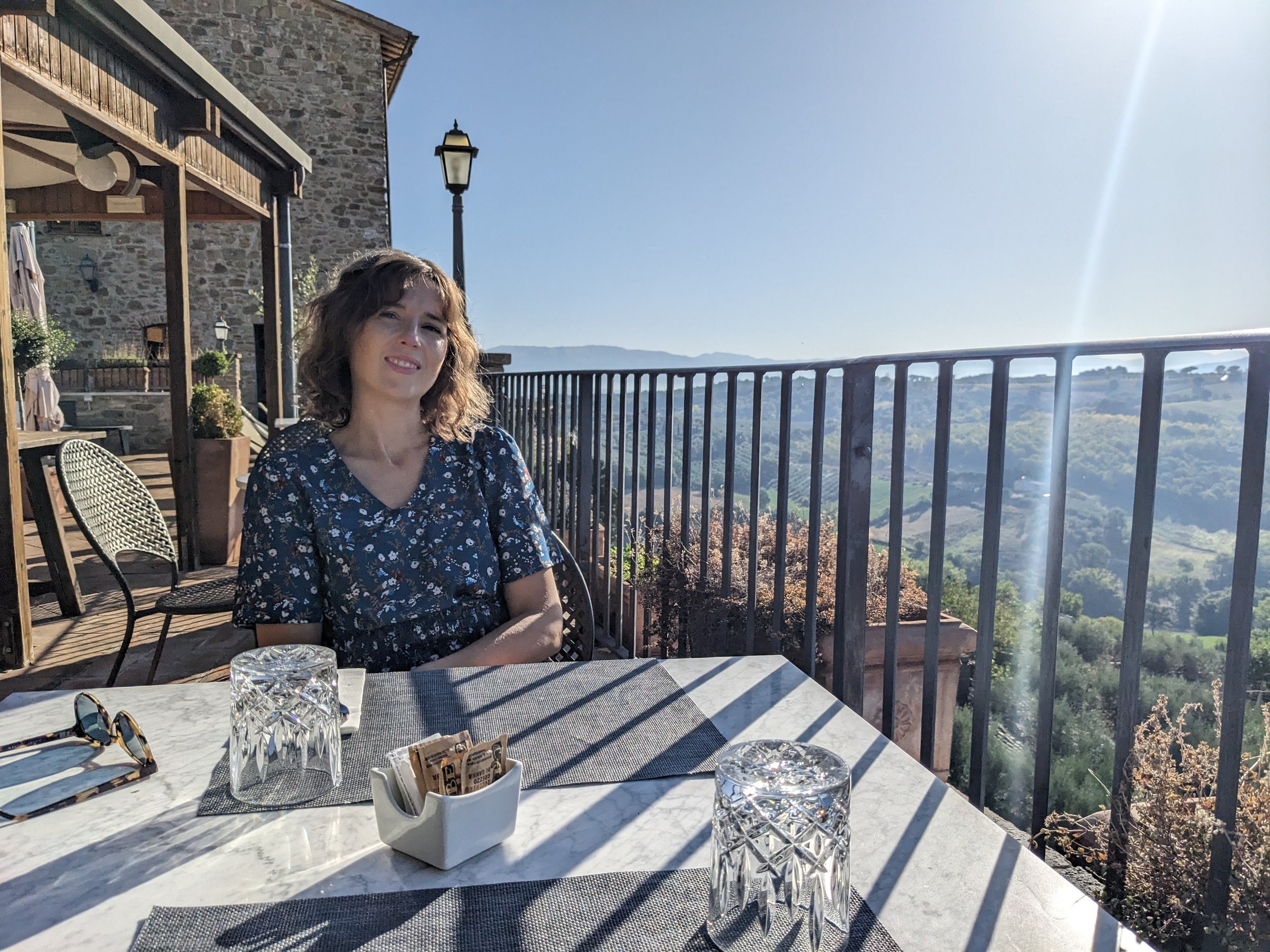
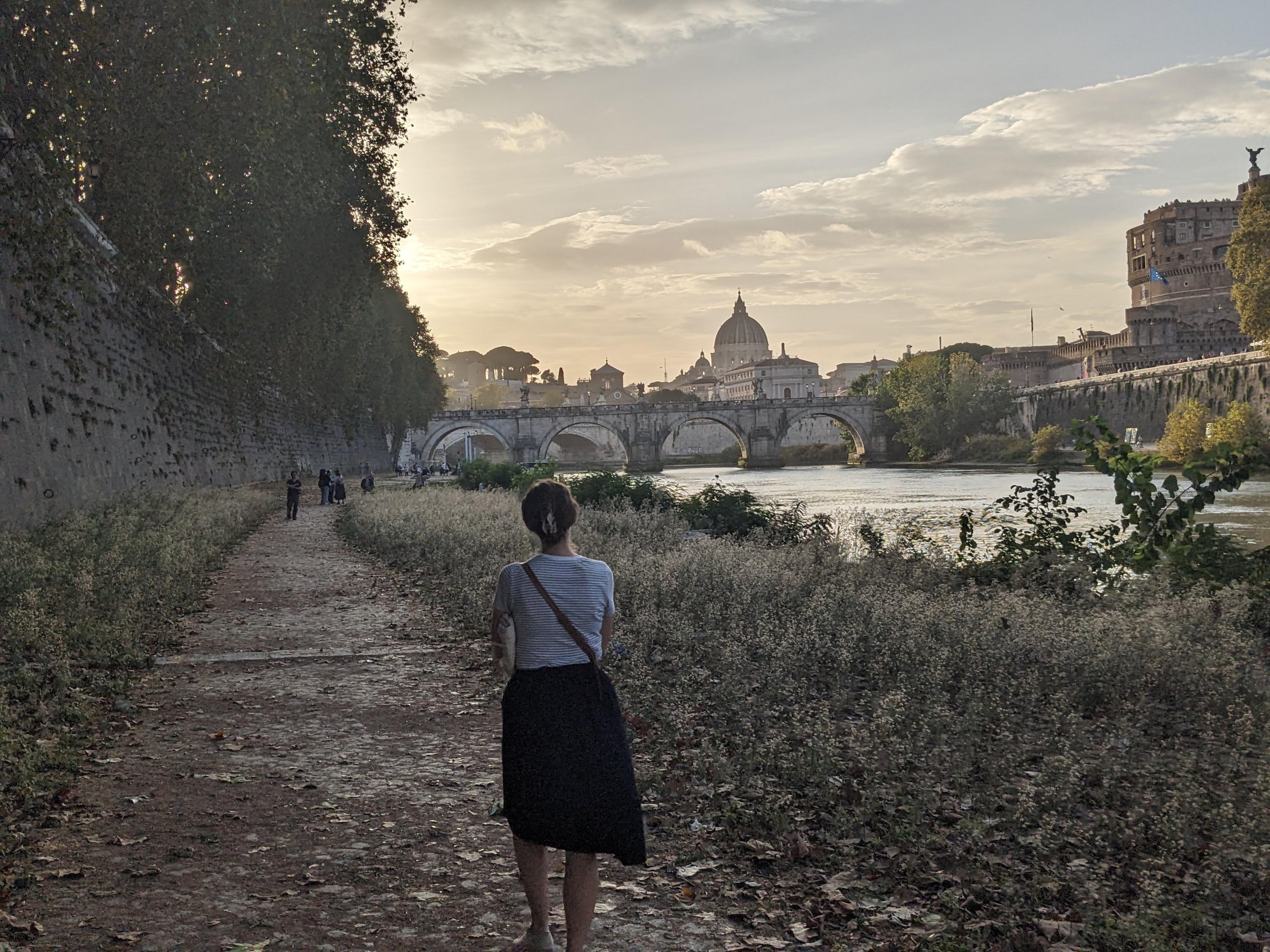
My next post explores what all that hassle and cost got us:
For more explicit instructions on how to break into the game of points and travel, read my old post:

It’s Time for a Raise

It’s time to get back on the wagon with our finances.
To be clear, we haven’t been complete money slobs since we had kids. Yet, almost as a rule, we’ve consistently passed over rental properties in favor of minivans and traded maximum mutual funds for modern-day time luxuries like raising our kids at home. And you know what? I wouldn’t trade it.
These days, though, with kids about to head off to elementary school it’s time to play financial catch-up.
Enter the deceptively powerful side hustle. Let me illustrate its power with an example.
Fictional Frank’s Favorite Function

Fictional Frank is making $50,000/year with a savings rate of 20%. In other words, Frank is putting away $10,000 per year towards his long term goals. Not bad.
However, let’s say Frank picks up a side hustle selling homemade mugs, netting himself another $10,000/year. This amount might seem unimportant compared to his $50k salary.
He might ask, “Is all that mug-making work worth it for a mere 10k? Will it actually move the needle?
Enthusiastically, I say “Yes!”
Hidden beneath Frank’s humble $10k/yr side hustle is the fact that Frank has just doubled his savings rate. Translation: wherever he’s going with his goals (retirement, lake cabin, South of France, etc.) Frank will cut his time to reach his goal in half with this small side hustle.
(Bonus: If he can add another 10k/yr he has now tripled his savings rate. He’s cut his savings time by 2/3. Invest the proceeds and the effect is even more powerful.)
Even better, this new income exists outside of his 9-5 gig. Unlike a bonus or raise, this new 10k/year is not at the mercy of his company’s revenue, his relationship with his manager, or some recession which may or may not come.
“Fine” I can hear you saying, “I guess I wouldn’t mind doubling or tripling my savings rate”, I’ll just google ‘side hustles’ and take the first thing I see.
I wouldn’t do that.
One Size does not Fit All

Despite all the side hustle talk on the internet, few content creators distinguish between the sizes of side hustles and how they may or may not fit into your life.
Young and kidless? You’ve likely got bandwidth to go big (like I kinda-sorta did). Look up Brandon Turner. Alex Hormozi. Or Codie Sanchez. These are the current-day kings of the “big millionaire side hustle”. They’ll push you to add skills, put in long hours on nights and weekends, and build something that scales big and quick.
Side Hustle For the Time-Starved
For many of us, that kind of hustle isn’t possible (or desired). Do not despair. Even the most time starved among us (busy parents included) can still find a side hustle that fits without nuking your family in the process. You’ll need to be picky, though, and select only side hustles that are flexible, low-time, and low-energy. No home runs for you. Instead, you’re going to hit regular and frequent singles and it’s going to dramatically change your financial future.
Ok, enough about you - let’s talk about me :)
Here’s one busy dad’s plan to try and drum up an extra $50k or so in the coming year. Perhaps one of the ideas could work for you if you’re in a financial pinch.
Speaking of a financial pinch…
My Side Hustle Plan
1. Poop with Purpose ($14,000)

There is a literal crapload of research going on in the world of gut biota. Specifically, companies are successfully researching how to use gut biota from a healthy “#2” to heal everything from IBS to obesity(!). It’s an incredible medical advancement, but it’s one that requires tremendous amounts of doo-doo. What the crap does that mean for your finances? Ladies and gentlemen, you are currently living in the age of poo for pay.
Don’t believe me? At this moment, there are people pulling down $180,000/year as professional poopers. If you live around the twin cities, odds are you’re (literally) flushing money down the toilet every single day.
The place I donate at is Rebiotix in Roseville, MN. Their mission is focused on eliminating a difficult digestive condition called C. diff. Willing donors can expect a more purposeful poo in addition to up to $60 per day with qualifying “donations”. With the other perks ($50 for biweekly COVID tests), I’m hoping to average about $300 per week. That may not sound like much, but if I can do it, this little morning habit will net $1200/month… which amounts to $14,000/year!
Throw in a spouse and you can double it. For fun, I did the math and (incredibly), an eligible couple could make up to $46,400 dollars per year for going to the bathroom.
If you do it, please mention my name as a referral when you sign up!
2. Bank and Credit Card Bonuses ($15,000)

Free travel is great. By the end of this year, Lord-willing, I’ll have made it to Spain and Portugal, Japan, Quebec, and Italy - all for free. In addition to the free flights and hotels, I try to regularly hit lucrative bank signup bonuses for cash.
Whether it was Royal Credit Union in the spring for $600 or Amex business checking accounts last winter for $2400, making bank and credit card signups a discipline can accrue into a massive (often tax-free) financial boost.

Typical tracking spreadsheet for me
When you total the signup bonuses (and my recently opened 5% interest checking account from Wealthfront), I’ve made over $15,000 in the last year from comfort of my porch and I’ll be continuing this discipline into the fall.
Big Pink Box: If you’re interested in hearing when I’m doing a card / bank bonus, just shoot me an email (brett@brettwrites.com). I’ll try to remember and loop you in on some of the stuff that I’m up to in realtime.
3. Fire my property manager ($18,000/ year)

Less than a month into our third kid, our rental property basement was drowning in melting snow - and we were drowning in babies. So, after a near-flooded basement in 2019, we reluctantly hired our first property manager.
The good: I’ve been able to keep my properties through the most intense years of my life.
The bad: The results have varied from “acceptable” to “nauseating”
The ugly: My property managers have generally been asleep at the wheel. The one thing they have been consistent at is charging massive amounts of money and neglecting my tenants. Sure, the $90/unit fee sounds amazing… but the reality is that the costs (placement and renewal fees, vacancies, turnover, and on and on) may eventually run your business into the ground.
I’m banking that even a half-ass job from myself, or honestly, even a “1/10 ass job” when I’m on the other side of the planet, can provide my tenants with a much smoother experience- and save me $15k-$20k/year in the process.
4. Etc
Pre-school is finally ending for us! ($6k/year savings). My wife is going to sub part time in the fall! ($10-20k/year?) And who knows what else will come up in this crazy land of opportunity we call America?
Let’s goooooo!
Conclusion
We all want a raise, don’t we? If you’re like me, though, you’d rather not wait around for an employer who may or may not come through with an end-of-the-year money shower. With recession clouds looming, I’m taking matters into my own hands.
What about you? Would you consider a side hustle if it meant reaching your goals in half the time (or less)? If so, what’s your side gig?!

Of Pyrenees and People

I’m 35,000 feet over the Pyrenees. Out front, clouds rise above the Bay of Biscay. Is that Bilbao in the distance?
Back home, I know Late Winter Despair must be settling in. So, it must be time for a travel post from my 500-mph chair in the sky.
These last two weeks have swept me from a windy work conference in seaside Malaga, Spain to the steep hills of Lisbon, Portugal with a few stops along the way.
Here’s what I saw.

Malaga, Spain:
Quaint beach city with beautiful Spanish center. I quickly realized, however, that living on the Cote D’Azure last year has spoiled me for life as far as beach towns go.

Granada, Spain:
Quiet mountain city with snow-capped Sierra Nevada backdrop. People go here for the Al Hambra craftsmanship and are not disappointed. The stonework will boggle your mind.

Algarve (Southern coast of Portugal): Picturesque and cliff-lined beach resort region on the edge of the old world. Its people are noticeably kind and this was the perfect place (with free hotel nights!) to relax after an intense conference.

Lisbon, Portugal: Is this hilly, tiled city the hottest spot in Europe right now? Maybe. For whatever reason… I found it underwhelming.
It struck me as dirty and only “generically” European feeling. For me, the tiled exteriors couldn’t compete with the iconic vibes of a France, Italy or Germany. Finally, any remaining traces of affordability or “undiscoveredness” seemed to have drifted to sea by the time I showed up. I was glad I came, but was ready to leave by the end.
Sevilla, Spain:
I finish with this city because it blew me away. The crown jewel of Southern Spain is endless winding streets of riverside beauty on a surprisingly large scale. Add the quiet, the parks, and the pedestrian-friendliness and you’ve got an eminently livable city that may warrant a return.

History Below My Feet
One thing that set this trip apart from others was the unshakeable weight of history that seemed to emanate from the bumpy Spanish cobblestone. I sensed it on sunset walks through the breathtaking Plaza de Espana. I felt it as I made my way deep into the heart of Alhambra.
Was it the ghost of Columbus, who once made his world-shaking pitch for a few ships on this very spot? Was it memories of Peru, and the gravity of standing where Pizarro once embarked from on his way to bringing Atahualpa and the entire Incan empire to its knees?
In slower moments, I meditated on the reality that these streets once unleashed the most prolific explorers and brutal conquerors of all time.

Belem Tower
From Cortez and Columbus in Spain, to every Portuguese sailor ever waved off by the king from Belem Tower, how could this tiny corner of the Iberian peninsula have rewritten the tongues of every man, woman, and child, from northern Mexico to the southern tip of Chile? (short answer: Guns, Germs, and Steel).
Maybe it was the reflection-inducing solo nature of my travel, my growing appreciation for history, or perhaps some secret ingredient in the acorn-fed jamon iberico, but my “N” mind couldn’t help wandering beyond the tapas in front of me and into the distant past. This place deeply shaped the world we know today - and the significance of it was in the air.
Finally, the best aspect of my trip wasn’t pasteis or cathedrals, or any thing in Andalucia itself.
Jobs and Friends
It had been three years since I had seen my coworkers. Three years. Finally, from the desert of isolation, I emerged to drink from the firehose of human connection.

Of course, there was the expected death-by-powerpoint which you’ll get at any work conference. But between sessions, there was ample time to dig deep with old friends, yak it up with Frenchmen and Aussies alike, and discuss life in Tokyo with Japanese companions.
So far, the Great Resignation hasn’t shaken me loose from the “company of my youth”. Twelve years in with my current place of employment, and I know that there’s probably more money out there and certainly novelty and excitement in the world of other tech careers.

But I wonder. Where else can I reminisce with people who knew me as a 23-year-old kid? At what company can we laugh about the old startup days, working from a cheap container behind a little church in southern California?
I haven’t ruled out a career change. But staring out at the darkened Mediterranean sky, dusting off memories piled up over the years with old friends from far reaches of the planet - wasn’t it clear that there are some things that money can’t buy?
Maybe what I’ve got at my job is special - or maybe I’ve just been drinking the kool-aid for too long. For now, the plane is touching down in dreary Amsterdam. With sun-kissed sea in the rear-view, and the place they call me “dad” approaching, all I know is that I’m grateful. And maybe, for now, that’s enough.

Thinking in 2023

How do people in the 2020s think?
“Uh… correctly?” might be the unspoken answer. It’s the assumption in every age.
A Medieval European might say the same thing… on her way to a witch burning. Enlightenment thinkers assumed their way of thinking would usher in a better, more peaceful world…before the most enlightened thrust us into the bloodiest century in human history.
Never considering how you evaluate truth is to let the spirit of the age pull you downstream without your agreement or even your recognition.
My goal in this post is to give you fins.
Now, my guess is that you have little interest in philosophy (alas, a trapping of our current age).
But as I look back on my own attempts to understand the world, the most important discovery was the most obvious: we are not the first people to try to make sense of life. So let me bring you into one of my favorite muses - the history of how humans in the west have thought.
“BORING. What’s in it for me?” you might rightly ask.
To be frank, without this basic history, it is impossible to understand the present state of western culture- the discussions and the arguments that will shape our future. Secondly, without an understanding of the different ways that people approach truth, the danger is that you yourself are co-opted into the bubble of someone else’s way of thinking without even knowing it.
That brings us back to our original question: how are we thinking in 2023?
The way I see it, we are in the middle of a winner-take-all cagematch between three very different epistemologies.
A New Word
Epistemology: a too-fancy philosophy term that simply means "how you know what you know".
So a toddler who knows what’s true about the world because mom said so has a "mommy epistemology". Your neighbor who reads his horoscope to know if he should start that business (or just curl up in the fetal position) could be said to have an "astrological epistemology".

Your epistemology is not a catalog of your beliefs - your epistemology is how you came to those beliefs. It is the rubric by which we know something is true or false.
This is a little meta, sure- but important. Despite the infinite expressions of human thought since the dawn of western civilization, in terms of how those beliefs arose, there have been three epistemological power players - and we are in the middle of their fight.
To understand them, go back with me for a second.
Mapping the Zeitgeist
The (Really) Old Days
Before farming, there wasn’t much time to think. We were too busy chasing berries, hunting buffalo, and otherwise reaping the curse of the ground. The “big thoughts” we did think were typically religious and spiritual in nature.
Farming brought food surplus. Food surplus gave us the time to do all the other things that we now know as “civilization” - including thinking like we had never thought before.

From one such civilization (Ancient Greece), there arose men who elevated logic and clear thinking to unprecedented heights. While most Greeks simply hoped the gods would be good and went on with their life, these “philosophers” asked big questions and tried to carefully reason their way to the answers.
Techniques and entire schools of thought cropped up around this systematic way of thinking, eventually trickling down (as philosophy does) from the philosophers to the culture.
For the first time, a rationalist epistemology was emerging,
Rationalism would survive the fall of Greece- but when its conquerors, the Romans fell, rationalism would (incredibly) go the way of the dodo for over a thousand years.
Before Rome fell, though, something incredible happened in the history of human thought. Constantine (the emperor of Rome) became a Christian - and Rationalism had a new rival.
The Age of Faith

Humans have always looked to spirituality and religion for answers to life’s big questions. But when Rome “Christianized” at the height of its power and (and then-height of western philosophy), religious thinking was levelled-up and infused into the culture with unprecedented thoroughness. Christian thought and Greek philosophy mingled, sparred, and more or less lived alongside each other. Until, somewhere along the way, the rationalism bestowed on us by the Greeks, was, essentially… lost. For over a millenia, we understood the world through the lens of church and bible (and sometimes superstition).
Origins, purpose, meaning - the church provided the answers. But more fundamentally, it provided a way of knowing.
Where did we come from? See what the bible says. How do I live a healthy, fulfilling life? See what the pope says. Where is the earth in relation to the universe? See what the church says.

To be a Medieval Christian wasn’t simply to believe the truths of religion- it was to know what was true by testing it against the stance of religious authority
For over a thousand years, the west had a religious epistemology.
Until the enlightenment turned that upside down forever.
The Age of Reason
If the Renaissance was Europe reacquiring its taste for Greek Rationalism, then the Enlightenment was the west getting drunk on the old 1000-year-vintage logic.
What was the enlightenmetn? Well, the characters are myriad and the effects incalculable (think everything from America to the iPhone). For our purposes, let’s simply zoom in on a short, French bachelor named Rene Descartes.

Perceiving a growing pressure from enlightenment thinkers, Descartes set out with a simple goal: to defend his beloved Catholic church against the assault of pure reason. His idea? To show that the truths of the Christian religion could be arrived at by reason alone - with no revelation required (Bible, pope, or otherwise).
In his Meditations he arrived at the same old biblical truths (the existence of God, the immortality of the soul, etc.), but in “showing his work”, he explicitly avoided using the bible as his standard of truth. Logic alone was enough.
Descartes wouldn’t understand the impact of his work until it was too late.
After being condemned by the church he was trying to save, copycats would soon follow - thinkers who loved how he thought (using reason alone) but who generally disagreed with his conclusions.
Modern philosophy was born.

The rational epistemology that had lain dormant since the days of Aristotle, was back - and this time on steroids. Science and Reason were in and the Bible was on the way out among the thinking class. But was Reason alone sufficient to guide us?
The Assault on Reason
For “rationalists” of the 19th century, the future couldn’t be brighter. Sure, there was a growing disparity between the different conclusions the philosophers were coming to, but with universally-accessible Reason and Science guiding the way (in contrast to faith-based claims), it was only a matter of time before Truth about everything from God to governance would emerge.
And yet…
Even in these halcyon days, cracks were already beginning to show. While Spinoza and Berkeley built their unassailable castles of rationality, Kierkegaard and Hume were loading enough dynamite into the cellar to blow the Rationalist project up forever.
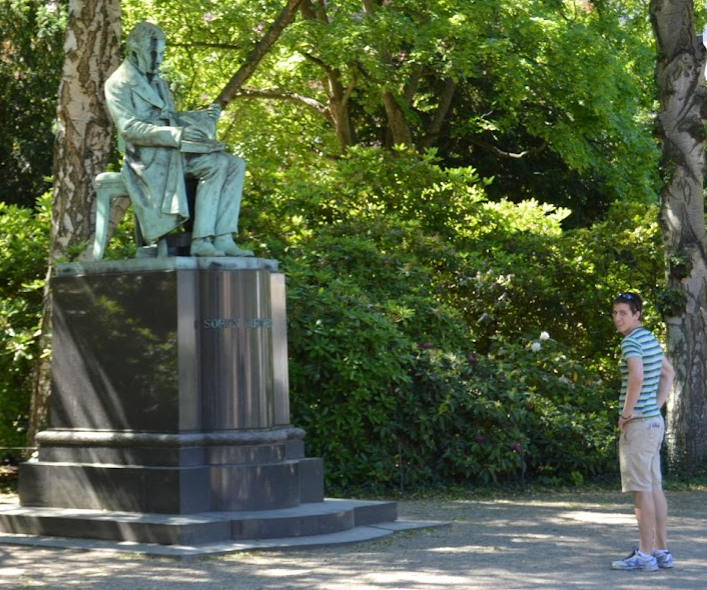
Oh, Kierkegaard…
While Hume’s problem of induction called into question the truth value of scientific claims, across the North Sea, Soren Kierkegaard was getting fed up with Hegel’s rational co-opting of the Christian faith. He questioned the very value of cold, reasoned Truth altogether. After all, what good is a Truth “out there” that has no bearing on our day-to-day lives anyways? Isn’t our lived experience more important?
Beyond Truth
Rationalism’s heyday would continue into the 1900s (with the positivists pushing rationalism to the breaking point). But by the time the last Nazis were cleared out of Europe and the blood had dried on a second gruesome world war, the consensus among philosophers wasn’t just that God was dead, but the very project of modern philosophy (the sufficiency of Reason in search of Universal Truth) - lay as dead as the men on the beaches of Normandy.

My local library while I was in France, dedicated to Camus, a leading existentialist thinker)
Before any remaining rationalists could pick up the philosophical pieces after World War II, it was Jean-Paul Sarte and the French existentialists that would set the tone for philosophy in the latter half of the twentieth century. If God was dead, then meaning was for us to create. Perhaps there was no grand narrative to figure out. And even if there was, hadn’t the last century shown us the impossibility of one person reasoning to it from their limited, singular vantage point?
Maybe our own experiences of the world, finding and living our own “truth” was the best we could hope for. Maybe Nietzsche had it when he said “might makes right”. What if Truth wasn’t something out there to find through reason and argumentation, but just a tool, defined and then used by those in power to dominate.

Post-modernism, along with post-modern epistemology was born. And as it always has, this view of the world, this definition of truth, did not stay in the dusty halls of academia. What was once an odd, minority view held by disillusioned Europeans has found its way to the main stage- our culture.
Today
Do you still think this foray abstract or esoteric? If you take one thing from this post, let it be this: The thoughts that philosophers think become the thoughts that everyone thinks (about 100 years later).
Open a newspaper, scroll through your Twitter feed, or simply look around.
In our day the gender and even the race of a person is not determined by an objective measure, say XY chromosome pairs or genetic ancestry. That’s where a rational or even a religious epistemology would push us to. In our culture, gender and race aren’t up for argument. After all, if the postmoderns are right, there is no objective truth - so why can’t gender and race and anything else be determined by how an individual experiences his or her or zirself.

While Martin Luther King Jr. dreamed a dream in which his four children could “live in a nation where they will not be judged by the color of their skin, but by the content of their character”, critical race theorists dream of a day when color, gender, and sexuality are the primary means by which we are to be judged.
And of course, in just two decades, we’ve gone from outrage over Bill Clinton’s big lie to the acceptance- and celebration of- our first fully post-truth president, living and proclaiming his own truth on all things big and small - from weather to his own re-election. Facts be damned.
Ideas have consequences. And right now we’re living through them.
These developments in western culture are not random. They are the outworking of a 70-year-old view of truth that has finally made its way from the lecture hall to the town hall.
Signs of the Times
Still not sure about all of this? Look at how thought leaders of today are aligning themselves.

On the American political left, Bill Maher, long the prime mocker of all things conservative, has found common cause with the American right. After all, in the old days he could at least argue over facts. He is not alone.

Whether it’s Jordan Peterson becoming the Canadian posterboy for reason or Joe Rogan becoming the number one podcast on planet Earth, these “old” liberals (with their rationalist epistemology) have taken up common cause over something far more concerning than priests talking about the bible (religious epistemology). More fundamentally, with post-modern thought, we are staring down the barrel of the end of truth itself.
Similar schisms exist on the right, with some Republicans merely agreeing with our former president’s policies… and others ready to jettison little details like ballot counts and evidence. From a post-modern viewpoint, truth is secondary and narrative is king- the real game is power.
The Real Battle
This article isn’t to push you to a certain epistemology (much less a particular belief). It's to give us better categories and narratives than the ones CNN and Fox are using to profit from our fear and anger. The key battle of our time isn’t between left and right, black and white, or rich and poor. It’s more fundamental than that. The battle that will determine our future is over what truth is and how we arrive at it.
Will reason guide us? Is evidence and rational argument the way to discover truth - or will power grabs and propaganda be required to create truth? Long the source of our ideas about morality, equality and truth itself, what role will religious understanding play in the minds of westerners in this century?
For all the helpful critique that postmodernism has given us about the limits of reason and the importance of experience, we need think carefully about this view of truth - and the role that this way of thinking should play in our future.
The last great epistemological battle was between priest and professor - and it was intense. People died, power shifted, and we all view the world differently because of it.
You are living through the next great battle. Think carefully.

In 1832, Hokusai painted his famous “Thirty-six Views of Mount Fuji”. With each painting, he gave a fuller view of the mountain- and his own perspective. Here’s one of my “36 (or so) views of the world”. It’s an attempt to illuminate an aspect of the present by telling a story of the world through one lens. This essay covers one of my favorite (though admittedly abstract) lenses: epistemology.

Favorite Things: 2022
New (to me) Books
Breath (James Nestor)
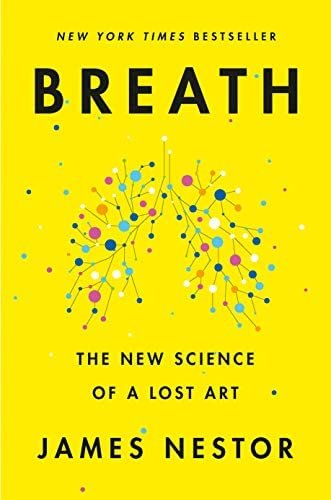
My summary:
Most of us breathe poorly.
Breathing poorly creates a myriad of health issues.
Anyone can improve their breathing and feel better, reverse ailments, and live longer.
I enjoyed Breath on two levels. First, as an occasional dabbler into health and self-improvement literature, the book left me wondering why it hadn’t occurred to me to improve the most fundamental activity involved in staying alive.
And secondly, as a wannabe writer, I was floored by Nestor's ability to create a scientific book on breathing (yes, BREATHING) that is utterly riveting.
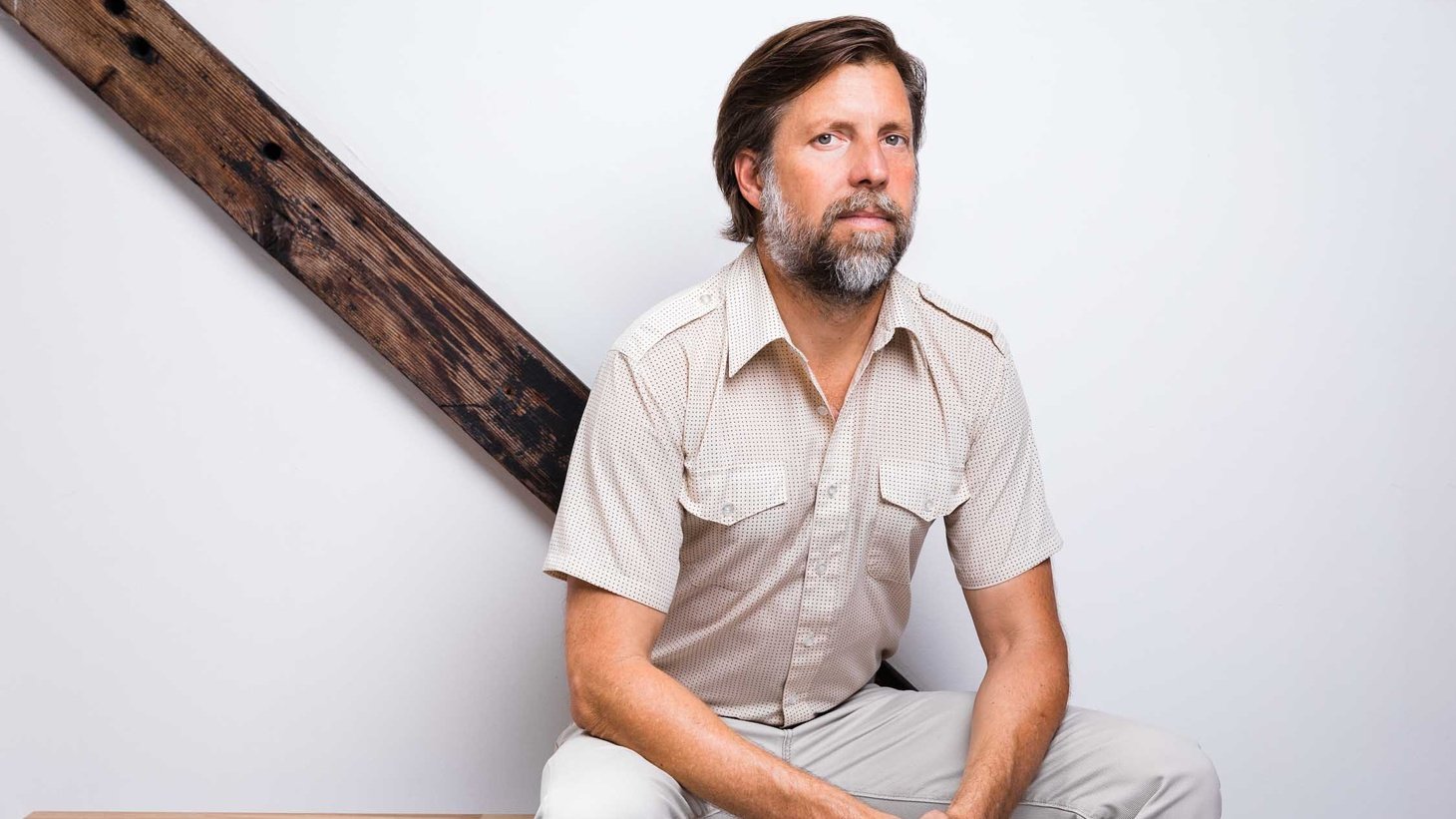
With eccentric characters playing out the story across time and space (yes, he really illegally journeyed miles into the catacombs under Paris to observe ancient skulls), Breath feels more like The Da Vinci Code than breathing manual.
Here's a teaser passage from his conversation with a group of semi-insane "free divers" (people who dive to ~300 feet below the surface of the ocean- with no gear).
Another diver told me that some methods of breathing will nourish our brains, while others will kill neurons; some will make us healthy, while others will hasten our death.
They told crazy stories, about how they'd breathed in ways that expanded the size of their lungs by 30 percent or more. They told me about an Indian doctor who lost several pounds by simply changing the way he inhaled, and about another man who was injected with the bacterial endotoxin E. coli, then breathed in a rhythmic pattern to stimulate his immune system and destroy the toxins within minutes. They told me about women who put their cancers into remission and monks who could melt circles in the snow around their bare bodies over a period of several hours. It all sounded nuts.
They discovered that our capacity to breathe has changed through the long processes of human evolution, and that the way we breathe has gotten markedly worse since the dawn of the Industrial Age. They discovered that 90 percent of us-very likely me, you, and almost everyone you know is breathing incorrectly and that this failure is either causing or aggravating a laundry list of chronic diseases.
On a more inspiring note, some of these researchers were also showing that many modern maladies-asthma, anxiety, attention deficit hyperactivity disorder, psoriasis, and more-could either be reduced or reversed simply by changing the way we inhale and exhale.
The Count of Monte Cristo

Many classics are good to read in the same way that spinach is good to eat - helpful, but not particularly enjoyable. This is not true of Dumas' classic.
Beginning in Southern France with a hook to end all hooks, the story eventually moves from the legendary Chateu D'If to Rome and Paris at a pace that will satisfy the most attention-deficient modern readers. Dumas' classic tale of revenge and redemption is still a winner for plot-lovers in 2022. Once read, the film will look like a silly, B-list child's play by comparison.
Re-reads


Ruthless Elimination of Hurry (John Mark Comer) and Get Your Life Back (John Eldredge)
Good books give us the truth we need at the right time. Fifteen years since Steve Jobs' placed supercomputing compulsion machines into our pocket, these books are the kind we need right now if our inner life is to survive the exhausting, lonely age of constant connection.
While Comer masterfully puts words to the challenges of the soul in the age of the internet, Eldredge's writing is the balm and direction we need to survive the digital age with spiritual life intact.
4-Hour Workweek

This all-time favorite found me again at just the right time. As my peers graduate to large suburban houses and new cars (along with the associated mortgages, car payments, and oftentimes high stress jobs to support them), Tim's 2007 classic was a timely reminder why we're taking the road less traveled. So far, our family has tried to prioritize freedom over convenience and experiences over stuff. So far, that has made all the difference.
Apps
Obsidian (w/ Readwise)

For all the content you read, the videos you watch, the podcasts you listen to - what percentage do you actually retain? What if the key points of every piece of consumed media along with every noteworthy thought you had were stored in an easily searchable database for instant recall for the rest of your life?
This is the promise of the "Second Brain" - a personal journal / content library on steroids made possible by modern technology. I've chosen Obsidian as the "hub" of my second brain and have been very pleased.
For more on the topic of the second brain, Tiago Forte is your man.
Duolingo
For all the flack it got in the reviews I read, Duolingo was an incredible resource for me. With just 15 minutes / day, I had enough francaise to outfrench 95% of tourists and even hang a bit conversationally. With a big travel year ahead, I will be leaning on the premium version to keep my French sharp and get up to speed quickly in Spanish, Portugese, Japanese, and Italian!
Podcast
Huberman Labs
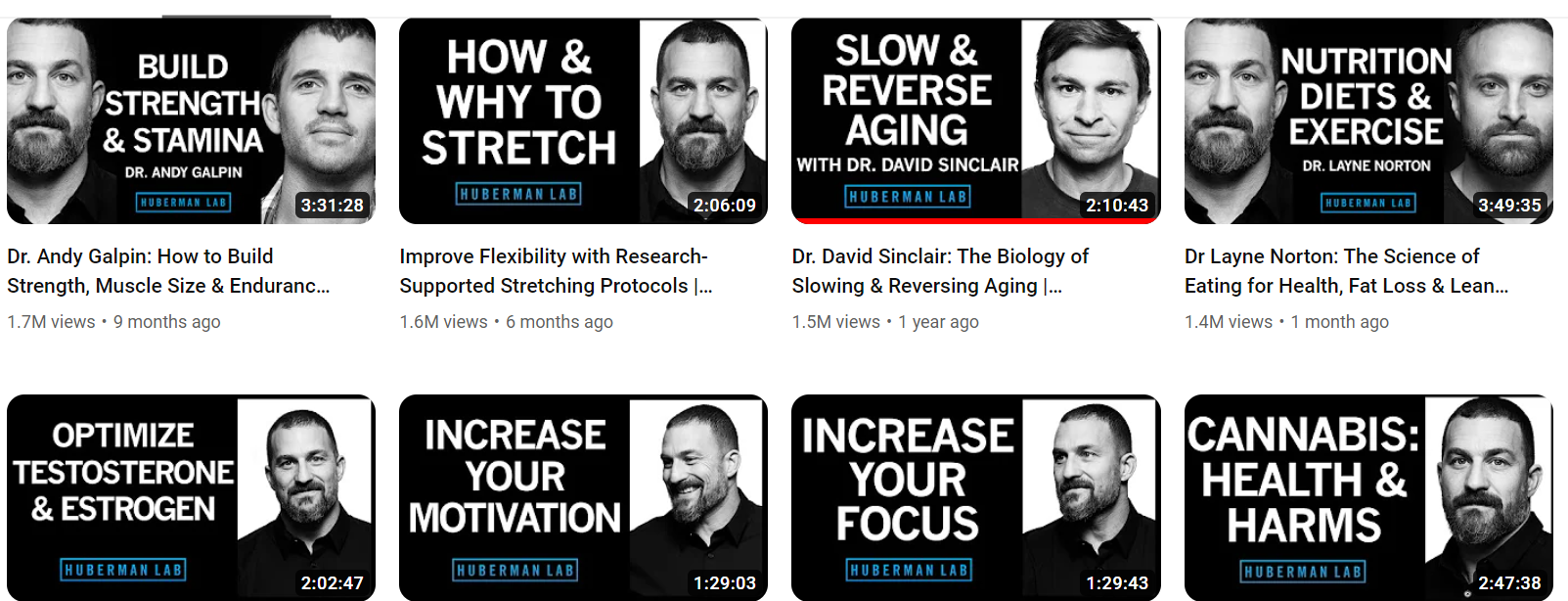
Picture a muscly, decorated, middle-aged Stanford professor with an encyclopedic knowledge of current health science and incredible ability to communicate it to non-scientists. What if, instead of pushing out esoteric academic papers, this jacked academic put his energies toward distilling the most relevant, cutting-edge health science and making it practical for normies like you and me?
In that case, you’d have Andrew Huberman. Every video he publishes essentially becomes the most helpful resource ever made on that subject.
Whether it's losing weight, unlocking motivation, mastering sleep or using cold exposure to your advantage, the end result of watching him is an "everyman's PhD" in your own mind and body.
Purchase
DIY 4-zone mini split system
If you have an old house like our 1920s gem (complete with microscopic ductwork), I would highly recommend a mini-split system. With our old AC condenser dead on return from France, we eschewed replacing it with a standard condenser and instead, put in a 4-headed mini split. Now, we have hyper-efficient climate control in rooms that previously got nary a trickle of conditioned air from the vent. Newer systems can also heat down to -10 degrees outdoor temperature or colder. We use ours year round!
If you are handy, I highly recommend a Mr. Cool DIY system as it costs ~1/4 the price of what a traditional installation would cost.
Habits
Sauna and Ice Bath

Whether your motivation has to do with heat-shock proteins and longevity (like reducing all-cause mortality by 40%), or just embracing winter while your stress melts away, I highly recommend finding a way to access a sauna. This year, I scored a free freezer and added a cold plunge to my "northern spa" backyard setup.
Guided Lectio Divina
Slow, guided scripture meditations in the age of fast information. The ancient practice, fresh to your Spotify account every day.
Wim Hof Breathing

If you haven't yet discovered him, Wim Hof is, at his core, a crazy Dutch man obsessed with cold water and intense breathing. For years, he was viewed as a bit of a kook- until he started achieving crazy results that continue to baffle scientists to this day (he is the man who directed his immune system to kill the injected E. Coli in the "Breath" passage above). I've done the cold for years, but recently started his breathing regimen, to good effect.
Applying for Credit Cards
With mini splits and new roof bills flying at us, we've been hitting the credit card applications hard. For just a few hundred bucks, we've booked round-trip tickets for the whole family to Montreal, a ten-year anniversary getaway to Italy, and even banked up enough Air France points for a family trip back across the pond in 2024.
Going without alcohol for long stretches
Between all the emerging literature on "Alcohol and the Brain" and a few "bad reaction" type experiences with alcohol this year, I've really put the substance (and its place in my life) under the microscope. Still figuring out what I'm going to do moving forward, but the days of "drinking without thinking" are over.
Moment
La France

Have you ever recognized one of the great seasons of your life while you were in it?
For me, that was our two months in France. Pastries and swims in the old city aside, the experience of visiting my wife’s home for two years, having our moms come with for the ride, and even being "adopted" by an extremely kind French family in Arles was nothing short of magique.
If I get hit by a bus tomorrow, at least we had France. This trip was all the things we wanted it to be and more.

Thought
"What has been will not always be"
I'm convinced that navigating your thirties is a worldview-altering experience. Maybe it was two babies completely rearranging my life in an instant. Or perhaps watching those babies grow to school age and all of a sudden running off and playing with their friends. Or maybe it's just watching the slow march of time slowly chip away at everything from dishwashers to my upper back.
The steady invincibility I felt in my twenties has been replaced by a sense of frailty and temporality in my thirties. These last few years have instilled the realization that things don't last, at least not on this side of the grave. If you're my age, you might even be in the tail end in some areas of your life.
As I walked through the MIA yesterday, this painting grabbed me by the lapels:

“Springtime of Life” - Jean-Baptiste-Camille Corot, 1871
I was overwhelmed by the feeling that I can only describe as fleetingness. As I meditated on this young girl, soon to become an old woman... and now long-buried somewhere in Europe, here was the thought I journaled:
"Oh to be young again" is a sentiment I'm starting to understand, even starting to feel. For the faithless, it must be a sad thought. But for those who hope for more than this “earthly tent", this feeling is another pointer to what should… and will be.
Hope this list finds you well. Cheers to 2023.

Travel with Young Kids - How?

We’ve learned a lot on our current expedition. In honor of the five years of our oldest kids, here are five “commandments” to chisel onto the itinerary of your vacation (with some fake King James English just for fun).
1. Know Thy Family
For some parents, a 12-hour flight to Japan is a serene voyage with their little angels. The rest of us are picturing an emergency landing in the Pacific to quell the inflight cage match amongst our progeny.
Trips should stretch us as a family - but they shouldn't break us. When it comes to distance and intensity, you know where that breaking point is.

No kids in this Japan picture
The same goes for when you take your trip and for how long. With school and work, use whatever unique levers you have to make as much space as you can. Have young kids? Great - pulling them for a few weeks of kindergarten shouldn’t ruin their chance at Harvard. For work, can you do it remotely? Can you aggressively hoard PTO or take unpaid time off?
What languages do you know? What friendly uncles with far off cabins do you have? Do you like urban or rural? What kind of house setup do you need?
Once you take stock of your family’s unique limitations and advantages, preferences and desires, you should have a trip that’s all your own. Maybe that’s six months in Tokyo - or maybe it’s an AirBnB two towns over. Whatever the case may be, make sure to design your trip with your family in mind.
2. Thou Shalt Travel Slowly
If you desire to travel with young kids, you need to learn to travel slowly.
Your trips are no longer jetting around as fast as you can to see the maximum number of possible things. Slow Travel means living your life in a new place and soaking that place in deeply as a family. In addition to being more rewarding (and often times significantly cheaper with weekly/monthly rates), slow travel is much easier on little people.
Slow travel can be illustrated in the difference between the two trips to Europe that I’ve taken.
Fast Trip 1 (Pre-Kids)
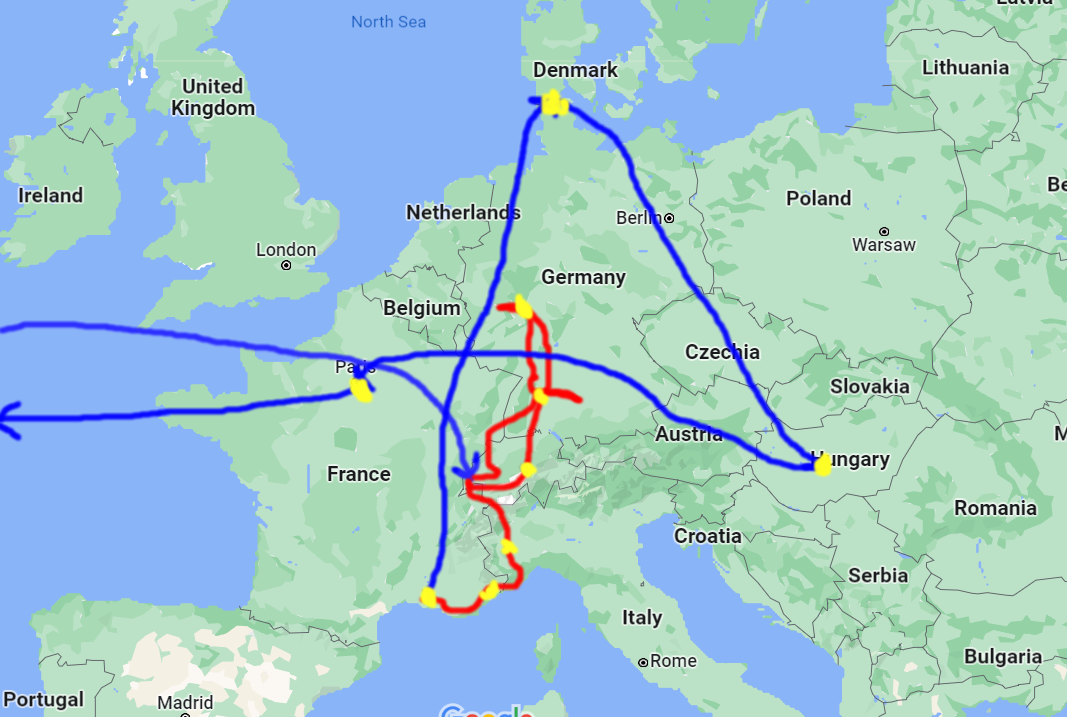
11 different stays across 6 countries. Many flights, much driving.
Sllloooowww Trip 2 (Mucho Kiddo)

2 Stays in 1 Country. Spread over twice as long as trip 1.
The need for bedtimes, play, and massive amounts crap don't disappear when your kids cross an ocean. Instead, these things become more important in a new place. And just think about it for a second - do you really want to be figuring out the pack-and-play, monitor, blackout shades, and nap plans in a different spot every single day?

The biggest gift you can give your kids (and yourselves) is to stay in the same place for at least a week.
For fast-traveling sightseers this is tough (for me too - right now I’m an hour away from Italy- Italy!). But for those who are disciplined enough to limit themselves, a richer experience awaits. For our France trip, that meant that we got to know the ins-and-outs of our city - from the best boulangerie in town to the guys at the local bike shop. By the end, our kids were leading us to all our favorite spots and calling it “Our French Home”. We even made some French friends and hung out with their family on the weekends! (That’s not going to happen when you’re flying around with other tourists to all the “must-see” monuments.)
To be specific, slow travel is:
Day Trips - Check out all the cool spots around your home base
Playgrounds - Prioritize kid happiness and fit the rest (cafes, pubs, museums, etc.) after
Recovery - You can have a crazy day! But then you better take it easy the next day.
3. Pay Not for Thy Flights
You thought that trip was expensive before kids? Try multiplying everything by 5. If flights are involved, I highly recommend you travel for free.
4. Thou Shalt Prep Like a Champion (Today)
If you're currently sitting on the plane wondering if you should have brought snacks and activities for your two-year-old, then let me just say… I'm glad I'm not you.
As soon as we booked the tickets (10 months in advance), my wife immediately got real intense about travel planning.

You ain’t the free-spirit solo-travelers you once were - and you need to up your planning game. So book your Airbnb and start packing.
Personal Soapbox: Hit Pause on Idealism

In "normal times" we try to be as screen-conscious, health-conscious, and every-other-kind-of-conscious as the next family. If there’s a place to bend some of those ideals (so that you can live up to others), it is on a plane, a train, or an automobile.
So for eight hours on the flight, my wife and I gave up our ideals for a “light parental Machiavellianism” - we did anything to get us to that next airport. We brought kiddie tablets. We brought their favorite snacks and treats. We did everything shy of slipping our kids the in-flight whiskey as a sleep-aid. And we made it.
5. Bring Thou Reinforcements
We brought two Grandmas to France and it's made everything from grocery shopping to bedtimes to date nights easier and more fun. Extra hands are the difference between a crazy trip and a crazy trip that approaches (though still rarely reaches) restfulness. Because in reality, there are two options for trips with young kids:
Your Family + Big Trip = Fun, enriching, and exhausting
Your Family + Big Trip + Grandma = Fun, enriching, and less exhausting

Now, if it came right down to it, I’d still travel even if we didn’t have help, but the potential gain is worth trying for. If you don’t have grandparents who are willing and able, all is not lost.
Who in your life might be a good travel buddy? A babysitter? A kid-loving friend? A preschool teacher? (seriously - we have friends who do this) Who would be fun and helpful with little ones? Could you buy (or travel-hack) someone’s tickets and lodging in exchange for a few days of childcare per week? With a little creativity, you might be surprised how doable this is.
Summary
There you have it. Henceforth, thou, thine kin, and thy quest shalt not be vanquished!
Know Your Family. Travel Slowly. Travel for Free. Prep Like a Champion. Bring Reinforcements.
In other words, Gird Thy Loins - and then have fun, you adventurous family.
You can do this!

Travel With Young Kids - Why?
So I guess we’re living in the south of France right now.

A few weeks ago, we bid adieu to the US and chartered a plane to the land of baguettes. After a blur of trains, exhaustion-induced naps, and a fitful night of jet lag, we woke up to soft glow of Provencal sun thawing our frozen Minnesotan bones.
For my wife and I, it’s been a breath of fresh air for our "parent-tired" souls.
Resurrecting Adventure
Personally, it’s been the synthesis of two seemingly-opposing sides of me: Adventurous Brett and Parent Brett.
For Adventurous Brett, the need for big, unique experiences lies somewhere between oxygen and food. But just as I was hitting my stride with world travel in my twenties, I kicked off my thirties by having three kids in two years (Three kids. Two years. … yep).
In the blink of an eye, I transformed from world-traveling-wannabe-real-estate-mogul to housebound-changer-of-diapers. There’s been joy these last five years but let’s just say Adventurous Brett has been on life support.

So despite the real challenges that traveling with little people presents, we decided that now was the time to emerge from the “baby years cave”, peek out through our dark-circled eyes, and see if the world was still there - even though we’ve still got three kids under age six.
For some, a big trip with young kids is obvious (“OF COURSE that's a great idea. We're on our way to Patagonia with two toddlers in tow right now!") For others, particularly parents in the throes of potty training, pre-school, and all the rest, the value may be less obvious.
Isn’t a trip with kids 10x the hassle (and cost) and 1/10th the fun?
I won’t sugarcoat it - this trip is not sipping Rosé on the beach all day while my kids fan me with cool air and appreciation. But as a man who types this sentence with hot espresso in hand and a cool Mediterranean breeze on my face, I can tell you that it's been worth it. Here’s how we thought about it.
Why We Traveled with Kids (Four Reasons)
1. This is the Time!

Two super-Grandmas overlooking the Luberon Valley
In my last post, I made the point that windows of opportunity don’t last forever.
Would it be easier to travel with older kids? Maybe. Sure, flights without tantrums and minute-by-minute-needs would be nice.
On the other hand:
How long until summer basketball and can’t-miss friend birthday parties takes over? (“I don’t WANT to go to Paris! I want to go rollerskating at Jonny’s party!”)
How long will your remote work situation last? How long will credit card companies dole out insane bonuses? How long until the next pandemic/invasion/etc/etc makes your trip impossible?
How many more years will grandparents have the ability and desire to tag along?
The trip you’ve been dreaming of for your family might be easier tomorrow - or it might not.
2. Parent Space
Life is tough. For me, my thirties have been a transition from "innocence to experience".

Hint on our town: It’s where a certain famous painter famously cut off a certain hearing organ…
Whether your life includes a year with reflux-laden twins or just surviving the isolation of a global pandemic, life puts all of us through the grinder at some point.
How do you stay positive and intentional in difficult times? How do you keep your marriage afloat when date nights have been replaced by passing screaming babies back and forth? How do you avoid the learned helplessness that threatens whenever we feel a loss of control in our lives?
A book could be written on the topic of walking well through life’s difficulties (here’s a good one).
For me, a good place to start is simply with space. When we travel we get a chance not to escape our lot in life, but to step back and evaluate what our lives have become- the good, the bad and the ugly.
As I watched the sun rise over the Rhone last week, I remembered back to those difficult early days of being a parent. I reflected on how far we'd come. I asked God what might be next - and I was open to an answer.
How do you get that kind of space to work on and not just in your life?
3. Opportunity to Grow
After 20 hours of trains, planes, and automobiles, my family was exhausted. We had arrived minutes earlier in our destination city’s train station. The last leg should have been a peaceful 20 minute walk along the river to our new home. Only it wasn't peaceful. It was raining. And it wasn't twenty minutes. Turns out with kids (especially tired, wet kids) you need to triple the Google Maps estimate.

To make it with all of our luggage, we needed our boys to not only make the 1-mile walk in the rain but also carry their suitcases while doing it. If this had been a few years ago, my boys would have simply sat down on the sidewalk and cried - and we would have been screwed.
Instead, our hardy little men recognized what we needed them to do, dug deep, and they made the walk. Through soaking rain, through up-all-night-weariness, they did it. I was amazed and I was proud.
On this trip, we’ve all been forced to be flexible, try new things, and even rely on one another. This has been a major life experience for all of us.
And with shared experiences being the glue that bonds people together, what greater gift can you give your family?
4. Beware the Coast
I'm not talking about the Cote D’Azure here.
The first chunk of life is usually where all the action happens. The nature of the school years is one of constant dynamism - a constant barrage of new friends, locations and lessons learned.
Beyond the classroom, things tend to slow down. Whether it’s marriage and kids or just the slow inevitability of age, the vigorous spontaneity of youth often gives way to an unplanned, unspoken "coast" as we float down whatever stream our twenties have brought us to.
But what if it didn’t have to be that way? What if there was a way to stay flexible in the face of monotony? To stay intentional even while more and more of our days give way to obligation? What if we could reverse the shrinking of our idea of “possible” - not just for us, but for our whole family?

Traveling with kids is more than just a few fun pictures next to the Eiffel Tower. Travel jars us loose from the idea that our lives are some passive tram ride (which, let’s be honest- parenting can totally lull you into). A new place is often all that we need to remember that we are active participants on the open road of existence, partnering with God to make a difference in our families and a make dent in this world with the years that we have.
Conclusion
Have I convinced you to consider the crazy idea of traveling, even and especially with those high-maintenance love sponges we call our kids?
I hope so. But even if you are brave enough, I should tell you - there are some essentials you’ll need if you want to avoid mid-flight meltdown or regret in Rejkjavik.
That’s what we'll tackle in our next post.

Are the Big Questions Dead?
“Am I living it right?”
- John Mayer

"My purpose is whatever I make it”, "What does it matter if God is there?" "Haven't we moved beyond these old questions?"
As quickly as these sentiments have seeped into the modern psyche, it's worth noting that “the big questions” about meaning, God, and reality are still, well… big. There’s (still) a lot at stake.
It's not that everyone has always agreed on answers to huge topics like purpose and the existence of God. On these, men and women have come to all kinds of conclusions. But ever since Socrates reminded us that “the unexamined life is not worth living” thoughtful people have joined in common chorus around one big idea: the meaning of your life and nature of reality are worth figuring out.
And yet, most of us live without asking big questions. We go to church or mosque or skip religion altogether without asking “why?”. We believe what our parents asserted or we just drift with whatever our culture is pushing at the time.
It’s tempting to pass topics like meaning and God off as “esoteric”, but the reality is that these questions lie inches below the surface of our daily decisions, experiences, and longings.
Stumbling into Depth
Underneath “What should my major be?” or “Should I have kids?” lie whole root systems of assumptions which can only be probed with deeper questions.
“What is a job for?” “Why should I (or anyone) go through the risk and pain of having kids?”
Now we’re getting somewhere. Brave souls can dig one level deeper.
What is the purpose of my life?
Is there some objective meaning to my life? Or do I make it up myself?
But where would objective meaning come from? There is one candidate…
…Does God exist? What is he like? What might he want from my life?
For some of us, this just got real uncomfortable real fast. Like any good Minnesotan, I too sought to push aside “the big questions” - or at least keep them to myself.
Eventually, my Scandinavian heritage would yield to my inner engineer. In trying to be intentional with my life before I lived it, asking big questions became necessary.
I’m not trying to convince you of an answer. My contention is simply that big questions are not dead. They are worth asking.
Here are a few reasons why.
Ask Big Questions to Clarify Your Purpose

“Begin with the end in mind.” Stephen Covey's second immortal habit is as obvious as it is rare. Covey argues that no project, business, or relationship should be launched without first asking what end are we are trying to achieve, because the steps we take will follow from our purpose.
The same goes for life.
And yet, most of us spend more time planning our vacations than planning our lives. Maybe that’s because to plan our lives, we need to decide what life is - and this can be difficult and scary.
Our present culture tells us that "life is whatever we want it to be". This might be true. Or it might be a accidental byproduct of the "expressive individualism" that rules our tiny, privileged time and place.
To find out we have to ask.
2. Ask Big Questions So You Don’t Miss Out
I’ve noticed a funny theme in my bible reading lately. I’d call it “The Life within life”. It’s all over the book, but let’s just look at a couple passages that become weird when you stop to think about them.
Man shall not live by bread alone, but by every word that comes from the mouth of God.
-Jesus, Matthew 4
Isn't life more than food and clothing?
-Jesus, Matthew 6

Wait, what? We all know people who seem to get by just fine on “bread alone”, without a care for “every word that comes from the mouth of God”. We know people who are very much “alive” with mere “food and clothing” and a full 401k, etc. These are people whose primary concern is their physical needs now and in the future. That’s normal. It’s common. It might be you.
Jesus is saying that you can be alive while at the same time missing out on Life. He’s claiming there is a deeper dimension to what life can be.
Is he right? Or is he full of it?
To find out we have to ask.
3. Ask Big Questions to Understand your Foundations
We all believe in things like free will, morality, and human rights. We can't help it. But for these features of reality to make any sense, we need God.
We’ll all take moral stances in our lifetime, both big ("Putin has no right to invade Ukraine") and small ("She has no right to treat me like this"). We'll assume people matter. We'll act like decisions are real.
Are we standing on solid ground when we do this? Or are we just being illogical robots living in cognitive dissonance?
To find out we’ll have to ask.
4. Ask Big Questions While You Can

Voyager’s iconic picture of Saturn’s rings (750 million miles away)
I just read a fascinating story about the Voyager space mission. The project stemmed from a crucial discovery by Gary Flandro in 1964. Flandro found that Jupiter, Saturn, Uranus, and Neptune align once every 176 years, making a long-range mission possible. Also - the next alignment was in just thirteen years. NASA frantically built Voyager and launched it just in time. Any later and we’d have missed the window.
We want to believe that timing doesn't matter. That life will wait around for us and that we'll always have the opportunity.
The Voyager story teaches us that windows of discovery don’t last forever.
And that's exactly how the Bible talks about life.
The picture that emerges from the ancient book is that now is the time to figure out what life is about (e.g. here, here, here). There are consequences for the answers, both now and later. Is that right? Or a bunch of religious nonsense?
To find out we’ll have to ask.
Conclusion
Friend, I don't know where you're at on this journey. Maybe you've already reached conclusions on the big questions of God and meaning or maybe you're asking them right now. Perhaps you have asked the questions but you’ve drifted away from the answers you know to be true.
Or maybe you've lived your whole life climbing the ladder in front of you without asking if it was the right one.
Big questions can be scary. I can't say where you might end up. But you never know - until you ask.

The Bible in 1000 words (tl;dr)
For those who didn’t catch it in Sunday School…
The same people who tout the virtues of being well-read skip right past the Bible, the most popular book in human history. We’ll binge-read biographies about some hot new tech CEO while skipping the one about the most important figure in Western history: Jesus Christ.

The bible comes out with guns blazing.
Within the first sentence, we are hit with some huge statements:
There is a being called God
By the end of the first chapter, it's clear that in some way, this God made us too. This powerful, worldmaking being has condescended to create partners to rule with him. He makes them like himself and places them in a garden to create, build the world, and have a tight-knit, life-giving relationship with him.
For a while, things are, well… perfect.
Then things go very wrong.
Betrayal
The humans betray God.
Just three chapters in, the whole thing starts to unravel as the first humans are deceived into rejecting God as God, forgoing his ideas about good and evil, making themselves the arbiters of right and wrong. In so doing, they knowingly disobey their maker, their friend, their God.
The humans survive... but something at the core of their being dies. From here on out they will be deeply, irreparably, broken.
These first humans must leave the garden, the fulfilling work, the knowing and being known, the very God-closeness that defined their once-beautiful existence.
Outside the Garden
Outside the garden, life goes on, along with their mission to build the world. Humans continue to bubble over with the goodness given to them at creation. They live and work and make. But there is a darkness that will haunt the human project from here on out.

Outside the garden, work is laced with misery and oppression. Relationships are fraught with brokenness and misunderstanding. People die.
And it quickly becomes clear that whatever this curse is will be passed on.
The first couple’s oldest son kills his younger brother in cold blood. The fratricidal son founds a city... with values that somehow reflect the deep brokenness of its founder.
The next thousand chapters or so document the unfolding - and unraveling - of the ongoing human project. People spread out and expand, technology progresses, culture is made, but at every turn they are dogged by the selfishness and death that the humans can't seem to shake.
Is this world starting to sound familiar?
The Central Question
Here emerges the central question of the bible:
Can what is broken be fixed?
Is there something we can do to mend our broken relationship with God? How do we fix our dying bodies and crooked souls? Can the world be made right?
Human Inability
By the end of the old testament, it's clear that humans will not be able to fix their fundamental problem. Despite God choosing a people (the Jews), giving them deep experiences of his goodness, a perfect set of moral and civil laws for the time, and even land flowing with "milk and honey", it's clear that God's chosen people are just as broken as everyone else.
When the new testament picks up, God's disobedient people have been shattered and scattered and the progress-amidst-brokenness dynamic has reached its apex. The Romans are in charge.
In many ways, the Romans personified the best and worst of what humanity could be. The same people that perfected the republic, gave us Seneca and built still-standing monuments also mastered the art of "might makes right", enslaving conquered enemies and glorifying the torture of crucifixion.
This was when God moved in to fix the problem himself.
The Hero
Jesus was different. Born into Roman-occupied Israel, it was said that he didn't sin like the rest of us. It was said that miracles followed him. It was said that somehow... he was the Son of the Creator God himself.
Jesus loved people regardless of their social status or worthiness. He loved them in spite of their sin.
If there was one group he was critical of - it was the religious establishment.

In apt irony, the confluence of the heights of human power and will - religion and state - conspired and executed the innocent embodiment of love, joy, and life. They killed Jesus.
If the story ended there, we wouldn't be talking about it. But a few days later, the same people who watched him die claimed that they saw him, that he was alive.
They claimed that he was back from the dead and that his death and resurrection had accomplished something.
The Death, The Fix
They claimed that Jesus’ death was the fix that the world had been looking for since the day we left the garden.
That when Jesus died, he had taken on himself our sin and shame, paid the penalty for it, finally bore the wrath that we deserved, and opened up a way to be with God once more.
He had opened a way back to the Garden - back to God himself - and anyone could walk through it.
The way was not a physical path. It was a path for the human soul. One need simply believe and, in a reversal of the first sin, turn from their own ways - lives defined by themselves - back to God.
He said that those who make this move of the soul would gain access into a new way of being, the way of the coming kingdom, even while the world is still broken.
A New World

Finally, Jesus made it clear that while the world itself would stay broken for some time, one day he would return and usher in a new age, an age where somehow everything would be made right. All the brokenness and ugliness would done away with - and the new world, now absent of sin and suffering and oppression would be more beautiful for having been through all the darkness that had come before it.
In Sum
There is a God who made us. We turned away from God and in so doing broke ourselves and the world. Jesus died to take the penalty that sinners deserve, to fix our biggest problem - our alienation from the one who made us. The reason we are still talking about Jesus is that he came back from the dead.
We can be reconciled to God and find a new way of living by opening our life to him and turning away from the sin that has ensnared us since our first parents (trying to be god over our life and world). Jesus will come one last time to remake the world along with those who are reconciled into his life.
That is the story of the bible. And if it’s true, that is good news.
Further Resources
Book: The Drama Of Scripture
Video: For normal, modern readers looking to understand the important (but difficult) book that is the bible, I can’t recommend The Bible Project enough. Here’s their video on this topic: “The Story of the Bible”.

In 1832, Hokusai painted his famous “Thirty-six Views of Mount Fuji”. With each painting, he gave a fuller view of the mountain- and his own perspective. Here’s one of my “36 (or so) views of the world”. It’s an attempt to illuminate an aspect of the present by telling a story of the world through one lens. This essay covers what I think is the ultimate meta-narrative: God’s.

Free Travel FAQ
In my last post, I introduced the concept of using credit card signup bonuses to travel the world for almost nothing. If you're like me in the beginning, you've probably got some questions and concerns. Let's take a look at some common ones.
This sounds scary. Won't this ruin my credit score?
This strategy, used over time, will help your credit score. Mine has been in the 800s for years. The fear around signing up for credit cards comes from not understanding how your credit (or FICO) score is calculated. The factors that go into your score are:

On-time payment history (35%)
% of total credit used (30%)
Length of credit history (15%)
Credit mix (10%)
New credit (10%).
After getting a new card, here’s what happens:
Small dings
Credit pull. (any time you pull your credit there’s a tiny ding). Tiny impact that lasts < 1yr.
New Credit. (because you opened new credit) Minor impact as it’s only 10%. This impact goes away if you cancel card eventually.
Length of Credit History. Minimal impact that becomes negligible if you have an older card that’s been around for a few years. This impact goes away if you cancel card eventually.
Why it goes up
On-time payment history. This is the biggest contributor to your credit score so when you pay on time with a new account you are significantly helping your credit.
% of total credit used. This is the second-biggest contributor to your credit score so when you add new credit, your score goes up (as your utilization % has just gone down).
In the end, your credit should go up. This strategy isn’t much different than what “credit repair” companies do to help their clients increase their credit score.
Who should do this?
People who:
Will for sure pay off their credit cards in full and on time.
All benefits are negated if you end up paying the insane 18% interest or spending more than you otherwise would.
Have a decent credit score
The huge bonuses require an excellent score, but if that’s not you, applying to some smaller cards/bonuses will help you get there.
Can handle some details, are flexible and willing to learn
You’re adding some complexity to your big purchase and your travel. Over time, though, you’ll be able to do it without thinking.
What do I do with the card after I've got the bonus?
You may want to keep using it. For instance, I've kept my IHG card over the years despite the $49 annual fee because they shoot me a free night every year that we use as an excuse for a fancy getaway.
For other cards, you may decide that the long-term benefits aren't worth the recurring annual fee. A good time to close these accounts is 10-12 months after applying for the card.
What if I'm not that into travel?
As much as I love to travel, I get this. After having kids, our appetite for travel all but vanished. The cool thing is that the same habits that get you free travel can also simply net you cash rewards.
Those 100,000 Chase rewards points from last year are also worth $1000 cash. Of course, they could be $2500+ in travel, but if that's where life has you, feel free to take the thousand bucks!
How crazy can I go here? (How many cards can I do at the same time?)
More than you think, but not infinite. The main rule that's come out in the last few years is the Chase 5/24 Rule. Here's the rule:
To be accepted for a Chase card, you can't have opened more than five cards (from any cc company) in the last twenty-four months.
Chase cards are usually the best, so it's good to plan around this (either 2 cards/year or a big splurge and then a long break)
Can I do a card multiple times?
For Amex cards, no (1 bonus per card per lifetime). For Chase cards, yes, after about 4 years. More details here.
Can my spouse sign up for 2x the goodness?
Yes. One great benefit of being married is that all this free travel can be doubled. When you see a good bonus, you can sign your spouse up too for 2x the points.
Do you have any more examples of how you've used this strategy?
I suppose this is where I confess to my exploits to get you fired up enough to try it.
Internationally, I’ve notched free trips to Peru, India, and Europe.

My intense 2015 spreadsheet from our free-flight, mostly-free-hotel, free-rental-car trip to Switzerland, Germany, Italy, France, Denmark, and Hungary
Domestically, I’ve logged free trips to Alaska, New York, Los Angeles (countless times), Milwaukee (countless times - kids under 2 fly free and boy did we know it), San Francisco, Denver, Florida, Charleston, and Minot.
We've used our hotel points and free nights for everything from local getaways to $600 suites in the heart of Paris.
Speaking of free lodging…
I’ve still got to pay for hotels/Airbnbs, though. Is there any way to do those for free?
After booking free flights, many will be content to pay cash for their lodging. For tightwads with remaining gusto, you may wonder: how can I get free lodging too?
There are two ways that I know:
Free Lodging Option 1: Repeat the Process with Hotel Cards
At the time of writing there's an IHG hotels card (think Holiday Inn, Crowne Plaza, and more) that gives you 125,000 points for signup - along with a free night every year. Or there’s a Hilton card that lands you 130,000 Hilton points.
If you are able to meet the spends, this creates a powerful combo of free flights and free hotels.
Free Lodging Option 2: AirBnB Your House while you're gone
By now, most of us have stayed in an AirBnB. Have you ever considered hosting while you're gone? While you're travelling, the reality is that your house is now unused. If you have time to clean it before you go (and move out any sensitive documents, etc), you could have someone pay to stay in your house, offsetting the cost of your own stay.
This option gets interesting as you may be able to net positive income from your trip (i.e. getting paid to travel).
What is the best card for frequent traveling?
For frequent domestic travelers, the holy grail is the Southwest Companion Pass.
At the time of writing: If you get the SW personal card (40k points) and SW business card (80k points) at the same time you will have 120,000 Southwest points. In the process of meeting those spends, you will add another 6,000 points. This gets your total to over 125,000 points in a year which automatically gets you the Southwest Companion Pass for the rest of the year and the following year.
The Southwest companion pass is a reusable BOGO pass for flights. When you have the pass, every flight you book with cash or with your giant point stash nets you another free ticket.
tl;dr: For those who can meet the spends early in the year (January being the best), they essentially have free travel for two years (for two people).
And you can repeat it in two years with your spouse. And then you can do it in four years again…
Isn't travel hacking harder to do nowadays?
Anyone who's been doing this for five years or more could regale you with tales from the "glory days" (ask me about my free month in Europe some time).
This is a game that's always changing and it has gotten marginally more difficult. But if I can still get a family of five to the south of France and back for nearly free in 2022, I'd say it's still a game worth playing.
Where can I learn more
This is just an intro post to an entire world of free travel. For more, check out:
(why are they always guys? What about points girls?!)
How do I parlay my big expense into free travel and help support this blog?
Just use the links on my credit card page. One card signup funds this blog for three months.

You Can Travel for Free
Learn how to play a new game…
This is a brief intermission from the “Faith in the 21st Century” series we’ve been working through. We’ll be back in the deep end soon, but for now, it’s time to travel!

Back in 2012 some friends invited me on an epic trip to Peru. I wanted to go so badly, BUT the $1300 plane ticket (plus everything else) was just too much for my starting salary. With a stack of loans taller than the Andes, I was so sad that I wouldn’t be able to make the trip. Except…
I went anyways.
The key was not “YOLOing” my way into debt, but rather in stumbling upon a strategy that enabled me to be “young, wild, and free” without going broke.
Mystery booth
Before a work flight, I noticed a credit card booth at the airport with a sign that read: "Earn 50,000 bonus miles upon signup". At the time, I ignored it (sounded too scammy).

It was only when faced with my Peru FOMO that I remembered that booth. After a simple search on the airline's website, I learned that 50,000 miles was enough for a round-trip to Cusco, Peru on those exact dates. So… I signed up for the card.
The crazy idea worked. I scaled the Andes, volunteered with a non-profit, and even rode a scooter through the Amazon. I deepened friendships and gained perspective on big decisions (I was married a year after the trip, for one).
Best of all, I did the three week trip to Peru for very little money, with no negative consequences on my finances.
Rinse and Repeat
Emboldened by my South American experience, I repeated the process. Over the last ten years, I've gone everywhere from India to Alaska. In a few months, we’ll be in France.
The thing is… I still haven't bought a plane ticket (with money).
What does this mean for you?
I’m not sure if your hobby is golf, poker, or underwater basket-weaving - but let me share another game with you. This game has rules, details, and strategy too - but it rewards you with free travel for life.
Here’s how you play.
How to Travel For Free
o. Cue: Big Upcoming Purchase
In the free travel game, you get huge miles when you spend a certain amount on a new card (e.g. $2000 in 3 months). Therefore, the process kicks off when you know you’re about to spend a big chunk of money. Rather than putting that new Peloton (or medical bill or whatever) on your standard old 1% back card, you instead get a new card(s) with a juicy signup bonus and put the big purchase on that.
For example, my big purchase last year was finishing my basement. By putting Home Depot purchases (and even my drywaller) on new cards, I realized that I could probably do a pretty big trip.
1.Pick a Destination
When you know you’ve got a purchase coming, you should pick a destination, preferably one that makes your heart beat a little faster :)
For my example, I recognized that with the size of my big purchase I could get ambitious. I asked myself: could I get my whole family to the French Riviera?

2. Create a Card Plan
Now that you’ve identified a purchase and picked a destination, we need to map a “credit card route” to get there.
Figure out your Airline Options
First, we’ll figure out how many “miles” it will take to get to your destination. Just go to a few airline sites, check “book with points”, and write down what you find. For example, here’s a 17,500 mile trip to Los Angeles.

This is Delta. Feel free to check out American, United, or any other airline that goes to your destination.
Card Options
Second, let’s brainstorm some card possibilities to earn those miles (if you’re confused, the next picture should make it clear.) To find the best card bonuses, search Google, check out my credit card page or play with the Mad Fientist’s tool.
You should now have airline options and corresponding credit card options. Now let’s play the matching game.
Here is a real-number example for an LA trip (with a box around the combo I would choose):

Lots of options, but I’d go United - and bring two friends! (50k covers 3 United tix!)
Black-Belt Example: Five to the South of France
For our upcoming France trip, the best airline option was Air France at a steep 300,000 Air France miles.
Thankfully, Chase and American Express were foaming at the mouth for new customers in early 2021 - and their points transfer to Air France. We obtained the needed miles with just three cards.

Me: Chase Sapphire (100k), My wife: Chase Sapphire (100k) and Amex Platinum (125k)

3. Apply, Spend, and Book
Ok, by now you’ve got a purchase, a destination, an airline to get you there, and a credit card (or five) to get you the needed airline points. Congrats! You’ve done the hard work. Now, it’s simply time to execute the plan.
Go ahead and apply for the cards. Don’t be nervous - we'll talk about credit scores and all that in the FAQ. You’ll be accepted on the spot or you can call them if you need to.
When the card arrives, activate it and make your big purchase! (Sign up for autopay too so you don’t forget.)
Once you’ve spent the $, your bonus should show up in your account in a few weeks.
Now go ahead and book your trip with the miles!

Oh yeah, and last step: Go!!!

Conclusion
Travel can be fun, restful, or even life-changing.
In the past, world travel required significant costs, and therefore trade-offs, with other financial goals. Today, that’s different.
Eager credit card companies have made a way for organized middle-class Americans to see the world.
If you are new to free travel, I know you've got questions. Click on the left for some answers. Click on the right to try it out (and support the blog at the same time)!
Where are you headed next?!
or to grab a card…

The Making of Everything
"The first question that should rightly be asked is, "Why is there something rather than nothing?"
-Gottfried Leibniz

Before you read this essay, pause. Breathe. Look at your hand as it touches your computer or phone. Feel your arms and legs. Look around the room to see light as it hits your surroundings.
Your body, your thoughts, you are here on a giant ball we call earth, spinning out into an incomprehensibly large span of cold, heat, light, and matter that makes up the known universe.
Where did all this come from? Why is there anything at all?
You wouldn't be the first to ask. The question was first penned by the Greeks, but my suspicion is that it's been asked by thoughtful people since the dawn of human history.
Let's think about it.
Does the Universe get a Pass?

First, can we assume that everything (including the universe) has some sort of reason or cause for its existence? It seems far more likely than not. Everything in our experience has a cause. We exist and we have parents to thank. The trees in your yard are a result of seeds, water, sunshine and time. Science itself proceeds under the assumption that things are the way they are for a reason - and we can inquire what that reason is. Even those old sparring partners, Ken Ham and Bill Nye, can at least agree there are causes for the things we find in the world and we can know something about those causes.

Universe:
Is the universe itself exempt? Or would something that big, that all-encompassing cry out for a reason even more? The converse - that things exist without reason or cause and we shouldn’t ask why they exist - strikes me as a little absurd… and at least unlivable in the real world.
The universe must have a cause just like anything else - and Plato and Aristotle agree (phew).
This leads to a second question - what would cause a universe to come into being?
Making a Universe
Whatever made the universe is powerful beyond our wildest imagination. The hubble deep field tells us there are roughly 125 billion galaxies - and those are just the ones we can observe. What kind of power could make these?
Second, the cause would have to exist outside of space and time as neither space nor time (by definition) existed before the creation of the universe.

This seems to be consistent with modern physics, which tells us that it wasn't just matter that was created in the beginning but also space, time, and the laws of physics themselves.
In short, if the universe had a cause, the cause would be mind-bendingly powerful, eternal, uncaused, and immaterial (and possibly personal).
So what does all of this mean?
Let’s dust off our thinking muscles and turn those little paragraphs above into premises. Smash them together you’ve got yourself an argument (the cosmological argument to be exact - you philosopher, you).
The Argument
The summary would look something like this:
Everything that exists has a cause
If the universe has a cause, that cause would be powerful beyond imagination, eternal, uncaused, immaterial, (and possibly personal)
The universe exists

The necessary conclusion of this argument is that the cause of the universe is a powerful, eternal, uncaused, immaterial, (and possibly personal) entity. We haven’t “proved” the God of the bible by any means, but we’re getting warmer.
You might like that conclusion or you might not. The conclusion follows from the premises and from my seat, to deny the premises is to land in some weird places (philosophically and practically).
You might have questions - objections, even. To summarize a few objections in a borderline-offensively short way, I’ll just give some quick thoughts on these.
Why does God get a pass on being eternal and uncaused and not the universe?
If you were paying attention, premise 2 (the one about uncaused, eternal, etc.) wasn't put there because we need to exempt God but because that's the sort of cause a finite universe would require.
What about the multiverse?
A few issues with multiverse theory, not the least of which is that we’d now have to explain multiple universes.
What about Quantum Theory?
I love quantum theory, and I hope to dive in someday with the blog. For our purposes here, if you’re banking on quantum fluctuations to create everything from Andromeda to Dr. Seuss, my first question would be where the energy-dense quantum vacuum came from (along with the laws to govern it)?
Conclusion
For me, the cosmological argument has always been persuasive at a gut level. To say that there is no reason for the existence of the universe seems as unlikely as it is unsatisfying.
I wouldn’t call this a “proof”. I don't really believe in proofs, especially for God. To me, it’s just another pointer.
Over the years, thinkers have found ways to try and wiggle out of the conclusion (see Hume for old objections, Krauss for new ones). You'll have to judge if they've been able to do so.
For this armchair philosopher, if it's good enough for Aristotle (and Aquinas and Anselm and Descartes and Leibniz), then just maybe it's good enough for me. Or as Glen Scrivener put it recently:
“Christians believe in the virgin birth of Jesus. Materialists believe in the virgin birth of the cosmos. Choose your miracle.”

History’s Greatest Linchpin
And if Christ has not been raised, our preaching is useless and so is your faith.
-The Bible
The Only Question That Matters

If you want to disprove Christianity, don't go to the age of the earth, evolution, or weird stuff in the bible- go to the resurrection. It's Christianity's self-described linchpin.
But in 2022, how much can we know about something that happened two millenia ago? Turns out, a lot. The resurrection story isn't just unique in what it claims, but also in its early and prolific historic documentation of those claims. No one’s asking you to “just have faith." You’re going to need your brain for this one.
It turns out you don't need to believe the bible is an inspired book to believe in the resurrection. Feel free to treat the bible like any skeptical scholar would treat it - as a historical document with numerous claims of varying reliability.
So which biblical and extra-biblical claims are well-founded historically and relevant to the all-important "back from the dead” question? Here are the cliff-notes, an honorary degree in resurrection studies from Average Joe University. Turns out there are a few basic facts that scholars of various theological (and a-theological) viewpoints agree on.
The Facts
Here are some largely agreed upon facts from New Testament Studies:

1) That Jesus died by crucifixion;
2) That very soon afterwards, his followers had real experiences that they thought were actual appearances of the risen Jesus;
3) That their lives were transformed as a result, even to the point of being willing to die specifically for their faith in the resurrection message;
4) That these things were taught very early, soon after the crucifixion;
- Gary Habermas,“Minimal Facts on the Resurrection”
There’s nothing explicitly supernatural here. Some scholars might disagree with one or two, but they fight an uphill battle in opposing the established consensus view on each one.
The million dollar question, then, is what story best makes sense of these facts?
We don’t need blind faith - we need (our inner) Sherlock Holmes. We need to construct hypotheses, test and eliminate, and choose the best one. Over the years, many have done just that.
Sherlocking the Resurrection
We should prefer natural theories over supernatural ones. So over the centuries, naturalistic reconstructions (accounts without God or the supernatural) have been put forth to account for these facts. They fall into four buckets:

Legend creation: The story was changed / embellished over time.
Mass hallucination: Disciples only thought they saw Jesus back from the dead.
Jesus didn't really die: It just looked like he did. This is actually the Muslim take, FYI
Conspiracy Theory: Disciples stole Jesus’ body and lied about it.
To be “blogpost-level-concise”, these theories all suffer from fatal flaws.
Legend creation: There just wasn't enough time that passed for legends to develop.
Mass Hallucination: While hallucination is very much a thing, mass hallucination is not.
Not really dead: Roman soldiers were experts on human death. Also, crucified people left in a cold dark tomb don't recover without medical help. Here’s a dramatic youtube refutation of this view.
Conspiracy: Grief-stricken, disillusioned groups of fisherman and tax collectors don't come up with paradigm-shifting religious ideas, pull off the greatest conspiracy of all time, and then die for ideas they know are false.
An Inconvenient Truth
"When you have eliminated the impossible, whatever remains, however improbable, must be the truth."
– Sherlock Holmes
Of course, there is a theory that makes perfect sense of these facts, but the theory comes loaded with implications for the universe… and our lives. And we don't always like that.
Most of us would rather suppress the truths that are too uncomfortable to handle, particularly those about God.
The theory that makes sense of the facts is that Jesus died and then came back from the dead.
If that is the case, his life and teaching deserve a closer look.
Conclusion
At the beginning of my search, I thought I needed to figure out if I believed in God first, and then peruse the entire canon of world religions, painstakingly working through Muhammad, Jesus, Buddha, the bible, the problem of evil and suffering, and all the rest.
For me, it ended up working backwards. In zooming in on the resurrection of Jesus, I came to believe that Jesus had really died and had really come back from the dead.
The implications of that one conclusion informed many of the other questions I had. The existence of God, the afterlife, and the truth status of other philosophies and religions all found their answer in who Jesus was - the resurrected Son of God.
The answer gave me some rope to keep believing when I came across difficult things in the Bible or the world that I didn’t like or understand. Most importantly, it made me want to listen to what the guy said.
Of course, this is just my take on the all-important question. We must all answer the question Jesus asked Peter all those years ago.
Who do you say that I am?
Comment
What are your thoughts on the resurrection?
Subscribe
Read More
Popular: Case for Christ (it’s also a movie now, apparently)
Academic (long): The Resurrection of the Son of God

A Shortcut for the Spiritual Search
“Anyone who really wants the truth ends up at Jesus”
-Johnny Cash

Jesus said he’s the way, the truth, and the life. For me, he was the shortcut too.
After my summer of doubt, I was consumed by a question: How do you go about figuring out which religion or philosophy is true when there are so many out there?
It had dawned on me that the menu of religious and philosophical options is less like Chipotle (“black or pinto?”) and more like a Chinese restaurant (“I'll take #17 and my wife will have… #46?”).
Faith options come in endless flavors - eastern and western, new and old, secular and theistic. When forming a worldview, where do you even begin?
Turns out, you should start with Jesus.
I know what you're thinking: "Ok, Mr. Biased Now-Christian. Of course you want us to start there."
Sure, I'm biased towards Christianity for reasons we’ll get to below. But I'm also biased toward efficiency - and if you can make your mind up on Jesus, you narrow your search considerably.
It's like an old game from millenial past…
Playing Guess Who with Jesus

"Does the person have glasses?"
"Yes"
[flips down all but 3 people]
I'm looking at you, in the second row, Joe…
Mathematicians know that in “Guess Who?” better questions lead to faster answers. For spiritual seekers, “deconstructers”, and doubters, the same principle holds true.
In “Worldview Guess Who”, “Who is Jesus?” is the most strategic question you can ask. Why is that?
Jesus the founder of the world’s most popular religion - in looking into him, you’re starting with the most worshiped person in human history.
His claims are unique among major religious figures. Buddha, Muhammad, and Moses never claimed to be God.
You’re killing multiple birds with one stone. Because of his incredible claims, other religions are forced to make a call on who he was, either explicitly (e.g. Islam) or implicitly (e.g. atheism, Judaism). In studying Jesus, you’re actually sifting through multiple major religions at the same time.
Making up your mind on who Jesus is (either way) will clear out a huge chunk of the board.
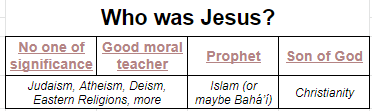

If Jesus is no one of significance, didn't exist, or is just a good moral teacher, you can cross out the worlds' two most popular religions in one go (Islam and Christianity). If he's just a prophet, get out the burka because you, my friend, are now a Muslim. If, however, he is more than that - say, the Son of God, then we’ll need to take a closer look at his life and teachings.
“Ok” you’re saying. “Start with Jesus. But isn't the Jesus question intertwined with other contestable questions like biblical inspiration and if there is even a God to begin with?”
Not for our purposes. While existence and inspiration are big issues, let’s bypass all of that. If we can make a call on if the guy really died and came back from the dead, we’ll have the most important piece of data available. The implications to that answer will tell us a whole host of things about the existence of God and the truth status of the most popular religions in world history.
To summarize, for spiritual seekers:
Jesus is the shortcut
His resurrection is the shortcut to the shortcut.
But surely, I wouldn’t introduce such a big topic in the medium of a blogpost? Oh shoot- turns out I did.
Comment
Who do you say that he is?
Subscribe

We All Believe

Why do some people believe in God while others don't?
The Bible gives a weird answer that I didn’t understand for a long time.
If I were writing the Bible, here are verses I would include:
"Some people are just more inclined to religion than others"
“We're all just doing our best with the evidence in front of us"
But those verses aren’t in the bible.
Here's what is in the bible:
“For the wrath of God is revealed from heaven against all ungodliness and unrighteousness of men, who by their unrighteousness suppress the truth. For what can be known about God is plain to them, because God has shown it to them. For his invisible attributes, namely, his eternal power and divine nature, have been clearly perceived, ever since the creation of the world, in the things that have been made. So they are without excuse.”
-Romans 1:18-20 (my emphasis added)
That is a controversial description of belief in God.
The writer is saying that:
Every human believes in God (v.20)
His existence is plain to anyone who's living in the world (v.19)
Rather than embracing God, humans suppress the knowledge of God (v. 18)
For years, I thought this was silly. Was Paul really saying that Richard Dawkins (or [insert your favorite atheist here]) is really some sort of closet evangelical?
Kind of.
He's saying that God has baked his "invisible attributes" into "the things that have been made" (i.e. us and the world). We don't need to be scholars or philosophers to perceive him- the answers are right there in our everyday lives - in how we live.
Things like free will, good and evil, human rights, logic, beauty, meaning, love, the existence of matter itself. These things aren't the end of a syllogism. They are perceived by professor and plumber alike (v. 20). And those things don’t make sense without God.
We all live like God exists. But because of what acknowledging God might entail, we simply take these features of God’s world - and deny the God who made it. We embrace cognitive dissonance.
So secular conservatives point out government corruption, the importance of free "choice", and the inherent "evil" of totalitarian states. Secular liberals argue that Black Lives "Matter" and fight for abortion "rights" and denounce corporate greed. Even Richard Dawkins can't help going on moral crusades despite his moral-less universe.
Without God, all of this is inconsistent foolishness. It's denial.
Once I understood this Bible passage, I started seeing it all over.
A gay rights rally? Just an odd way of people saying they believe in God (from whom do rights come?).
Someone calling out Donald Trump for his latest scandal? Another profession of faith (from where does morality come?).
Black Lives Matter.
Women's right to choose.
#MeToo
Immigration.
Environment.
God, God, God, and more God.
"But this is just sloppy thinking on the part of non-theists" you might respond. "Surely, the more thoughtful among us can avoid this." Not so. We all live like God exists.
Here's what Romans 1 looks like in high-profile intellectuals who are clearly not fans of God - but live as though He is real as their mothers.
Bertrand Russell on Morality

I have no difficulty in practical moral judgments, which I find I make on a roughly hedonistic basis, but, when it comes to the philosophy of moral judgments, I am impelled in two opposite directions and remain perplexed.
-Bertrand Russell
Possibly the most famous atheist of the 20th century, Russell was famous for his vocal, wide-ranging moral stances on world government, women’s rights, marriage, and war. He also didn't understand how someone could believe in objective morality.
Galen Strawson on Free Will

"[The impossiblity of Free will] can be proved with complete certainty"
...
"I can't really live with this fact from day to day. Can you, really?""
- Freedom and Belief
Albert Camus on Meaning

“There is only one really serious philosophical problem, and that is suicide."
Despite Camus’ academic views on the meaningless of his (and everyone’s) life, he would work tirelessly towards multiple causes throughout his life including the French Resistance in WWII and a wide range of moral issues.
Christopher Hitchens on Human Rights

Christopher Hitchens was a well known atheist (of New Atheist Fame). While he would make a career out of arguing for God’s non-existence (his magnum-opus on the topic being “God is Not Great: How Religion Poisons Everything”), he also would take a number of moral stances throughout his life - including, surprisingly, being against abortion.
We don’t always want to believe in God, we just have to live like he’s there.
Comment
Where do you see cognitive dissonance in the world today? Or in yourself?
Subscribe
Share
Who could benefit from this post?

The Inescapable God

It's hard to live like there's no God - it might be impossible.
Many in the west are dropping God from their worldview. They may or may not realize that they are picking up a new worldview (one without God).
Few that adopt a God-less worldview work out its implications. Fewer still live by those implications.
Most of us (actually all of us as we'll see) believe in things like free will, human rights, morality, justice, and meaning. These things make perfect sense within a Judeo-Christian worldview. Made in the image of God, we are given a purpose, dignity and worth, and a moral sense to comprehend the moral law that permeates the world.
If there is no God, none of those things are real. Free will, morality, human rights, and meaning in life are fictions.
What's wrong with believing that?
Nothing... except real life.
Free Will
There is no free will in a universe without God. We are just biology. Biology arises from chemistry, chemistry arises from physics, and physics tells us that we are simply a bundle of atoms.
Atoms don't choose. Their location and velocity depends on prior location and velocity. There's no "free will variable" in Newton's laws or quantum theory - it’s already determined. In a universe without God, it turns out that we are robots.
But try to live a day denying that you have free will.
Try it in the burrito line at Chipotle. Notice when convincing a friend to watch a TV show or come to a party. Consider when you criticize the president for what he did or didn't do.
You're assuming that you, your friend, and the president have a choice. If it was determined, why argue anything? It's already determined.
My personal favorite is when someone tries to convince someone else that free will is not real (cue Alanis Morissette).
Is this an accurate description of the world and our experience?
In the philosophy room, it's easy to dismiss God. But real life is stubborn. It grabs us by the collar and forces us to believe in things like free will. We can't function without it.
But for free will we need a worldview that includes God. When we make a choice, when we argue or protest someone's actions, we are believing that free will is real.
We live like God exists.
Morality
There is no morality in a universe without God. Matter is all that is... and it just is. Arguments over morality are like arguments over which color is the best - one person's feelings against another's.
But try living a day without morality.
Read about the latest murder. Remember armed jihadists taking over a plane of terrified travelers and crashing it into a skyscraper. Let the reality of millions of little boys and girls on the trains to Auschwitz (and those bringing them there) sink in.
Think too about the social workers, policeman, and teachers working to make our world a better place. Think about the firefighters climbing up World Trade Center stairs, saving lives and giving their own. Think about families across Europe risking their lives to harbor their Jewish neighbors.
Is the firefighters' bravery the same morally as the Jihadists' murder? Are Adolf Hitler and Josef Mengele the same morally as Mother Theresa?
They are in a universe without God.

In a world without God, might is what makes right. Without God, survival of the fittest is our ethic and there's a strong case to be made that the Nazis were performing a moral good.
Is this an accurate description of the world and our experience?
If God exists, there is a transcendent moral code that exists across space and time - and we know it. If God exists, we can condemn slavery or the Holocaust even though those in power believed it was right at the time. If God does not exist, we can't.
When we condemn war, child abuse or genocide, we are saying that morality is real.
We live like God exists.
Human Rights
There are no human rights without God. A person has the same instrinsic value as a puddle of mud. A child is as valuable as a lawn ornament.
But try living a day without believing in human rights.
"Black Lives Matter". "Blue Lives Matter". Without God, the only lawn sign that makes sense is one that says "No Lives Matter".

Gay rights, civil rights, women's rights - all fiction.
What are "rights" in a material universe? When did they come into existence? How do you know they are there? Why should we abide by them?
In a world without God, a society that wanted to get rid of a people group, could simply decide that it brings utility to the rest and get rid of them - without argument. It would be the right thing to do.
Is this an accurate description of the world and our experience?
If there is a God, humans do have rights. Justice is something we are supposed to work for because black lives, blue lives, young, old, democrat, republican, gay straight, Muslim, Buddhist, all have tremendous value. They matter.
So when we condemn slavery and genocide, when we stand up for people's rights, when we protect the vulnerable, we are saying that humans have inherent value and rights (which only make sense if we're made in the image of God).
We live like God exists.
Meaning
Life has no meaning if God does not exist. We will die and so will humanity. Our achievements and our wars, our art, technology, and progress will be forgotten without witness as our sun burns down alongside the wider universe.
But try living a day like life has no meaning.
Why do you get out of bed? Why pour yourselves into work? Or kids? Or a cause?
We can delude ourselves with ideas like "subjective meaning" but subjective meaning is no meaning at all.

Albert Camus, the 20th century authority on meaning without God, summed up his life's work well - “There is only one really serious philosophical question, and that is suicide.”
Without God, nothing matters.
Is this an accurate description of the world and our experience?
With God, everything matters.
Our work, our parenting, our struggle for a better world are all of utmost importance. We are partnering with God on things that will last into eternity for people who will last into eternity. Even our incomplete, imperfect work awaits the day where God will complete what he's started in us.
In 1974, Ernest Becker won a Pulitzer prize for his book "The Denial of Death". Its core thesis: it is impossible for humans - religious or otherwise - to live as if life has no lasting meaning. We simply can't do it.
Does your life matter? My bet is that you live like it does - we can't help it. When we wake up, go to work, raise our kids, fight to make our world a better place we are saying that life has meaning.
We live like God exists.
Conclusion
Few non-theists work out the implications of their worldview. Fewer still have grappled with the incompatibility of those implications with real life.
If our boots have leaks, we need different boots. If our worldview can't account for reality, we need a different worldview.
A worldview without God has no room for fundamental aspects of our lives - and our humanity. Furthermore, it doesn't provide helpful guidance for living a good life. If anything, the opposite is true.
Back in the thick of my doubt, there were days where I was sure that God didn't exist. But I noticed something. Even on the days that I dismissed religion as a silly, inherited set of beliefs, I saw that it didn't really matter what theoretical conclusions I had reached about the existence or non-existence of God. I couldn't escape living as though God was real. It's just part of being human.
We live like God exists.
Comment
Do you live like God exists?
Subscribe
Share
Who could benefit from this post?

Hiking Boots and Worldviews

I was panicking on a cold Alaskan mountain.
My hiking boots had just soaked through. The temperature started to drop.
The realization sank in.
"What have I done?"
Boots
I was Caribou hunting in remote mountains east of Fairbanks. I was ill-equipped.
In planning for the trip, I had considered a few different hiking boots for the rugged Alaska terrain. It was unclear to me which boots were the best, so I chose some old cheap ones.
Big mistake.
On the first day, as we ascended the mountain, it rained. And then it rained some more. I felt my socks dampening. Then they saturated. As we climbed, the temperature cooled to near-freezing.
I would survive (and even get a Caribou), but the mist and showers would continue for the rest of the trip. My boots would never recover. I had to borrow from friends - socks, fire supplies (I ended up melting the boots trying to dry them out :/).
My boots looked good in theory from the comfort of my house. But they weren't ready to handle all that the real world threw at them. It was foolish and dangerous.
Worldview

Choosing a worldview is like choosing a hiking boot for an adventure. You think, you debate, and then you pick. Finally, you step out into the world to see how it works.
Choose well and you'll be ready for anything. Choose poorly and you'll find frustration and misery. You'll need to borrow from someone else.
What’s in a (Good) Worldview?
Oxford defines worldview as "a particular philosophy of life or conception of the world". Some get theirs from religion, philosophy, or their own brain. Many distract themselves so they never have to think about it.
What makes a good worldview? I think back to my own story and what I was looking for.
My searching boiled down to two questions:
What's true?
How do I live? (in light of what's true)
Some worldviews are better than others. Just like boots, some look cool and some are a little funky. For boots and worldviews, we need one that works. We need one that explains the world well and guides our lives.
If it can't do those things, we are in for discomfort and maybe even danger.
Many assume that if we simply walk away from God, then we don't have to worry about belief (or worldview) anymore.
But that's not how worldviews work. You don't abandon. You exchange. We've all got our mountain to climb, and barefoot is a choice (a very leaky one).
You can distract and ignore, but the worldview game is one that we all must play.
In my intro to this series, I mentioned a new worldview on the rise in America: the "nones" - call it atheism or agnosticism, the deconstructed or the deconverted.
In our next post, let’s put this view under the microscope.
Comment
How did you arrive at your own worldview?
Subscribe
Share

How I (almost) Lost my Faith
“I’m convinced that we could divide Christians into three groups. The first would consist of those who have doubted.
The second would be those who haven’t doubted yet but who will. The third group would be those who have completely shut off their brains!”
-Lee Strobel

How could a billion people be wrong?
That was the question that started my doubt.
After my life-changing sophomore semester, I left on my first overseas trip: a three-week study abroad program to China. The journey would expand my view of the world- and nearly shatter my simple Christian faith.
China
While touring this strange land, a few questions started to bubble up.
How much did I really understand the world?

What was this place? Why were the people (and their crazy government) so different? What do they believe about God and life?
After the drama of last semester, I thought I had finally figured out the world. But here I was walking through the biggest, oldest civilization on the planet and I knew nothing about its history or people.
Maybe there was more to life than what I knew.
If Christianity is Right, Other Religions (and People) are Wrong
I’d seen pictures of temples in Asia, but what were they but architecturally interesting houses with funny statues?
Something changed when I was in Beijing.
I remember watching an older lady walking up to thousand-year-old Buddha statue, incense in hand. Bowing. Praying.
It was just one lady. But it wasn't just one lady. To me, she represented the hundreds of millions of real people, past and present-, mothers, fathers, sisters and brothers who believed completely differently than me.
In becoming a Christian, was I saying this woman (and millions like her) were wrong?
What happened to the people that are wrong?

There are serious consequences in the bible for people who reject Jesus. Growing up in a “Christian land”, though, I didn’t really have to worry about it.
What a wake-up call to get off the plane to one billion souls who did not believe in Jesus, many of whom hadn’t even heard about him.
What would happen to them?
How did I know that any of this Christian stuff was true?
If you noticed, nowhere in my “spiritual voyage” of the last semester did I question whether Christianity was objectively true.
The “battle” of my previous semester was a battle of the will. My study-abroad created something new - a battle of the mind.
The questions started gushing out:
Why do I trust this book called the bible?
Was I interpreting my spiritual experience correctly?
What about the Buddhism, Taoism, and Confucianism I had seen (not to mention Islam, Mormonism and all the rest).
What did my new faith say about all these people?
The summer ahead would only water the seeds of confusion.
A World of Ideas

Back in the US, my internship left me alone for the summer in a small town, hours from everyone I knew. I was determined to use the summer to make sense of what was true about life and God.
Here was my plan for the summer:
June: Study World Religions
July: Study Philosophy (history, and current options)
August: Come to a conclusion
Surely three months would be plenty of time to understand the history of human thought and leave me with a clear, satisfying conclusion.
Well, I tried.
From "The Idiot's Guide to World Religions" to selections from the Q'uran and the Bhagavad Gita, then Plato and Bertrand Russell to countless Wikipedia bunny trails, I soaked up books and articles like a sponge.
Unfortunately, the more I looked, the more confused I became. It was like I was searching for a pearl of truth at the bottom of a muddy pond. The more I frantically searched, the muddier the water became.
The Agony of Doubt
This was the first time I had really thought about what life was and what eternity might entail. It was the first time I had stared down the barrel of meaninglessness or felt the weight of an idea like eternal suffering. I felt alone on the journey. It was miserable.
By the end of the summer, I was wondering things like, “How do you pray when you don't think anyone’s listening?” “How do I move forward with my life when so many fundamental questions are still unsettled?”
Coming back to school wasn’t much help, at least right away. I needed community, but I also needed answers - answers to questions that no one around me was asking.
The Slow Ascent
One of the hardest things about this life is that the most important topics are oftentimes the least clear. Out here in the wild landscape of deep truth there is no proof, only pointers. Faith will always be required (no matter what you believe).
Eventually, I made it back to committed faith.
My journey would take me through Descartes and Darwin, Calvin and Camus. It would require more time, effort, and intellectual discomfort than I could have dreamed when I set out during that lonely summer of 2007. But I have no doubt that the journey has left me with stronger faith, clearer thinking, and more compassion for people who haven’t figured it all out.
Let me share some things I’ve found along the way.
Comment
Have you ever had a period of doubting? How did you get through it?
Subscribe
Share
Who could benefit from this post?

What Happened When I Became a Christian
I will give you a new heart and put a new spirit within you; and I will remove the heart of stone… and give you a heart of flesh.
-God (Ez.36)

Every day in the northeast corner of Lake Erie, there are fish whose lives are changed forever.
The fish live their entire life in the cool, calm depths of the great lake.
Then one day things change. They find a new spot with a new sensation: current. Something is happening to them.
While some swim back to familiar waters, others forge ahead. Before they can get used to this new normal, there's a noise.
A distant rumble. Then a sudden roar.
Then they are hurtling through the air, unable to breathe, gills pinned to guts as they brace for impact.
They've just plunged 180’ down Niagara Falls. They're in an entirely new place and will never return.
That's kind of what my faith story was like - chance encounters, a new current, a dramatic plunge… and then a new life.
I looked the same. I lived in the same room and took the same classes. But over the weeks that followed, friends would ask what had happened to me.
This post is the answer to that question - it’s what I found downstream.
Spiritually
Bible: Worst to first
Before I walked home from the fateful dinner, I agreed to go with a friend to a church service the next day. It was one of my first times attending a Sunday service in college.
The sermon topic was marriage, a topic that I cared approximately zero about at age 19. But as the pastor began, I was riveted. This was the best sermon spoken message I'd ever heard. The bible was alive for the first time.
And that insufferable weekly study that had made me so miserable for all of first semester? Starting that week, the study became the best, most anticipated event on my calendar.
First semester, the bible had somehow inspired boredom and guilt at the same time. Now I was addicted.
To Be Good

There's a paradox at the heart of the gospel. When you become a Christian, all your sin is forgiven - past, present, and future. This raises an important question: then why be good at all?
I had sensed and lived that tension for the last year and a half. In the blink of an eye, the tension was gone. I wanted to be good.
There was no “shoulding” ("well I'm a full-blown Christian now so I should shape up"). While my sin was still there, alongside it was a new desire - not to numb my conscience like before, but rather to live a holy life, powered not by moral fortitude but by God living in me.
So I changed spiritually - big surprise. But the changes didn't end there.
Intellectually
The "heady" Brett that my friends know was born at this time.
Confession: up until this point, I had been a bit of a closet "romantic". I was smart enough in some ways, but when it came down to it, life was about following your heart and embracing wherever your path (and feelings) took you.

The first book I picked up flew in the face of all of that. It was a pragmatic book on a topic that I didn't think pragmatism applied to. The book was called “Boundaries in Dating" and its central message was that while your emotions are good, they can blind you to reality if you let them.
If you knew how my mind worked up until that point, it was crazy that I read that book. It was even crazier that I listened to it.
Thus began a seismic shift, not just in my dating views, but how I approached life in general. The game had changed. Things didn’t need to “feel right” - they needed to make sense. Life wasn’t just about “fun and feeling good”, it was something to be understood - the books, conversations, and classes that could get me there became the priority.
The only changes bigger than those happening in my head were the ones happening in my heart.
Emotionally
There was a lot going on inside during these years. Anxiety and occasional depression were tips of the iceberg that was my emotional life. Being a good Minnesotan I had learned that if I could just ignore those things long enough, I might be able to get through my whole life without ever having to deal with them.
I quickly realized that if I was to walk this untrodden path of becoming a better version of myself, I was going to need to learn some new, terrifying skills: vulnerability and introspection.
After spurning the advances of my bible study in first semester, I still remember sitting down at Potbelly's sandwiches, of my own volition, and asking my friend if he wanted to meet up for weekly prayer and accountability.
We added another close friend and started meeting weekly. I didn't know it at the time, but this group would become the greenhouse where the seeds of a new life could grow. We laughed shot the breeze, we confessed sin, we let our guard down and we pushed each other.
For me, this group wasn't a new weekly activity, it was a new plane of existence - one where the deepest parts of ourselves didn't have to live alone, unknown in darkness. Light could come in.
Vulnerability was just the start. Over the next two years, through classes, books, conversations and programs, I'd learn about critical concepts like attachment, family of origin issues, neurochemistry and the incredible power of self-talk (CBT). This journey would not be quick, but the seeds that were planted during those weeks in November would set things in motion that would leave me anxiety and depression-free within about three years.
Into the Summer
That semester was the most transformative time of my life. A simple decision led to a fairly dramatic spiritual experience, setting off massive changes to the deepest parts of my life. The drama and intensity of those first weeks and months would eventually wear out, but the new direction would continue.
At the end of the school year, I sailed off into the sunset and life was puppies and rainbows from then on.

Yeah, that didn't happen. That summer would take me far from my safe haven of Christian community, first to a country with state-sponsored atheism before coming home to the most isolating, lonely months of my life.
What I didn't know was that in four months, my faith would be on the brink of disappearing.
Comment
If you’re a Christian reading this - what was your faith story like? Quick and dramatic? Slow and “boring”?
Drop a thought below!
Subscribe
Share
Who could benefit from this post?

How I Became A Christian
The Prodigal Son at least walked home on his own feet. But who can duly adore that Love which will open the high gates to a prodigal who is brought in kicking, struggling, resentful, and darting his eyes in every direction for a chance of escape?
-C.S. Lewis

Should I hide?
I could hear him coming down the hallway, getting closer. I knew what he was after.
Could I squeeze into my closet? Or under the desk? Too late.
"Hey man, bible study's about to start - come on out!"
Shoot.
It was my freshman year of college. I had hoped to distance myself from “the religious thing”. I was failing.
It's not that I had a bad experience with faith growing up. I'm thankful for my Lutheran roots - hotdish, ham buns and all. I had gone to Sunday school, been confirmed, and even played in a youth group worship band.
But college was here. It was time for freedom.
Freshman Year: The Freedom
The only snag was that my freshman dorm hall advisor was starting a bible study for anyone who was interested.
I was not. But he wore me down. Over the first few months of school, his enthusiasm and persistence won out and I checked out the bible study.
When my next door neighbor joined up (and subsequently swung by my room every Wednesday to pick me up), it appeared there was no way out. I was as flaky as I could manage to be, but somehow I managed to keep attending through my freshman year.

Oh yeah, one more thing about my freshman year - I was partying.
Not like a rockstar. More like an idiot kid who had never had alcohol trying to figure out why droves of 18 year olds were jamming themselves into nasty frat house basements, drinking piss-tasting beer and then standing around like they knew what they were doing.
It wasn’t a word yet, but my FOMO was running the show.
So that was freshman year. Wednesday nights were bible study with my Christian friends. Friday nights I was doing shots with the marching band.
I didn't feel like a hypocrite. Cultural Christianity was still a thing at this time in the US and so for every truly practicing Christian I knew up to that point, I probably knew three (or more?) nominal Christians. These were nice folks who popped into church on the occasional Sunday and then just did whatever they wanted with the rest of their lives. Their faith didn't dramatically change how they thought or felt or lived. Maybe I could just be like that.
So everything was great - until sophomore year.
Sophomore Year: The Tension
When I came back for my second year, the seams holding my double life together began to fray.
My “party life” had started to solidify with friends and routines that ensured I could find a beer pong game every Friday and Saturday night. I had even started dating girls from these circles. I was getting in deeper.
At the same time, my "religious life” was pulling me in its own direction. The light, topical bible study material of freshman year had been replaced with deeper, more challenging content. We were talking about topics like the "Lordship of Christ". Basically I was learning that Jesus isn't a spoke on the wheel of a Christian’s life - he is to be the “hub” around which everything else turns. That didn’t sound like freedom to me and it certainly didn’t sound like fun.
We learned about fighting sin in our lives. Most of all, I was starting to understand the gospel message - about who Jesus was, why his death was so important and what it called us to.
Worse yet, I started to meet people - lots of people - who were really committed to Jesus. Their lives did revolve around him. While their joy, peace, and vibrant community were attractive, c'mon- these were the weird "way too into it" religious folks. Who wants to end up like that?
Things came to a head about halfway through the year.
The Breaking Point
I had grown increasingly uncomfortable with bible study. Between the girl I was dating and the alcohol and partying that my weekend life was centered around, I knew these things were what these Christians called sin.

As we sat in bible study, talking about the seriousness of sin and our need to fight it, I felt about as comfortable as a pregnant nun at mass. Each week, I’d count the minutes until the study was over. Always I felt awkward. Sometimes the inner dissonance was so bad I'd almost feel sick.
I told the guy leading it that I wanted out.
He was surprised but accepted my request. His only ask was that I stick around until the end of the semester.
Those next two months would change my life forever.
Everything went wrong. My study abroad plans for second semester fell through. My engineering classes got extremely hard and started to seem pointless. I wondered if I was in the right major (though I was almost halfway through college).
Then came the anxiety. I remember sitting in a study room one night, heart pounding out of my chest in full fight-or-flight panic attack mode. I had no idea what was going on, no one to talk to, and no words to explain it even if I did.
The unfortunate events of first semester culminated when the girl I was seeing broke up with me. I thought it was going to break me.
The weird thing was that it didn't.
The Surprise
Two weeks before the breakup, the wider Christian campus group kicked off a seemingly arbitrary challenge to spend extended time "with God". For whatever reason, I decided that this would be the first non-bible study activity that I’d go along with. The structure was open-ended, so I decided to just read a few bible verses and then sit quietly “listening for God” for about half an hour.
Nothing magical happened. But by the end of the two weeks, I was starting to feel a sense of peace and an increasing sense that God was walking with me through my day.
Then I got dumped.
I felt like existential barf.
The next day, as I descended into the abyss of self-pity, my Christian friends interrupted me. Wasn't I going to the Valentine's dinner that night?
Well, that sounded about as fun as a sledgehammer to the kneecap.
Whether it was the fear of being by myself at such a low point or the promise of a free dinner, they somehow pulled me from "not a chance" to "fine, I'll go".
The dinner was unremarkable. The guys served the girls a big dinner and there was a dance at the end.
What was remarkable was that somewhere in the process of bussing tables and forcing myself to dance like an idiot, all the heaviness of my life lifted. I felt light.
I had thought my life was unraveling- this didn’t make sense. It felt like something was happening to me.
Surrender

On the walk home, I ran it all through in my head. My wrong major. My study abroad that wasn't. My failed relationship. The anxiety and all the dissonant tension of my double life.
This is where my best thinking had got me.
Then the question. Whether it was Someone putting the thought in my mind or just my subconscious bubbling up what was needed, I don't know. But there it was.
"Do you surrender?"
It's the question I had been confronted with all year, the question I had said "no" to, consciously, many times.
This time, though, I was seeing things differently. I had no idea what God wanted to do with me. But maybe he had something better than this life that I had conjured on my own.
A simple midnight prayer on University Avenue. "Alright God, my life is yours." I went back to my dorm and slept.
Then everything changed.
Comment
Drop a thought below!
Subscribe
Share
Who might benefit from this post?