Zero to One
I just got back from the gym and I’m laughing at myself. Any serious trainer would crack up at my feeble exercise routine.
"Leg day was squats... and that was it? And all you have here for arms is a few sets of bench and rows. Uh… where's the rest?"
For the last decade, my official fitness routine has been:
Show up (2x/wk max)
20m of cardio and 1-3 hard lifts
Sense my life wasting away, speed-walk out
On a scale of 0 (doing nothing) and 10 (fitness freak), I am doing “1”.
And yet... Despite an insanely full and very stressful decade, “1” has worked.
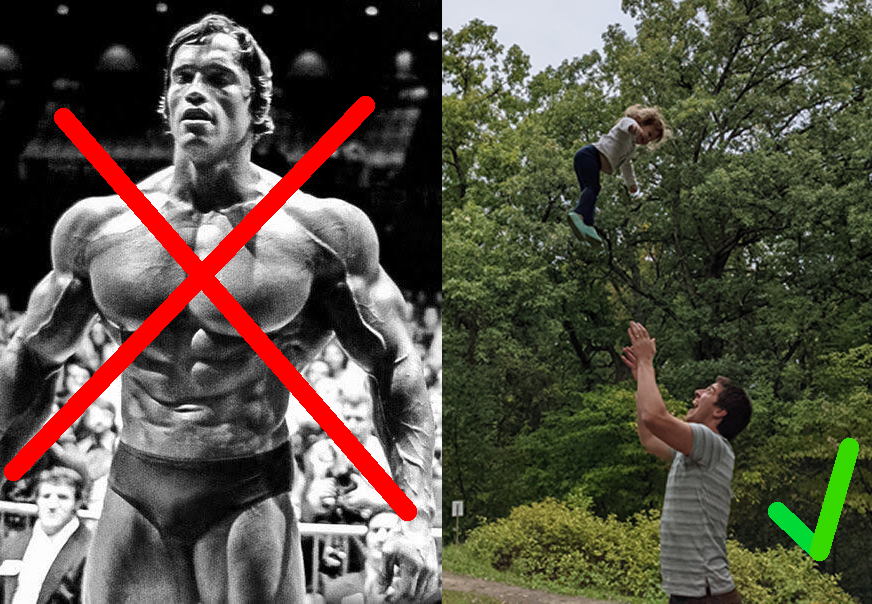
I'm not hitting peak-Arnold status anytime soon, but I've been able to build muscle, feel energetic, and I've so far avoided the big American belly that shows up so easily in mid-life. I can even keep up with my kids.
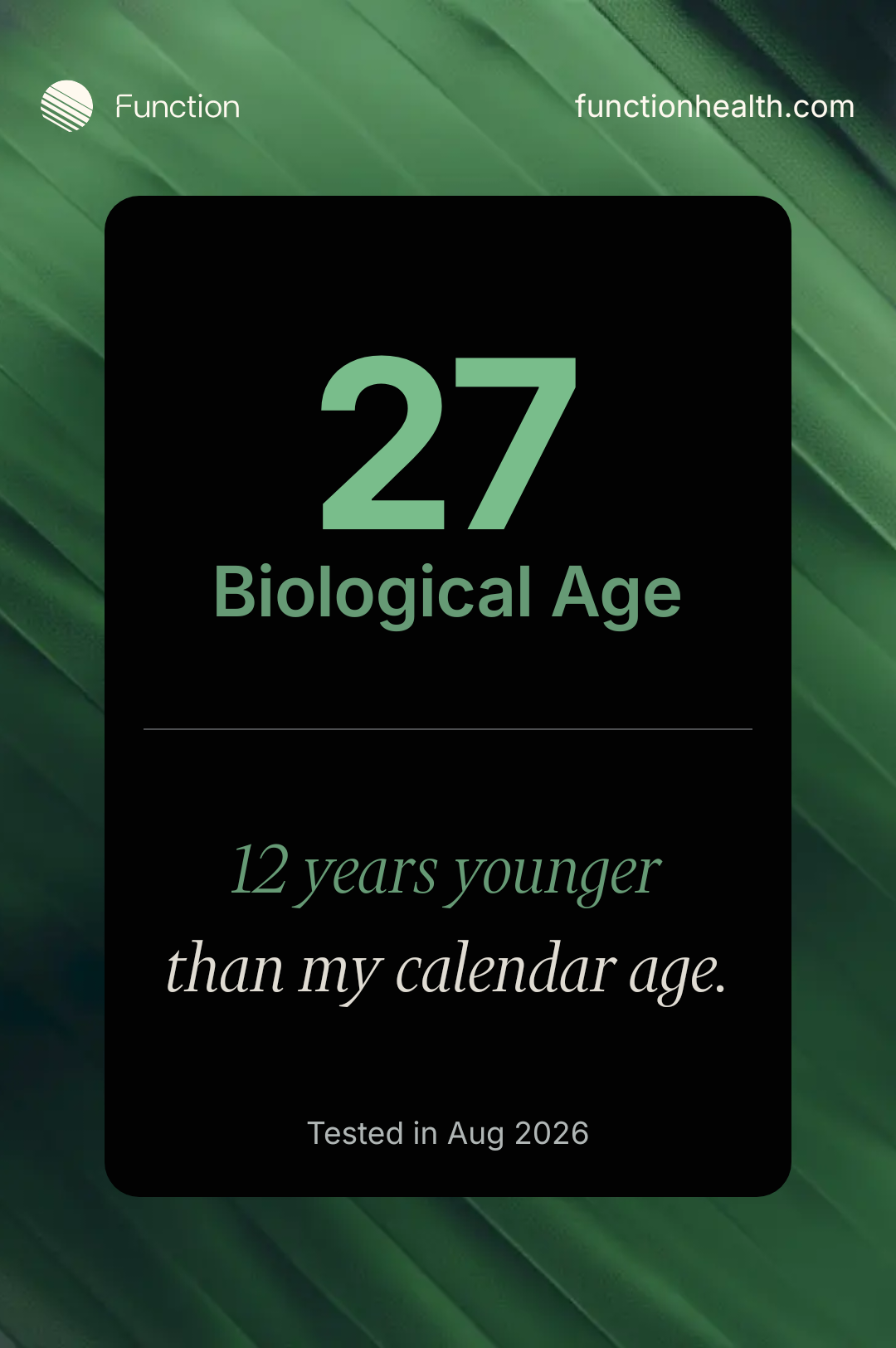
So what's my big secret? How did I end up with a biological age that's (supposedly) 12 years younger than my real one- despite such a wimpy routine?
Drumroll please... … here it is… get ready…
I do something. Regularly.
Sure. There’s genetics, nutrition, stress, and the other important things. But I credit the better parts of my physical health to simply picking high leverage activities (lifting, cardio) and then doing a tiny bit every week.
With fitness, even people who exercise less than what they should have a 34% lower risk of dying than people who do nothing.
More than Fitness
The principle of going from zero to one applies to far more than fitness. For example:
Money: The woman who never set up the 401k and ended up with nothing vs. the girl who put aside a measly $200/mo from her first job at 18- and ended up with $2.5M at retirement.
Meditation: The stressed guy who spent years dreaming about developing an epic meditation practice vs. the strangely “chill” guy who never bought a yoga mat, but who closed his eyes and took three big deep breaths every day before he opened his laptop.
To the Novice Go the Spoils
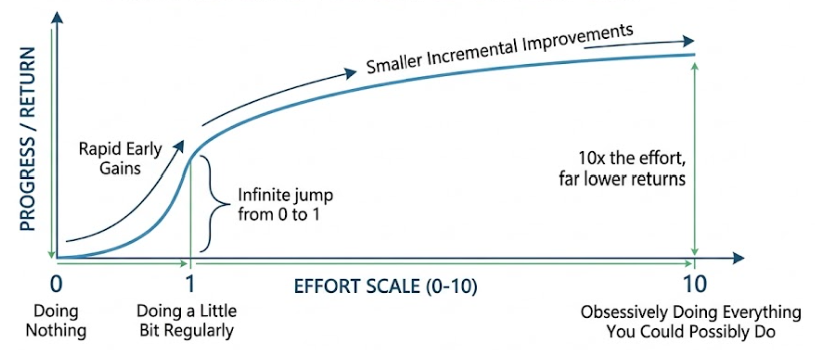
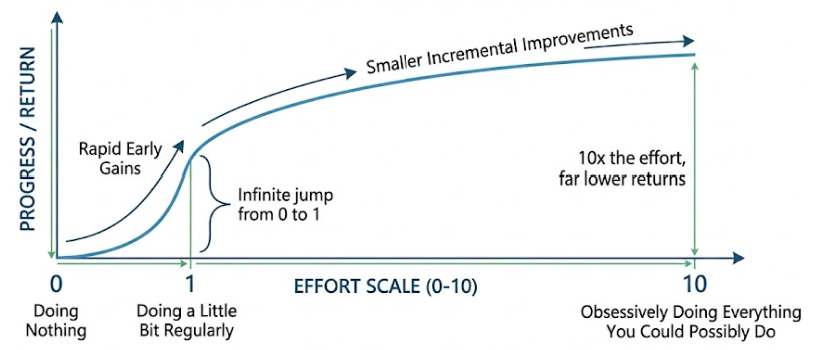
Picture an effort scale of 0-10, where:
0 is doing nothing, 1 is doing something stupidly small regularly, and 10 is obsessively redefining your life around something.
The difference between 1 and 10 is big- 10x! But the difference between 0 and 1 is even bigger. Mathematically, it’s infinite.
Real life reinforces this because progress in anything has diminishing returns.
You Don’t Have to Become a Sicko
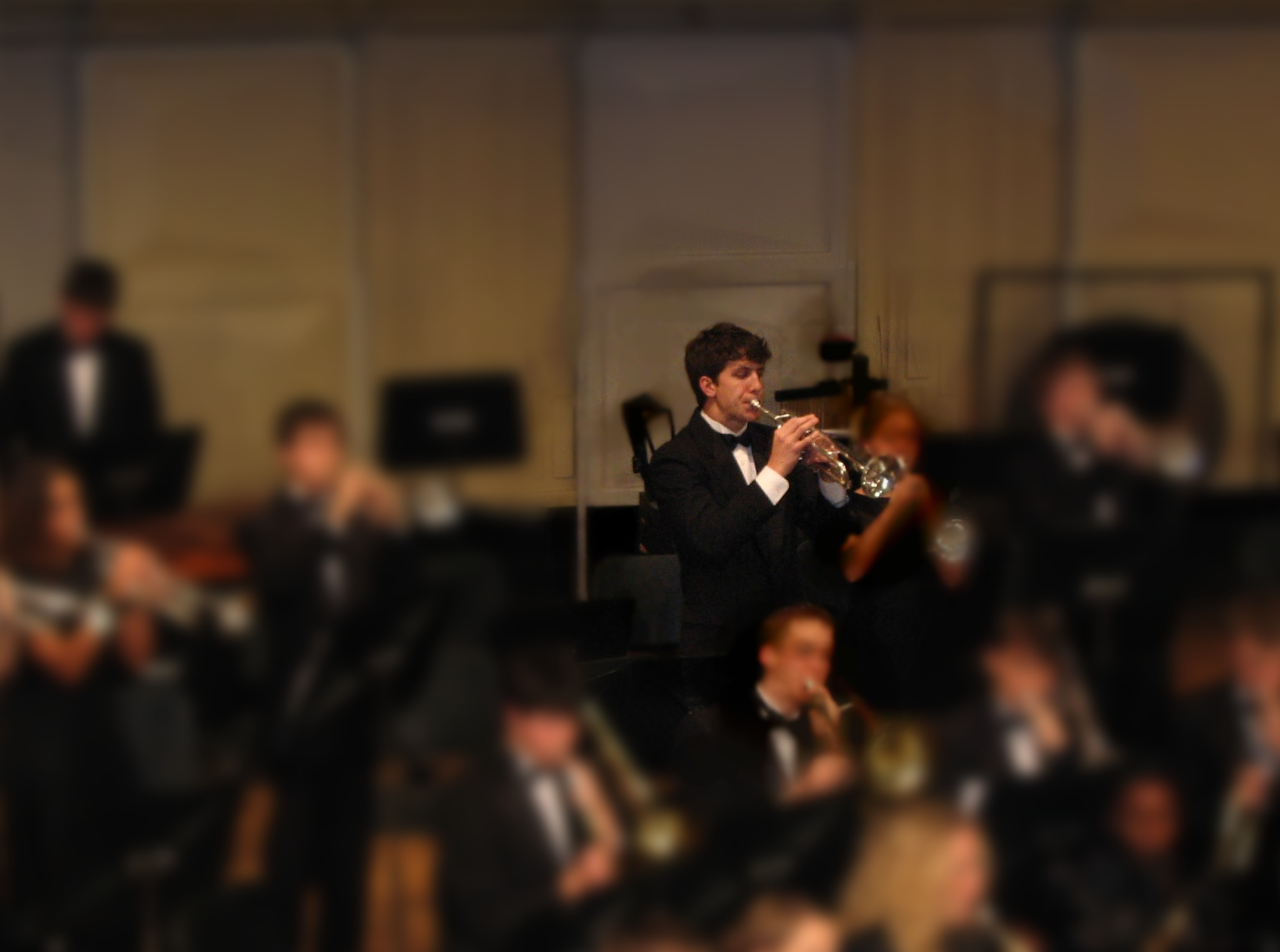
Say you want to play trumpet. Take a few months of lessons and practice weekly. Now you can join a community band, and you're at least better than 90% of people on earth. But to go pro? Trumpet has to take over your life. You'll need to become a kind of sicko trumpet maniac.
The biggest, easiest gains in anything are always jumping from doing nothing to doing the bare minimum.
You can be better than 90% of people at almost anything just by doing something rather than nothing.
Apply It
What area of your life do you need to go from zero to one?
Really. What’s that one aspect of your life that’s a dead zero- where just doing something regularly would make it infinitely better?
Marriage?
Thursday morning coffee break where you ask your spouse 'how are you really doing?’
Money?
1 bank bonus, invested into an index fund
Soul?
A few breaths, a psalm, and a prayer after breakfast
Parenting?
Taking one kid out for a donut Thursday afternoons
Writing?
Opening up your word processor at a coffeeshop for half an hour
Exercise?
15m run and ten pushups
Friendship?
Texting that friend to let them know you thought of them
These examples are so very small. We want to be a ten at everything, and these changes won’t make you world-class at anything.
Take my writing. I don’t want “1”. I want to sit in a silent cabin in the mountains, writing Steinbeck-worthy prose that melts minds like East of Eden. I want “10”.
But here's what I’m slowly learning: a couple hours typing at the coffee shop beats dreaming about a cabin that doesn’t exist.
And that’s why you’re reading these words.
Going from zero to one makes all the difference.
"If a thing is worth doing, it is worth doing badly." — G.K. Chesterton
7 Months Abroad: The Good
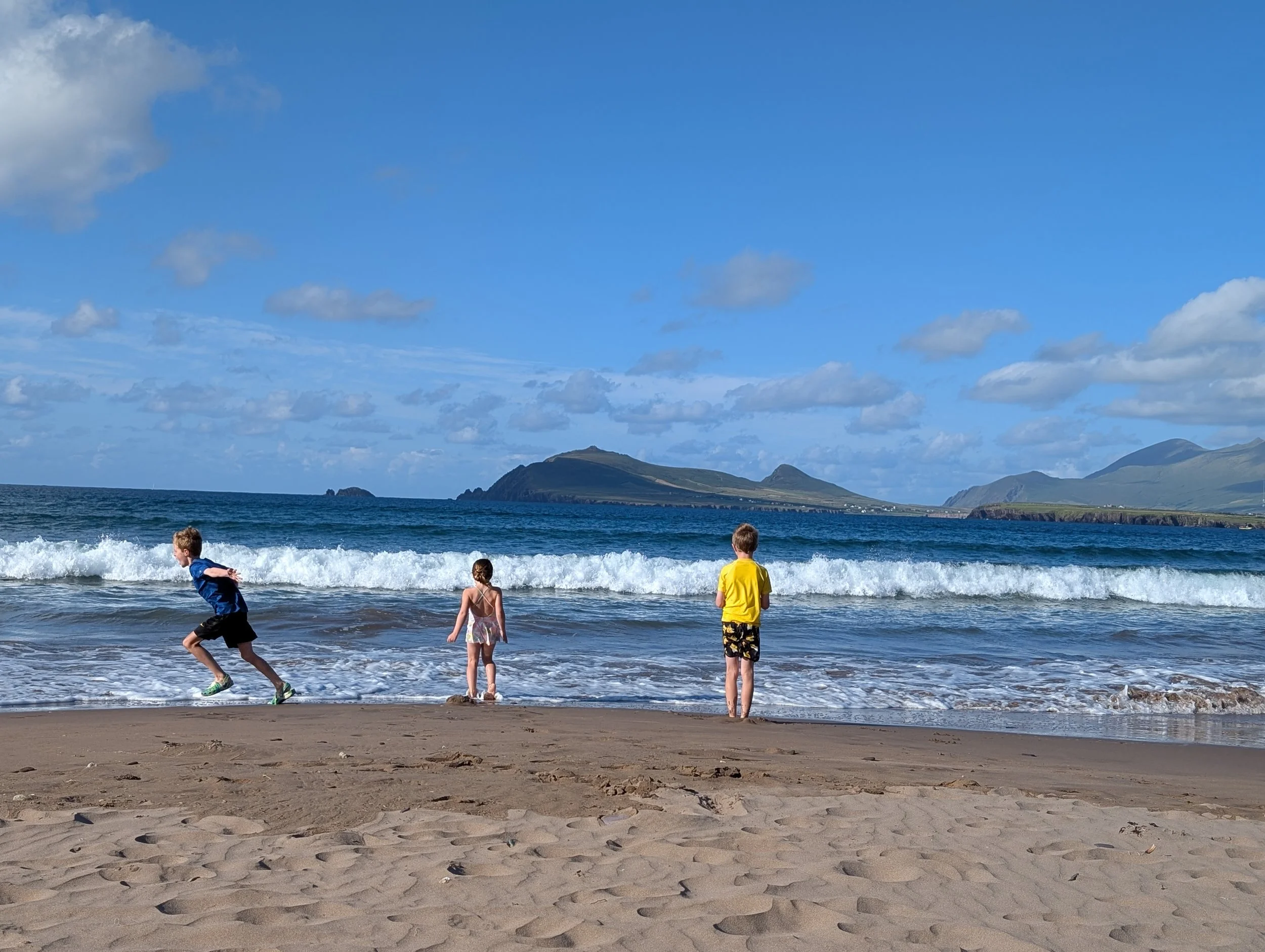
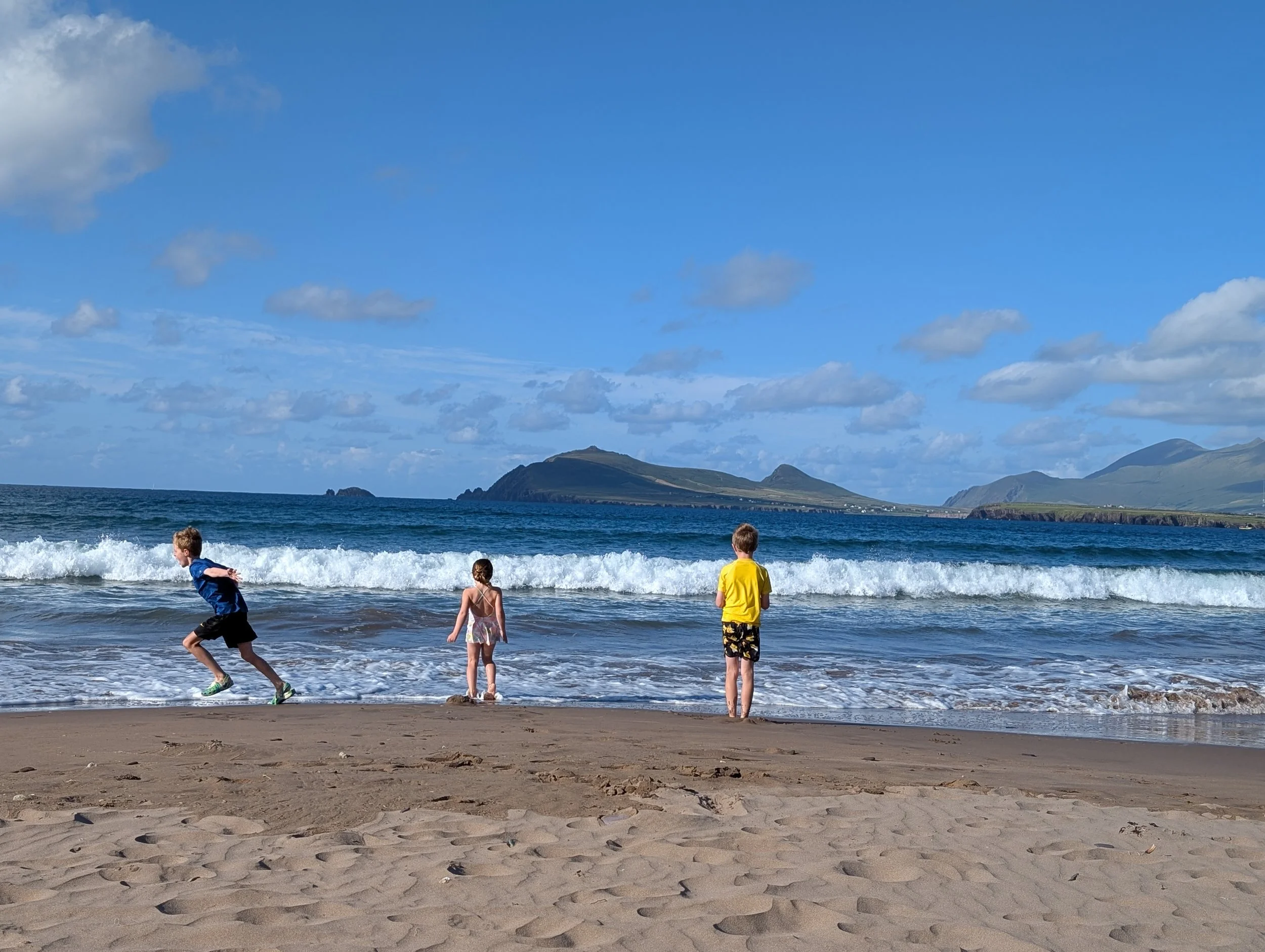
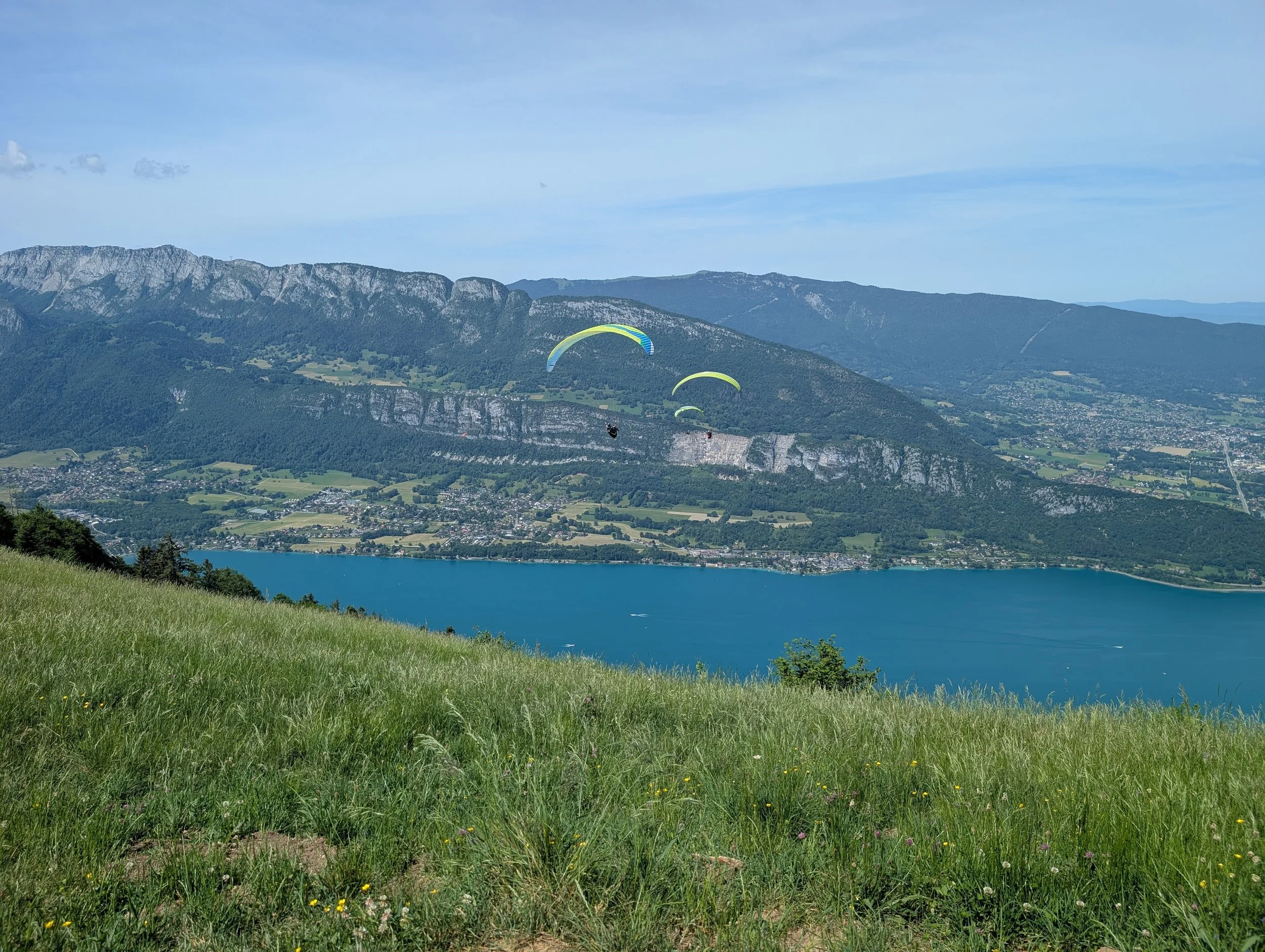
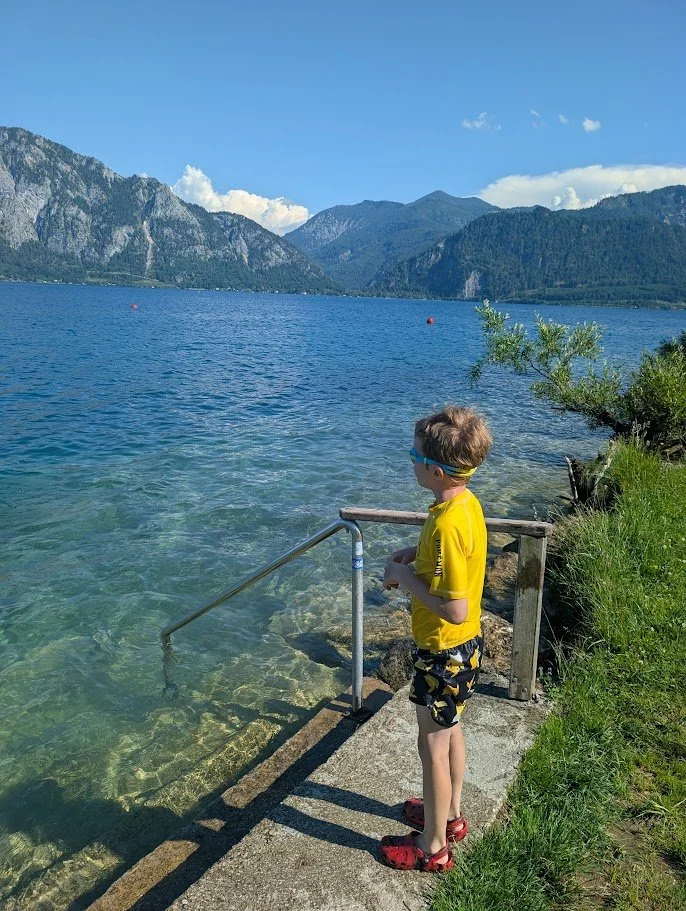
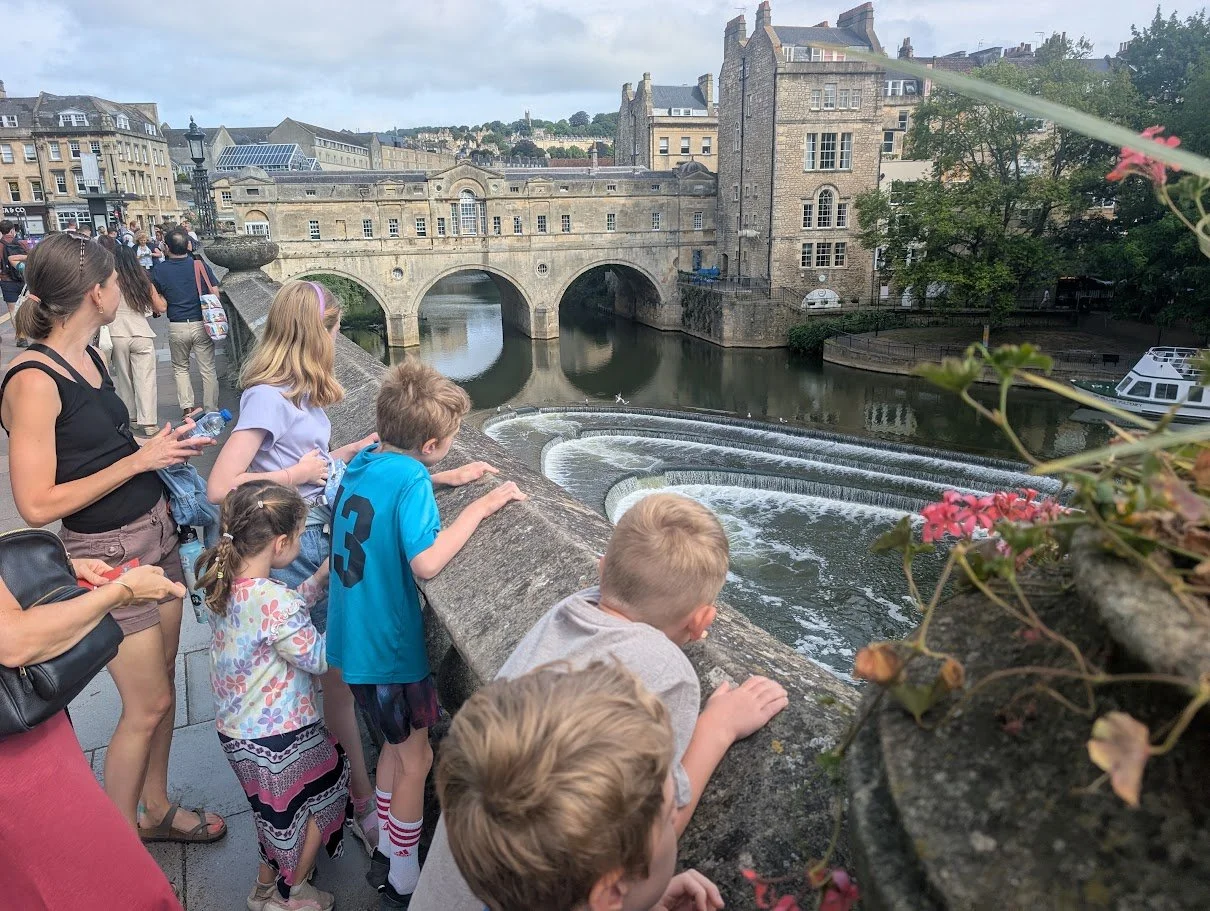
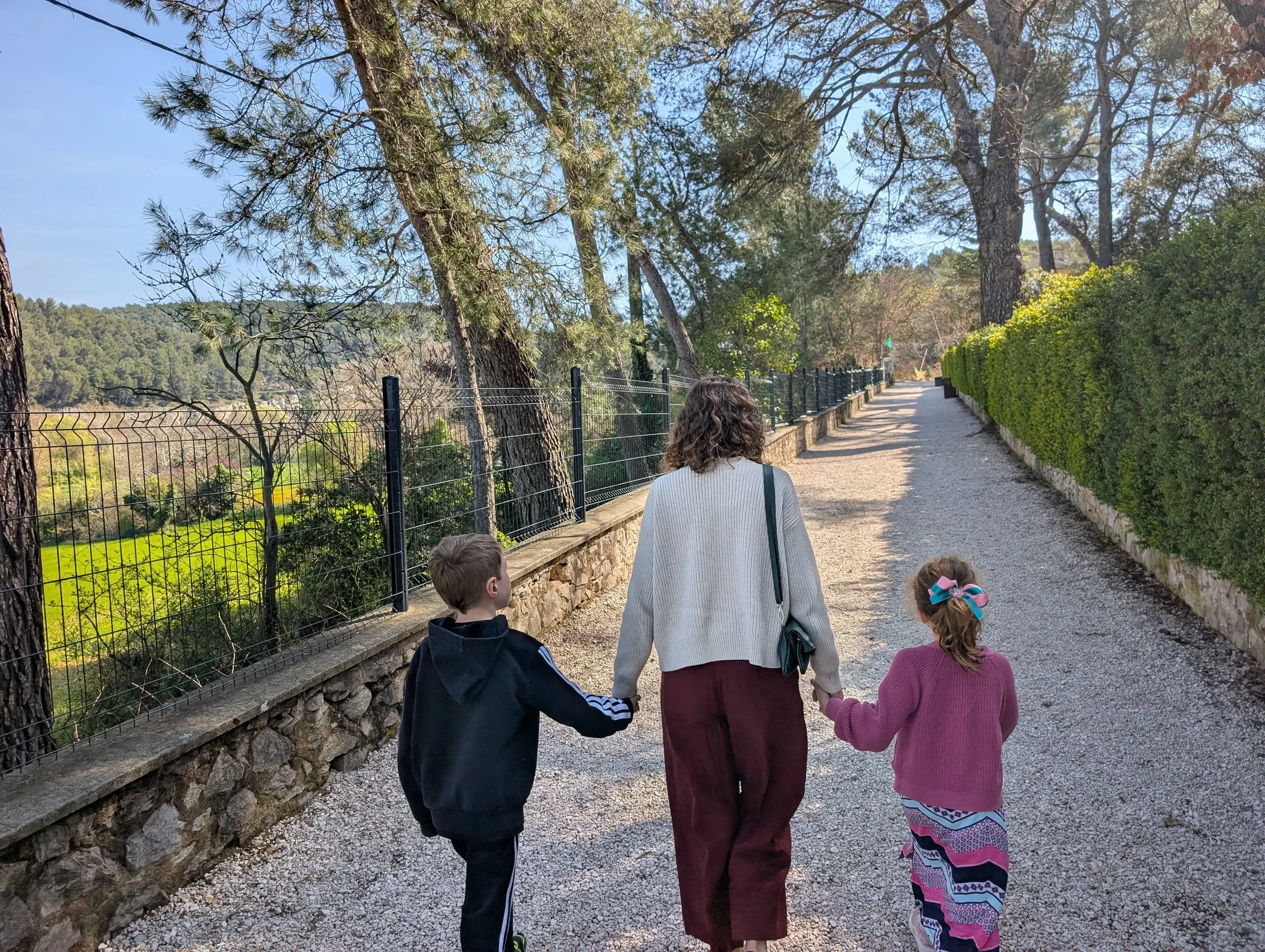
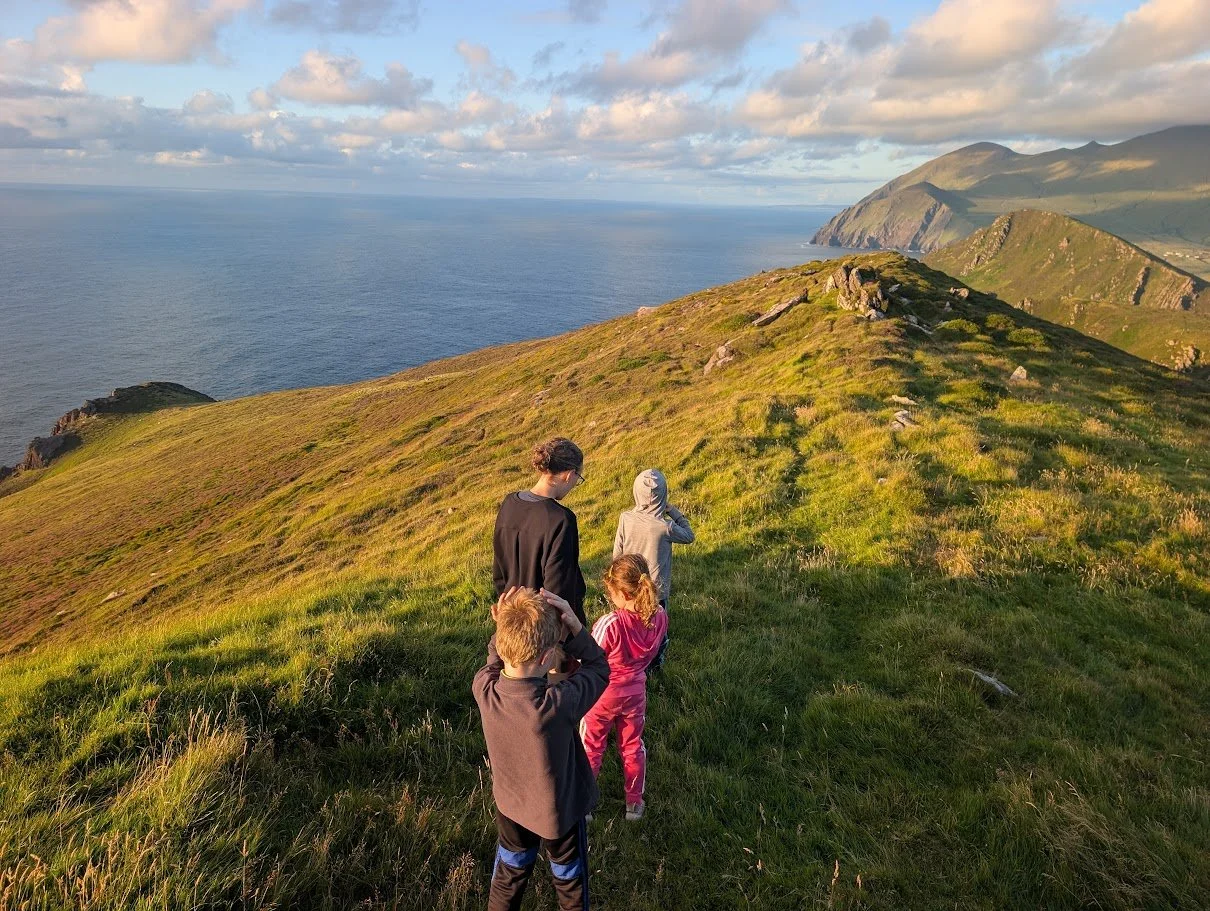
On our last night on the Kerry coast, Laura and I sat with our toes in the sand. The Irish sun was beginning its slow descent. Three kids ran and played and laughed, calling to each other over cold Atlantic waves.
Two thoughts landed:
It was over. This epic trip that felt so endless back in January was coming to an end.
The bigger adventure — this phase where these little ones are “ours” — that’s got a shelf life too.
I've been trying to capture the ‘big takeaways’, and there definitely are some of those.
“You can do big, hard things” “There is good all over the world and God (and his church) will meet you wherever you go.” You can lean on one another.”
These aren’t platitudes for the kids- they’re what we lived.
But when people ask “how was your trip?”, sharing a few big takeaways honestly just doesn’t seem to cut it.
I want to tell them the little things. To let every piece of gold spill out on the floor so they can see for themselves the treasure we’ve been given.
“How was our trip?”
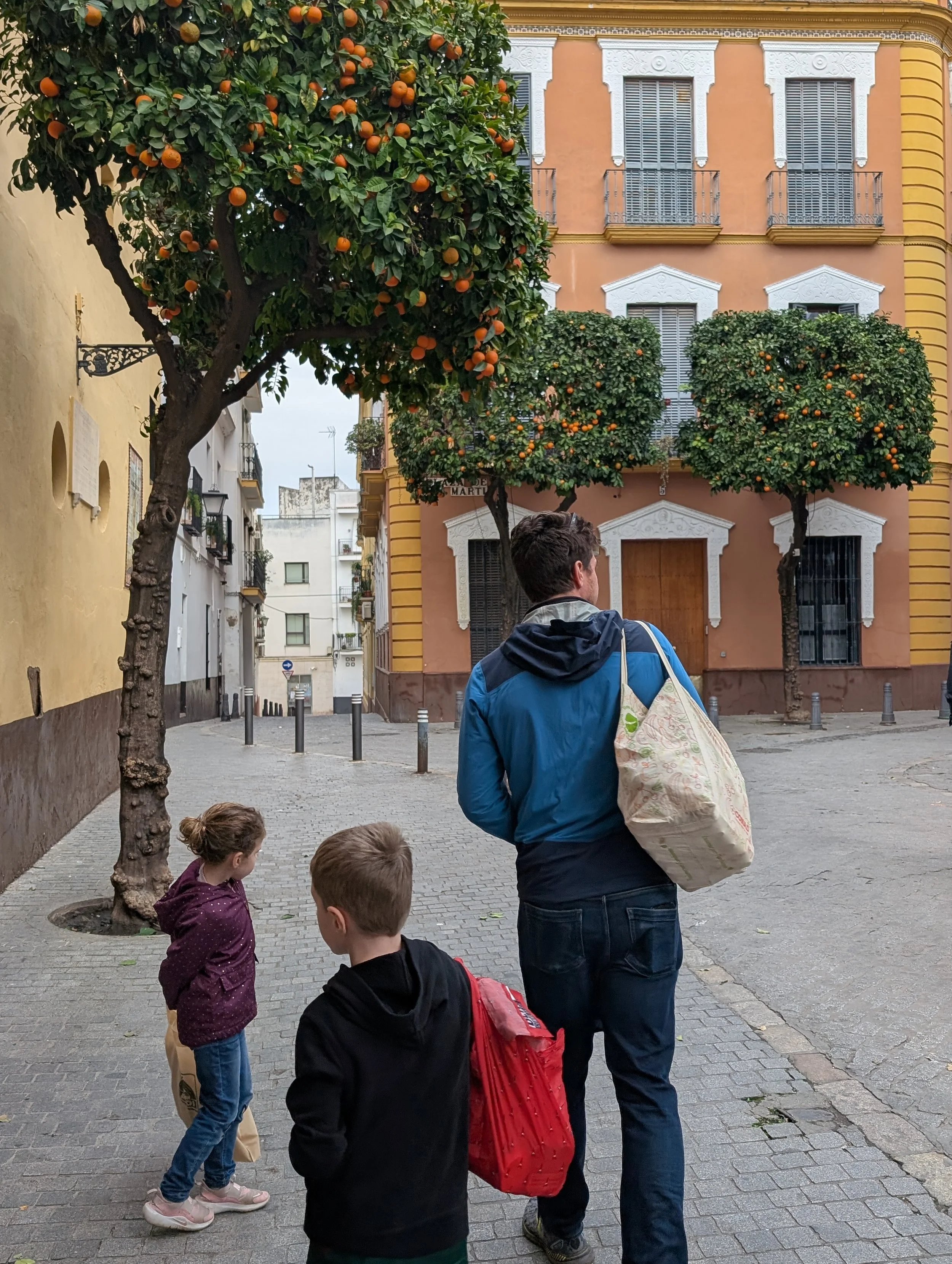
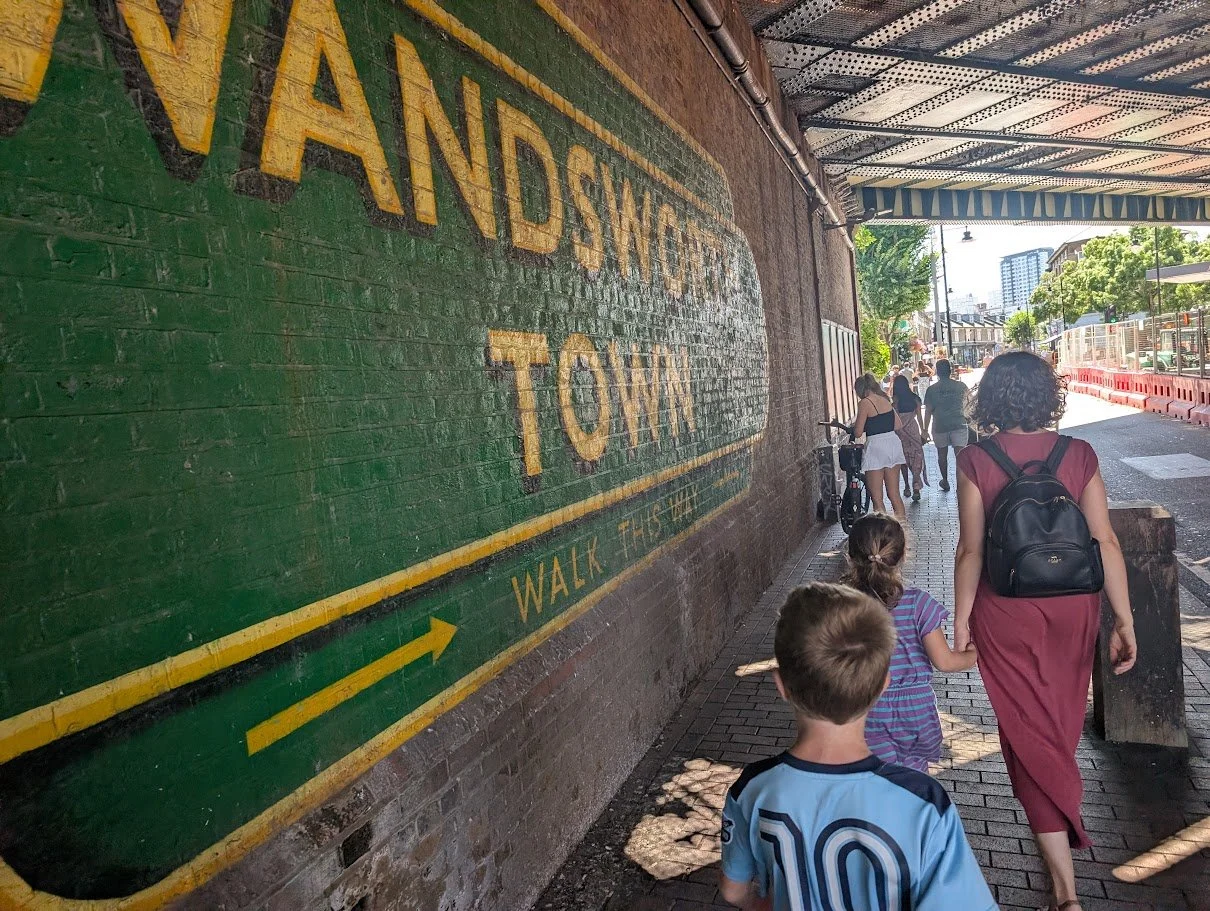
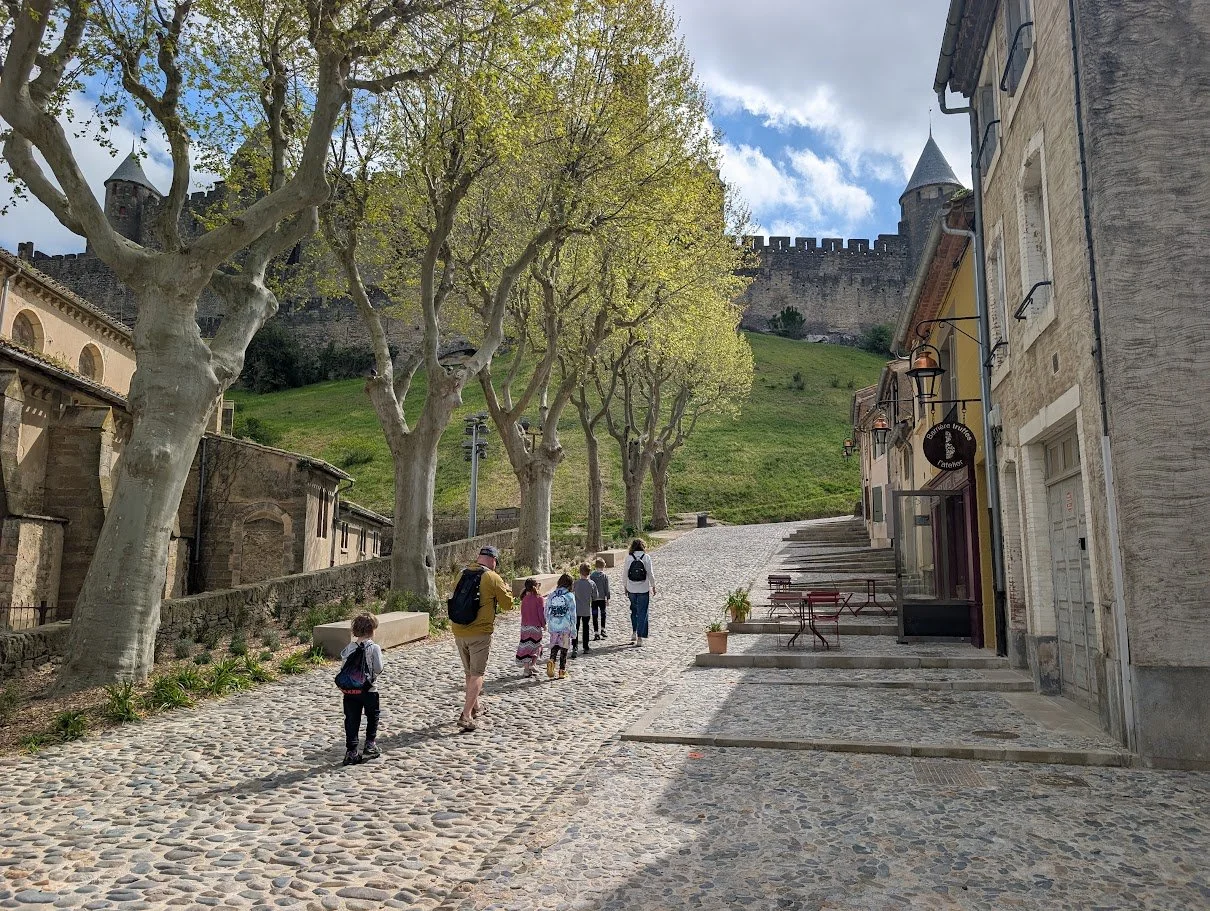
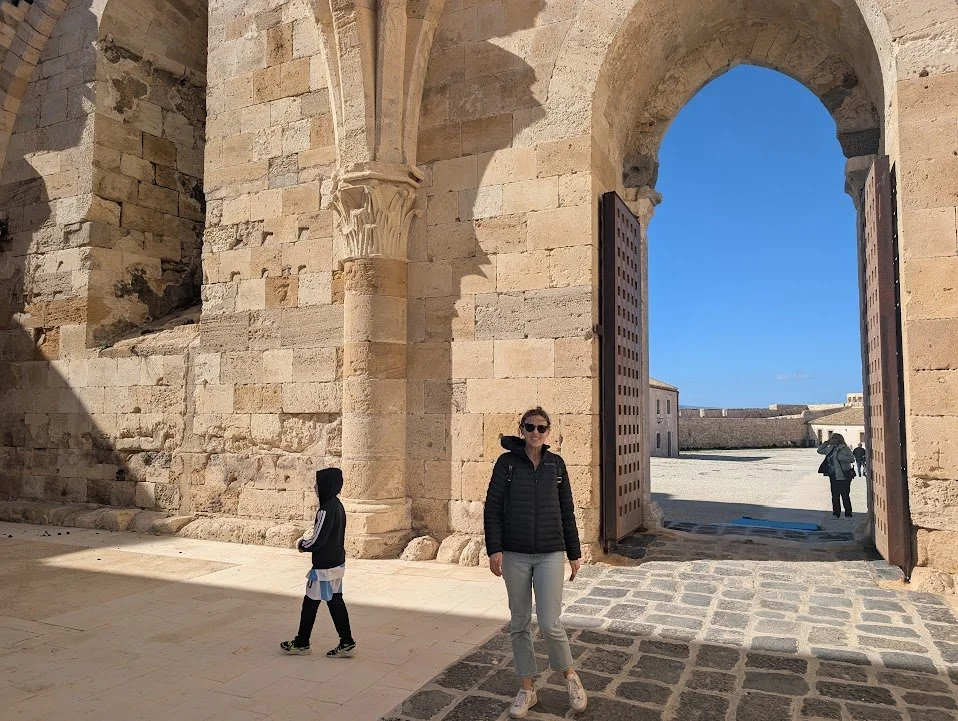
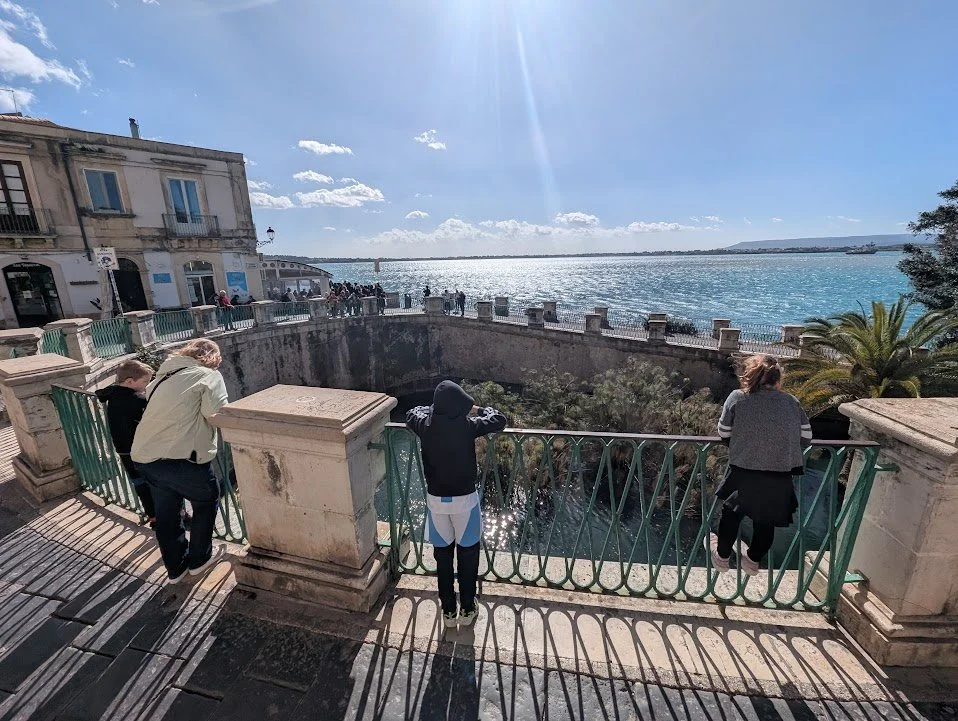
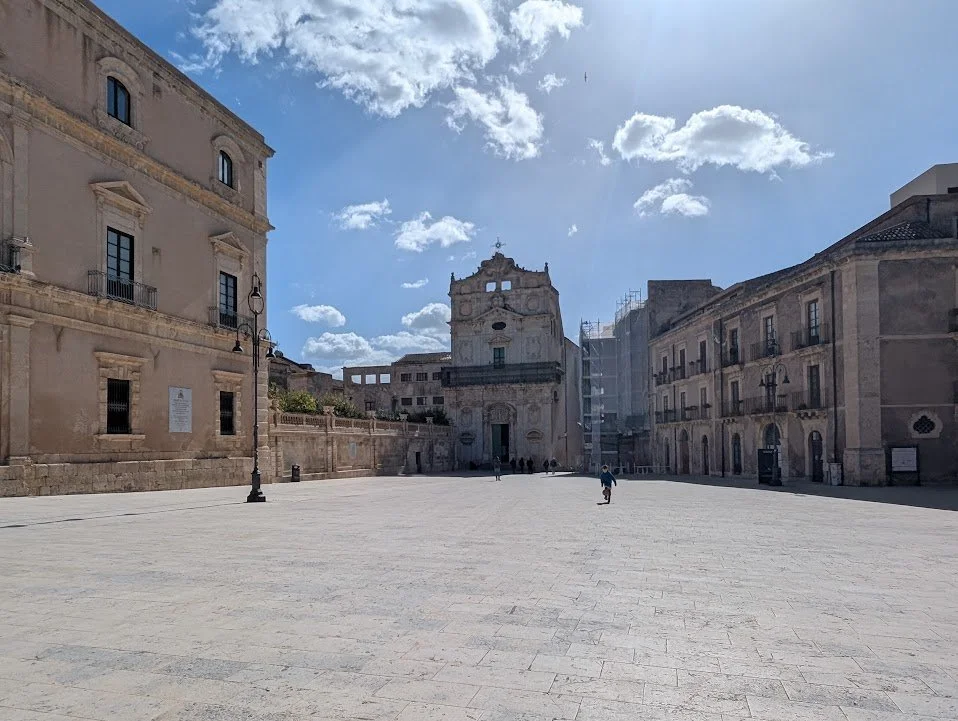
Our trip was the wave of relief as we opened the envelope to French visas in December. It was the pit in our stomach as we walked out of our house in January. It was last hugs from cousins. It was Lisbon rooftops and biking past Portuguese farmers. My daughter's seventh birthday at the pizza place on the corner in Sevilla.
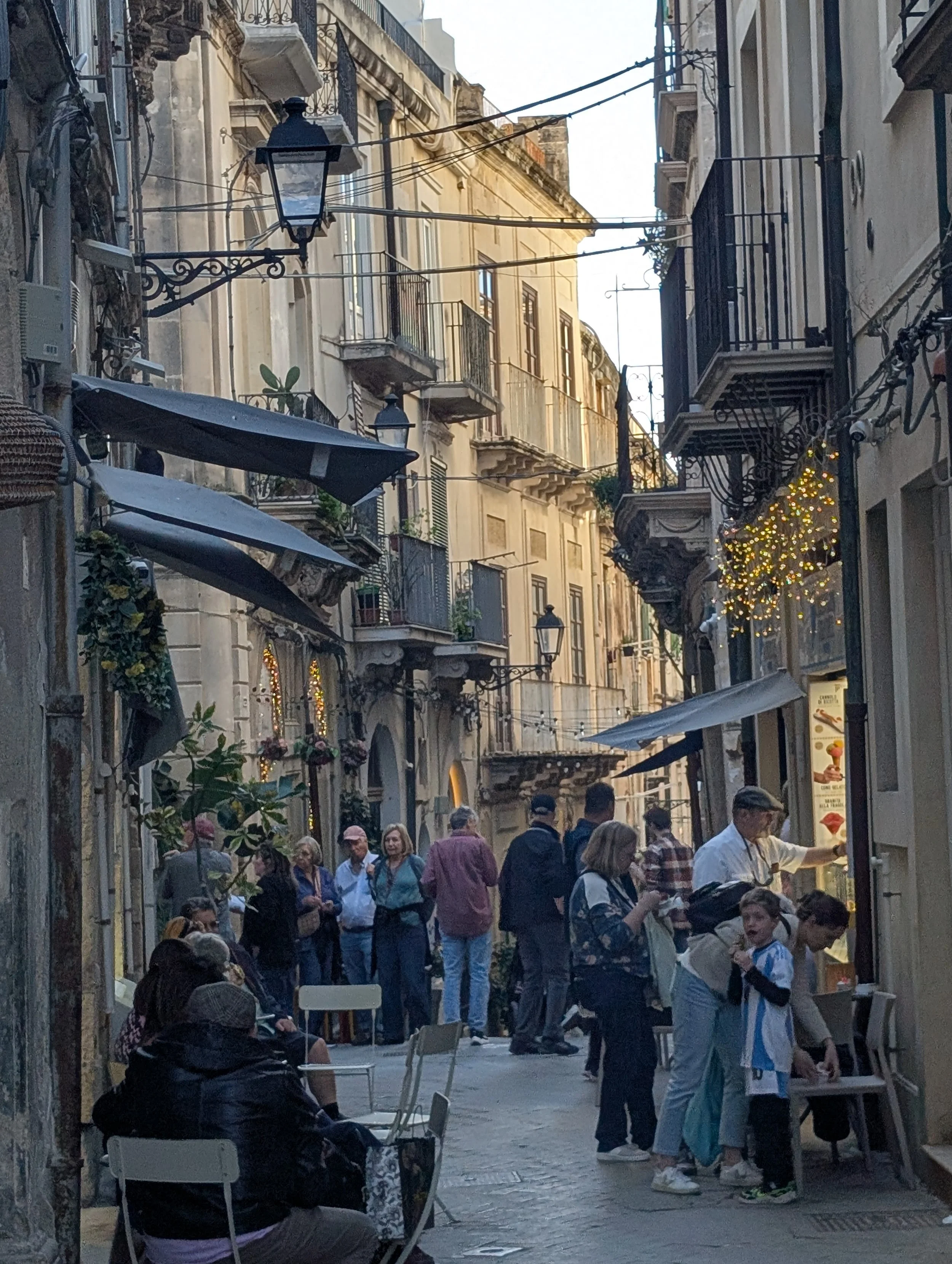
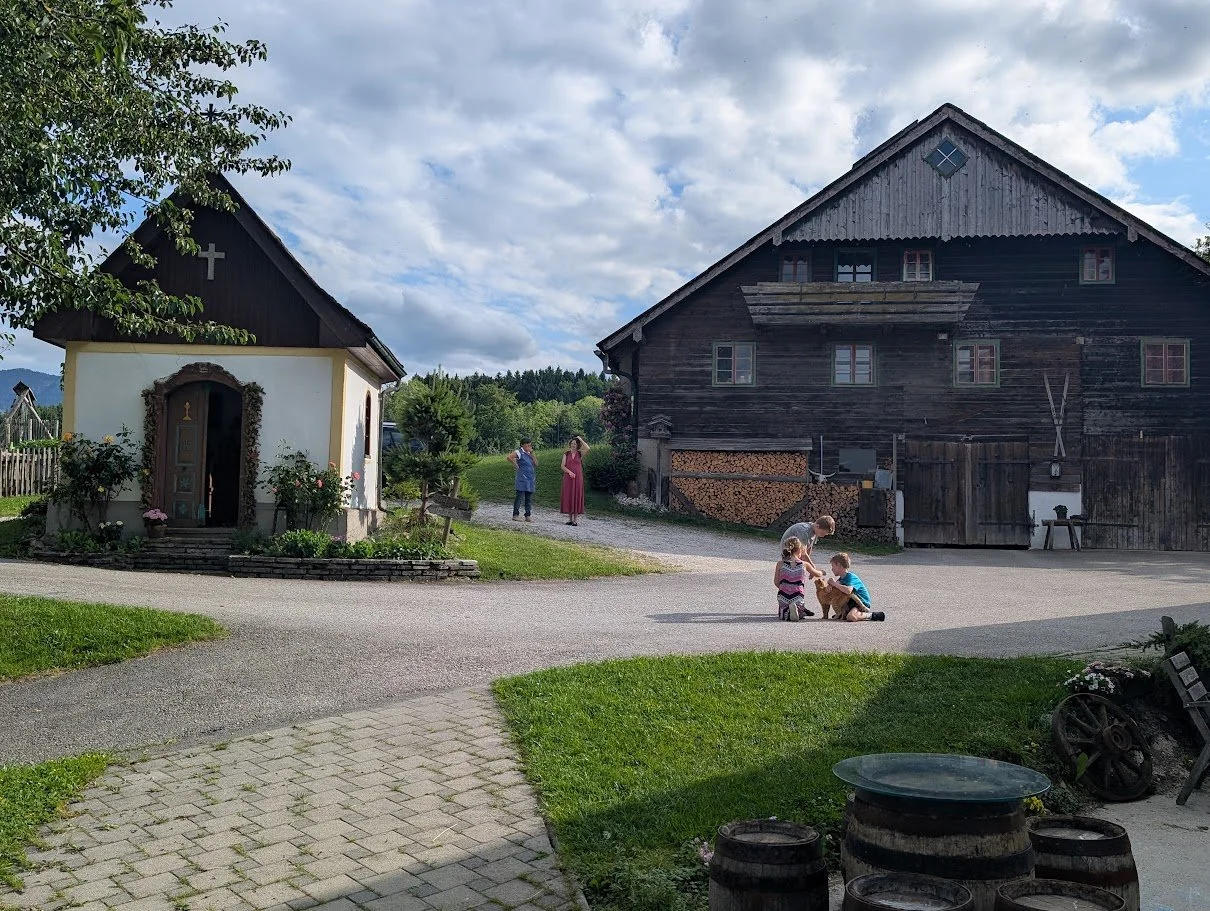
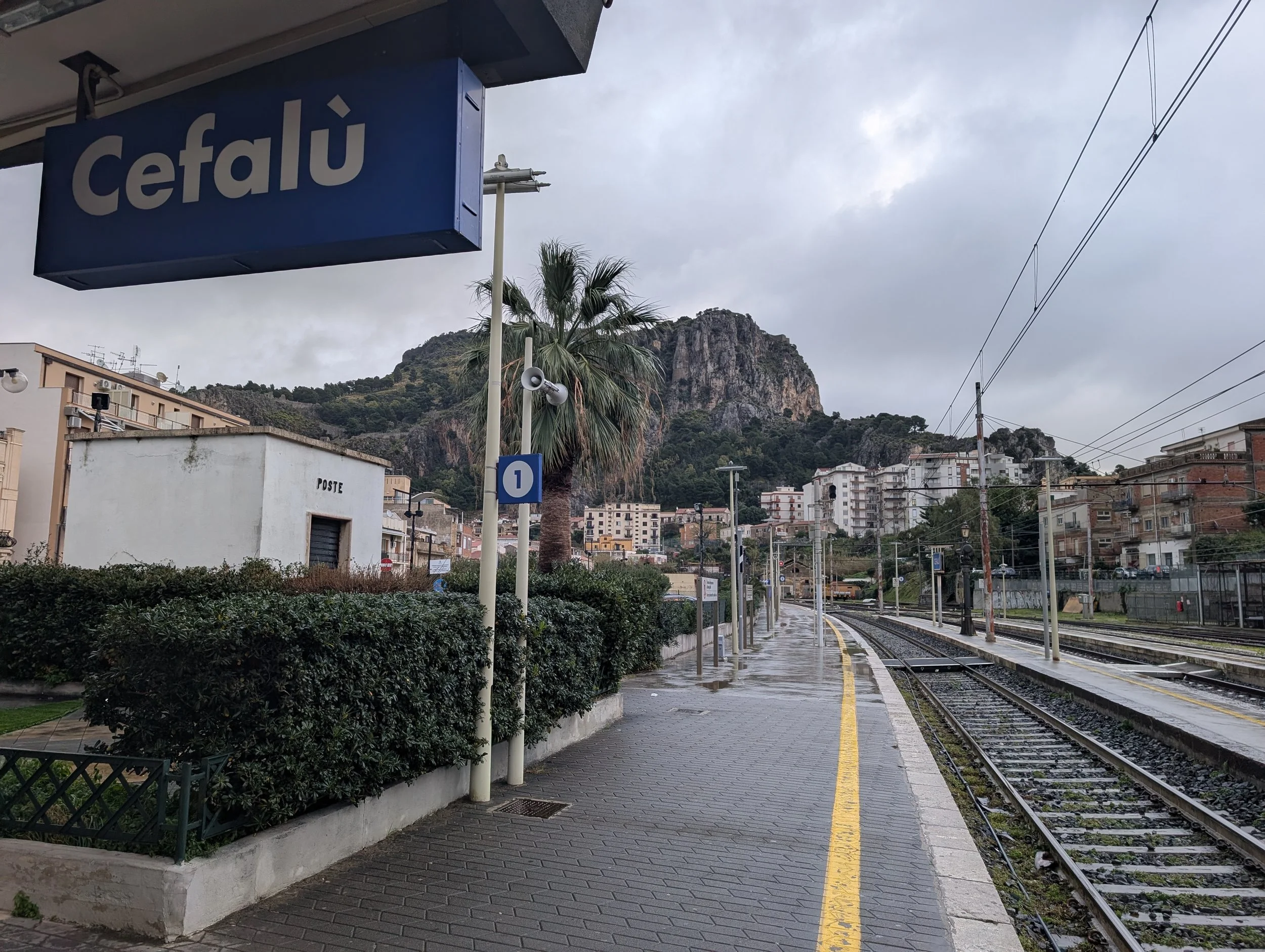
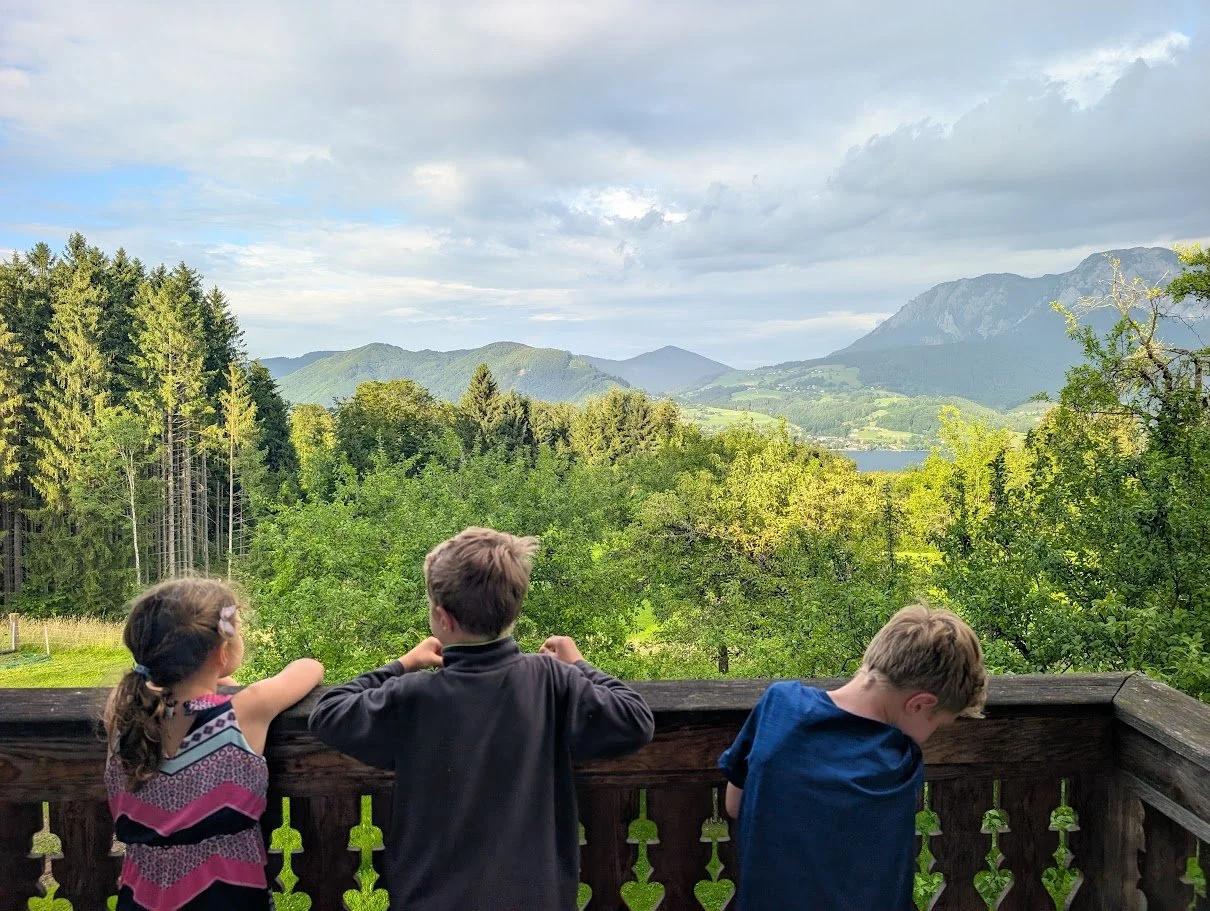
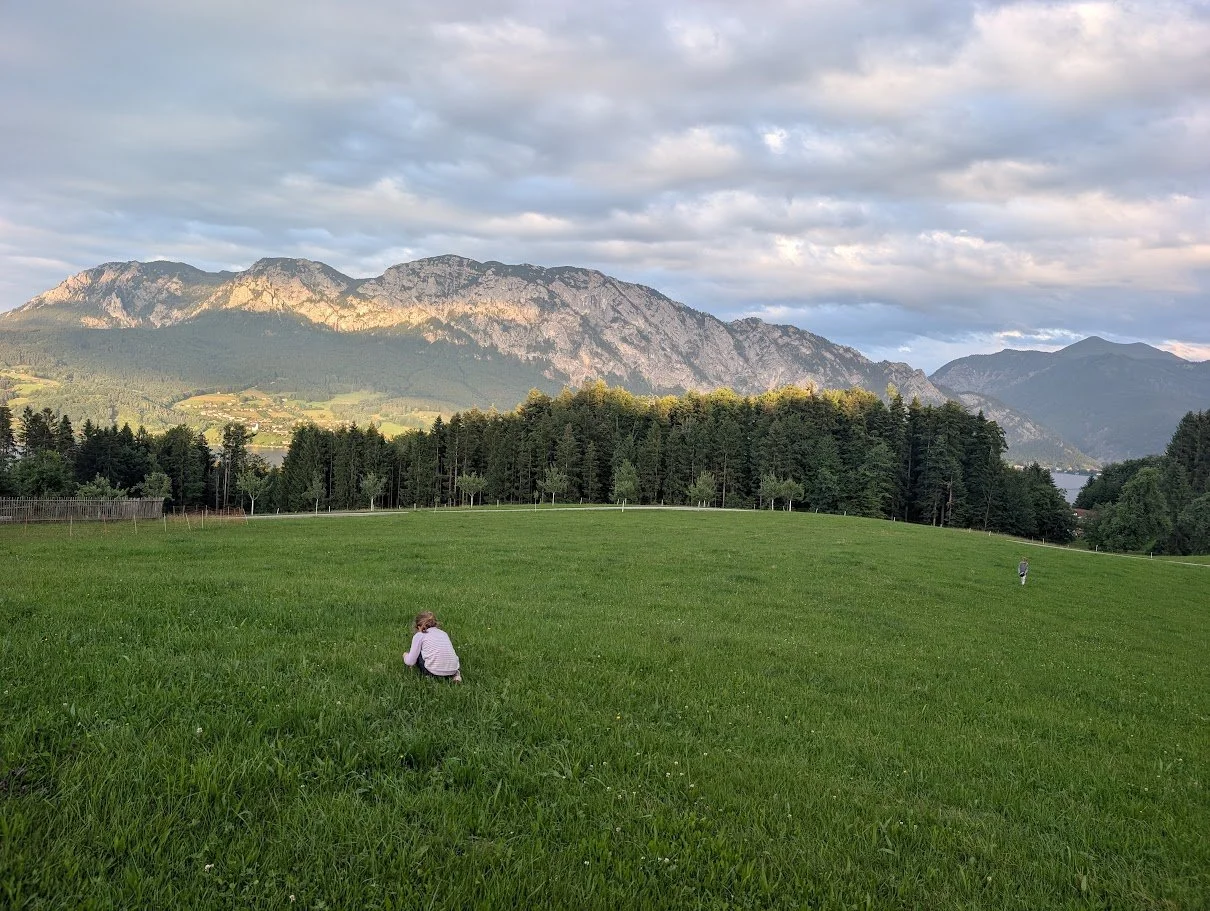
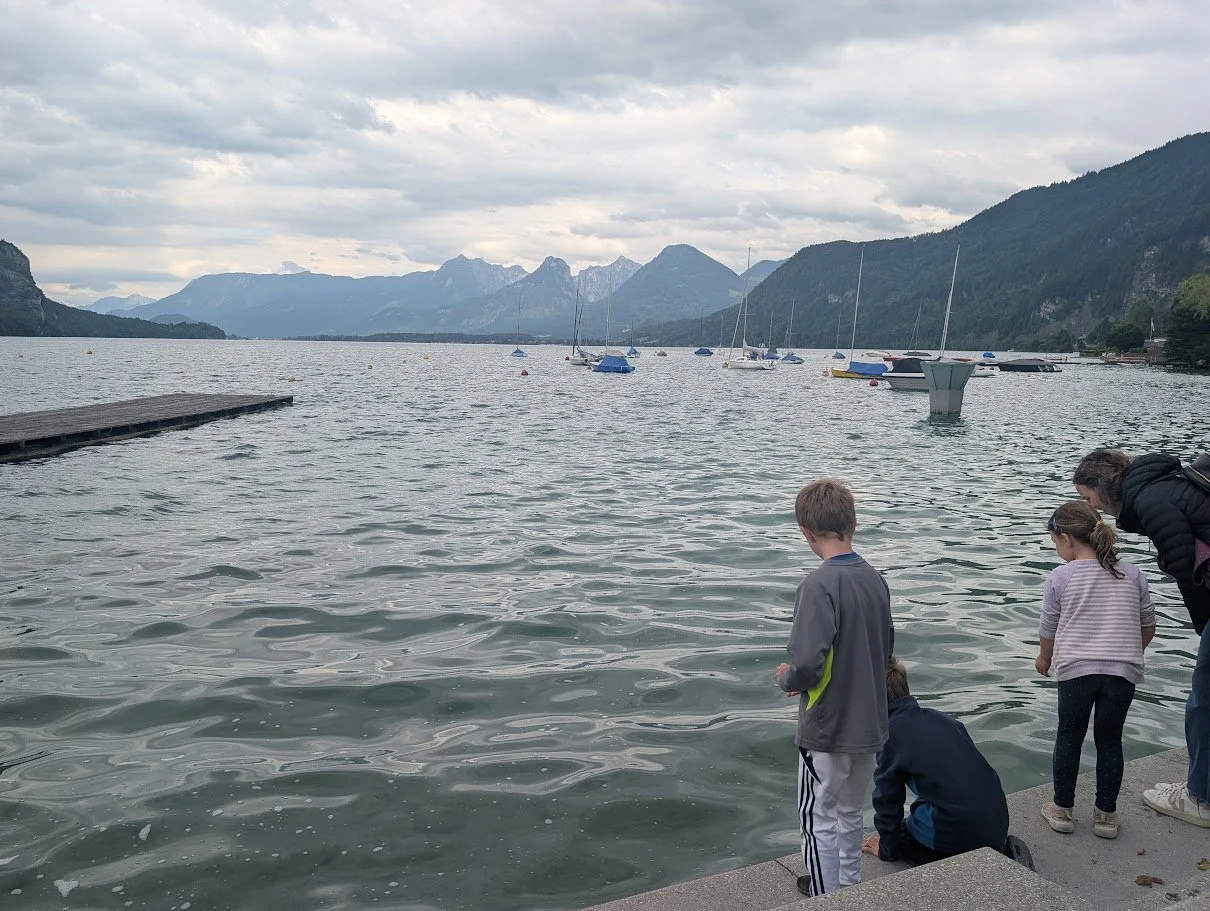
It was the pesto and sun-dried tomatoes from the Cefalù deli👌. It was wild rosemary and thyme crunching underfoot on our first climb behind the house in Aix. It was insane onramps in eastern Sicily. It was aperos with Manque and little Cleo and Lorenzo, our neighborhood sommelier. It was Adrien and Big Fluff the friendly dog and Sicily Laura. It was high-energy Manuel taking us over the Spanish border. It was Lydie and Alexa, Anne, Lance, Jeannette and the church, Aaron and Tiffany, and all the familiar faces of Occitanie. It was Christian and Barbara and our favorite Austrian grandma offering us a beer in their meadow as the pink sun hit their mountain across the lake.
It was tears of frustration at the Dingle golf course and laughter at getting stuck in the Spanish rain. It was the cheery songs of a Dublin pub, it was the hushed French of a late-night Parisian lounge. It was churros, gelatos, Butterscotch Murphy's ice cream, and croissants without end.
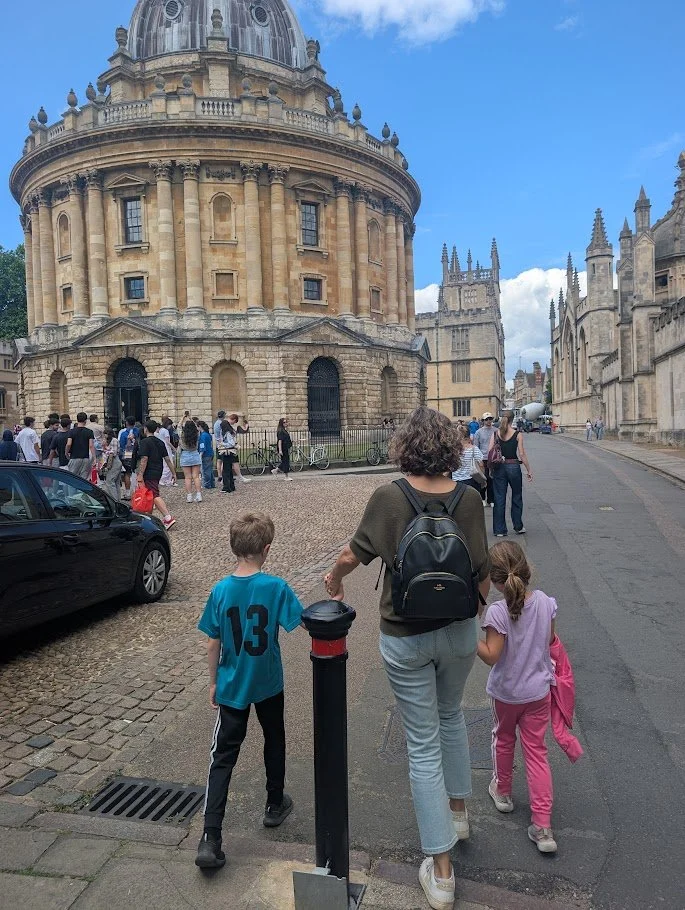
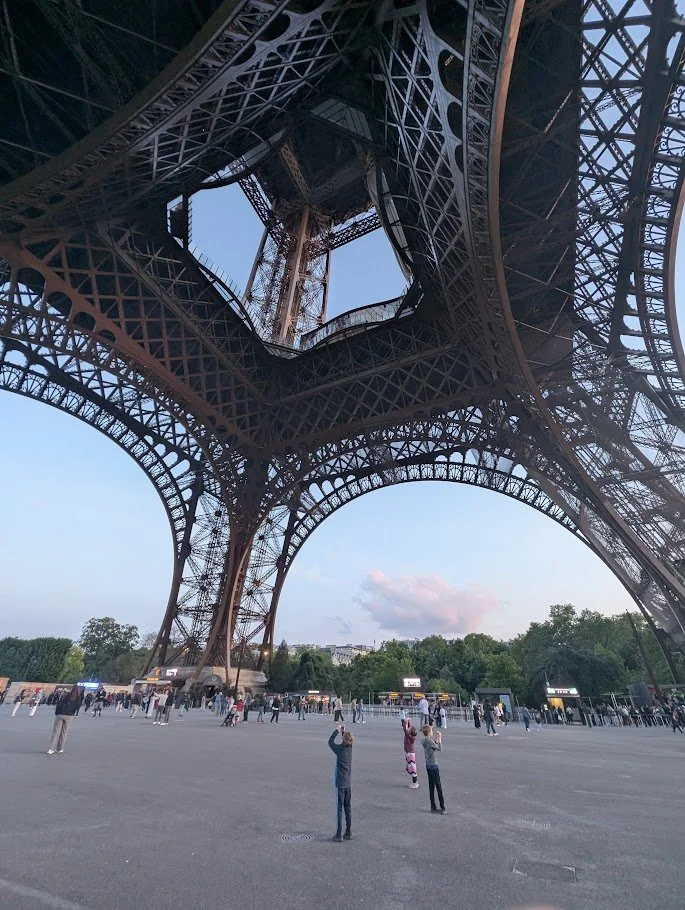
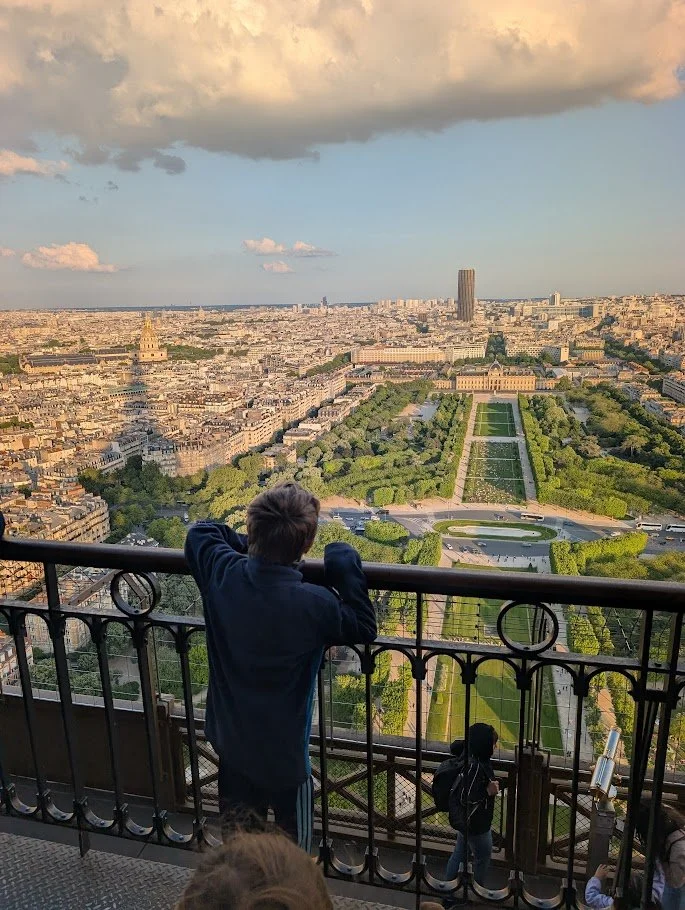
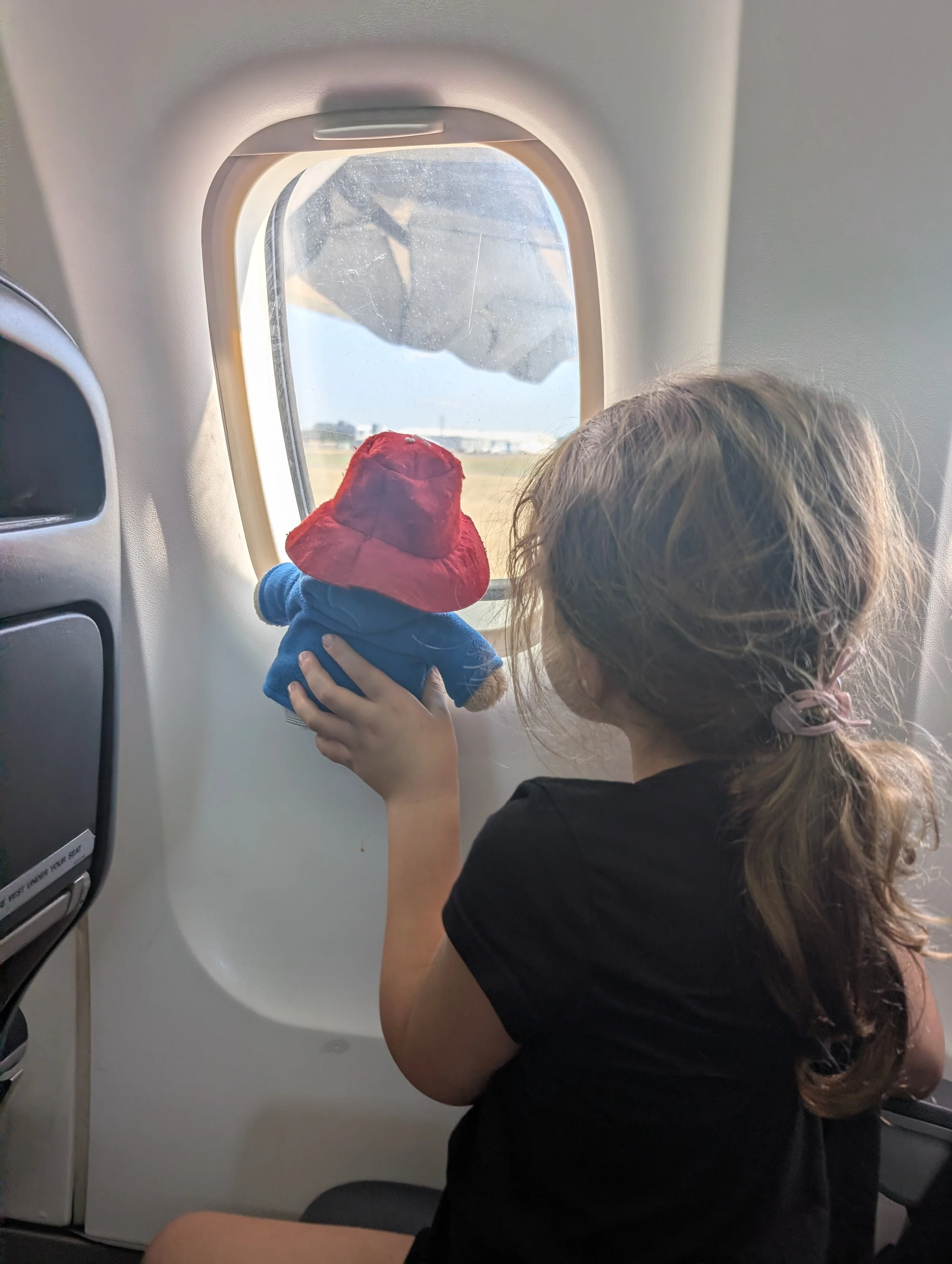
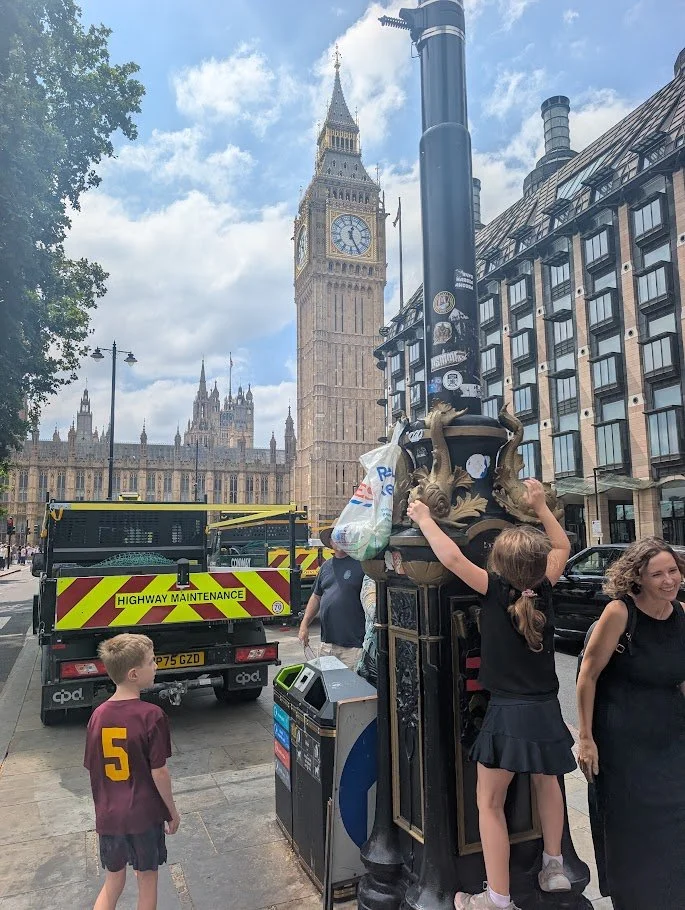
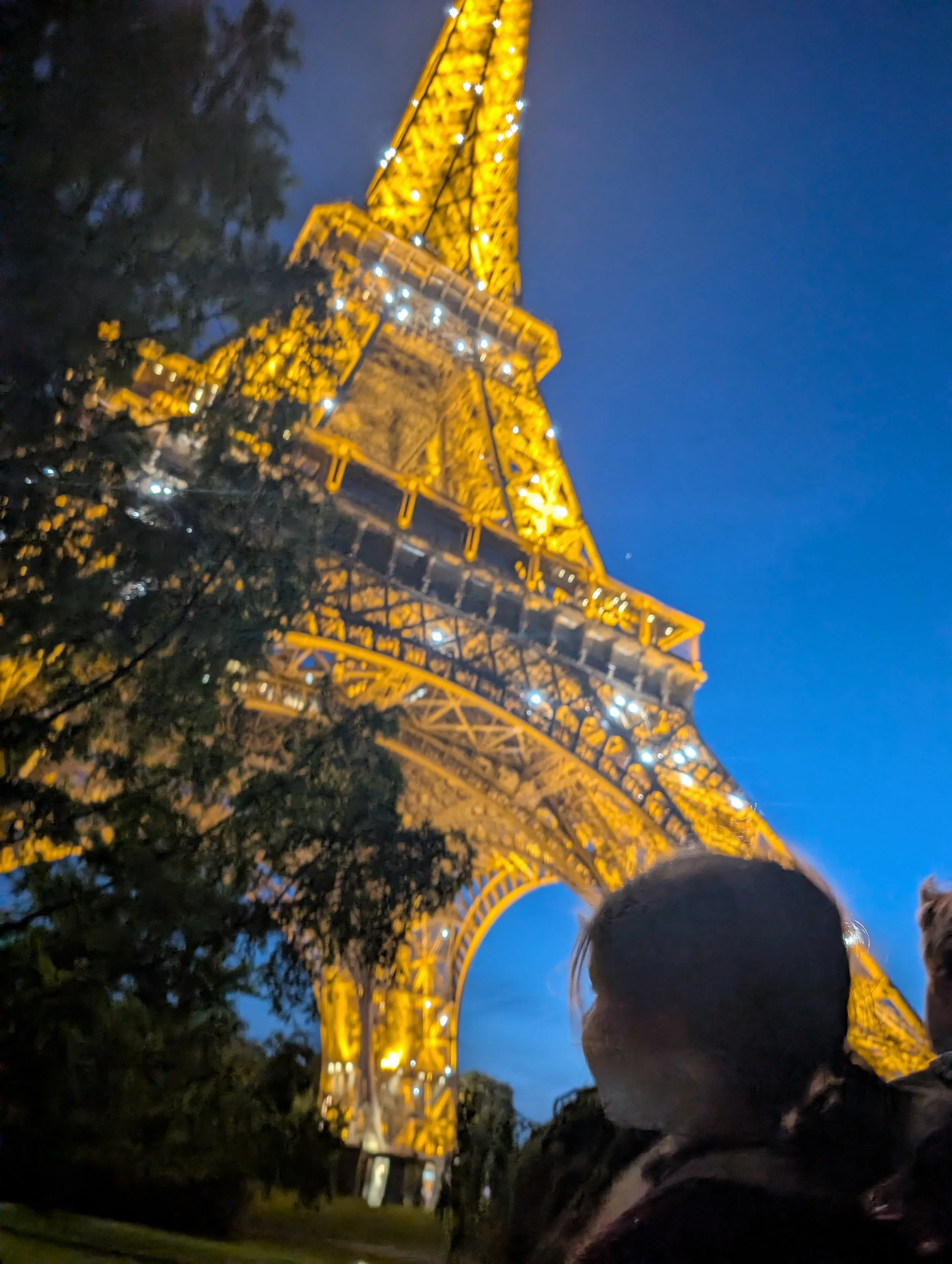
It was the winged Nike statue and Vincent's starry night over the Rhone. It was sneaking into Oxford colleges and it was kids falling asleep on me as we waited for the Eiffel to twinkle. It was playgrounds and 'our' cafes in every town. It was crowded trains, and the pilot who changed his mind 3,000 ft above Marseille.
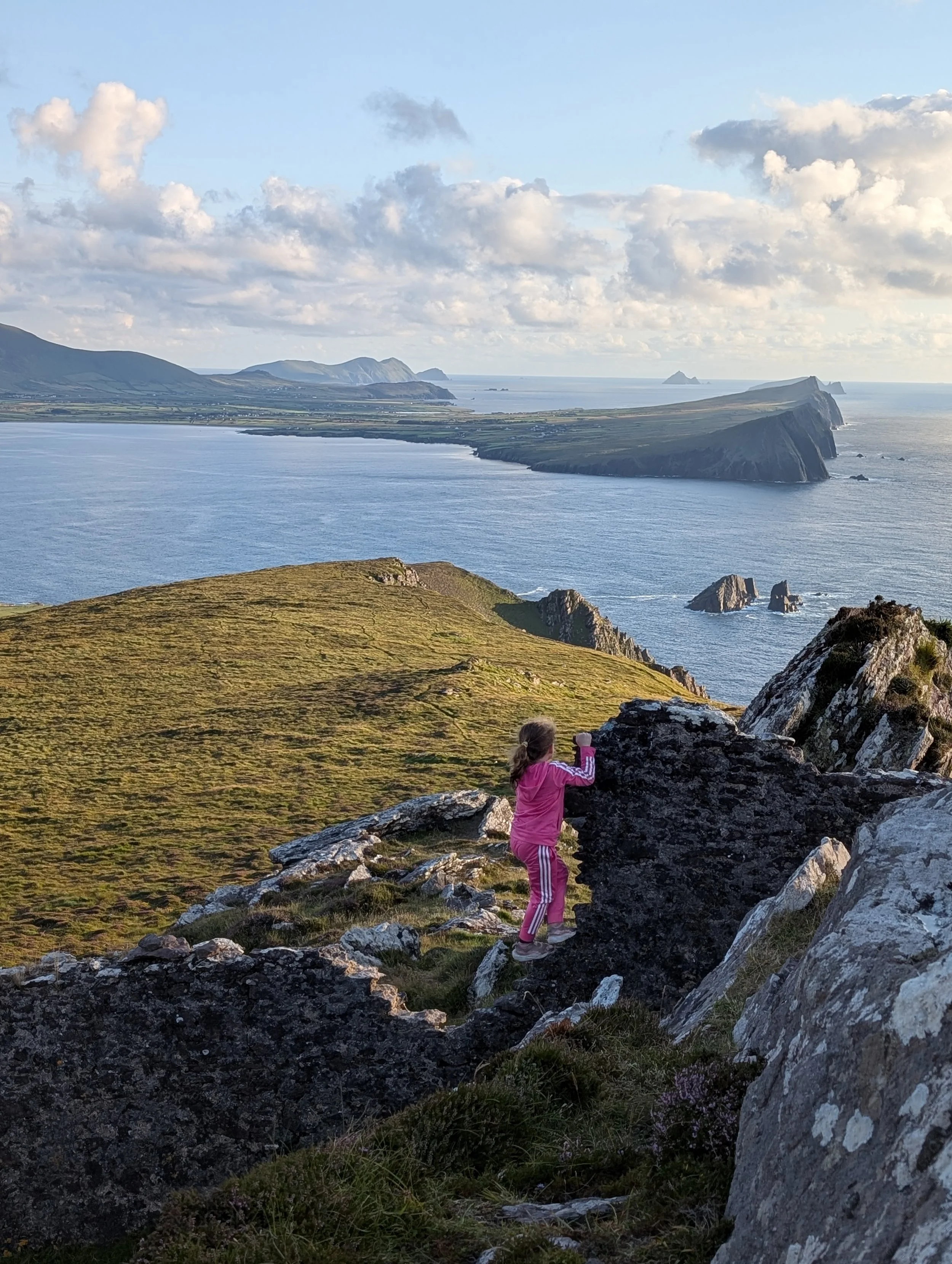
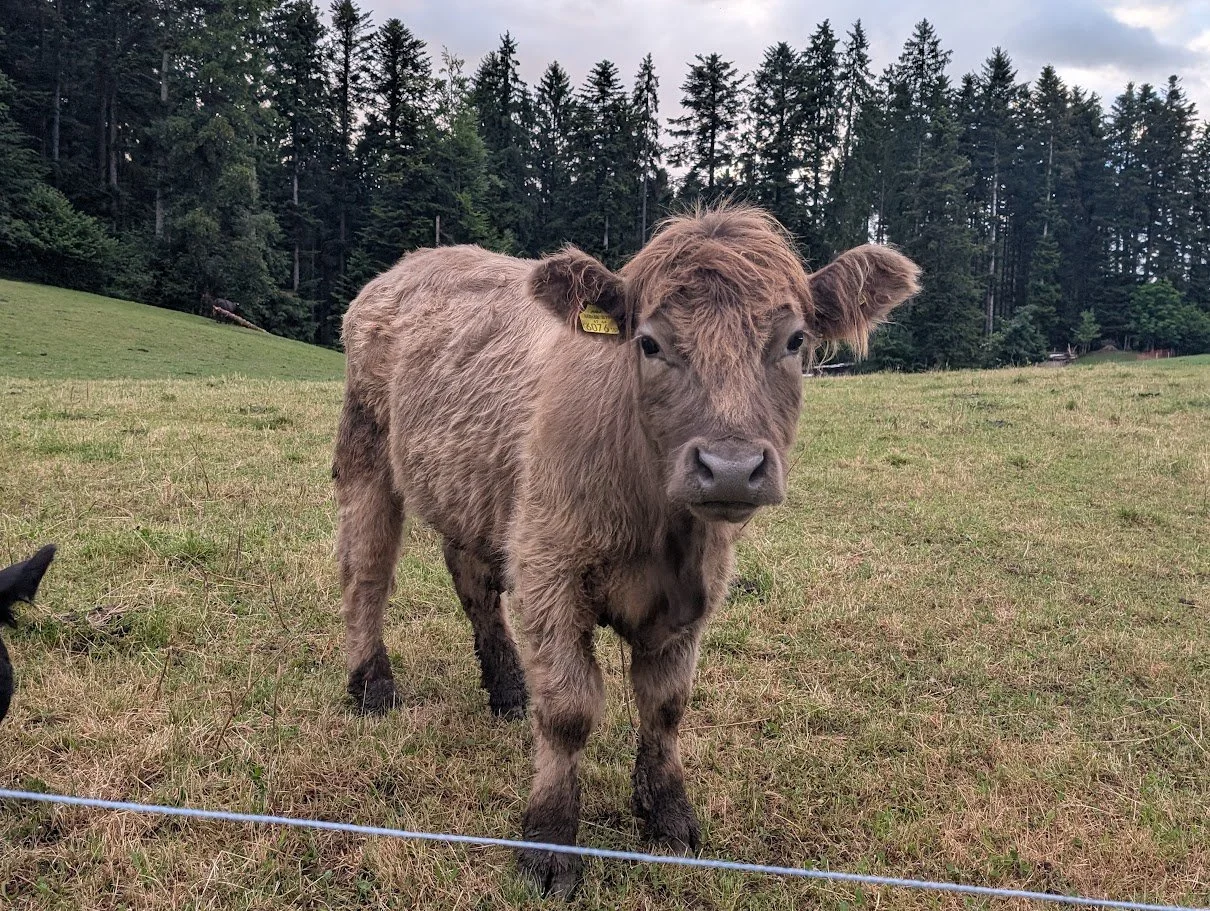
It was butterflies in our stomachs as we walked on Portuguese ocean cliffs. It was Spanish pigs trotting through the pasture and Irish sheep clinging for dear life to green cliffs above the swirling ocean. It was the dead quiet of Sénanque Abbey in the middle of the night. It was the roar of the La Liga crowd when Sevilla took the lead.
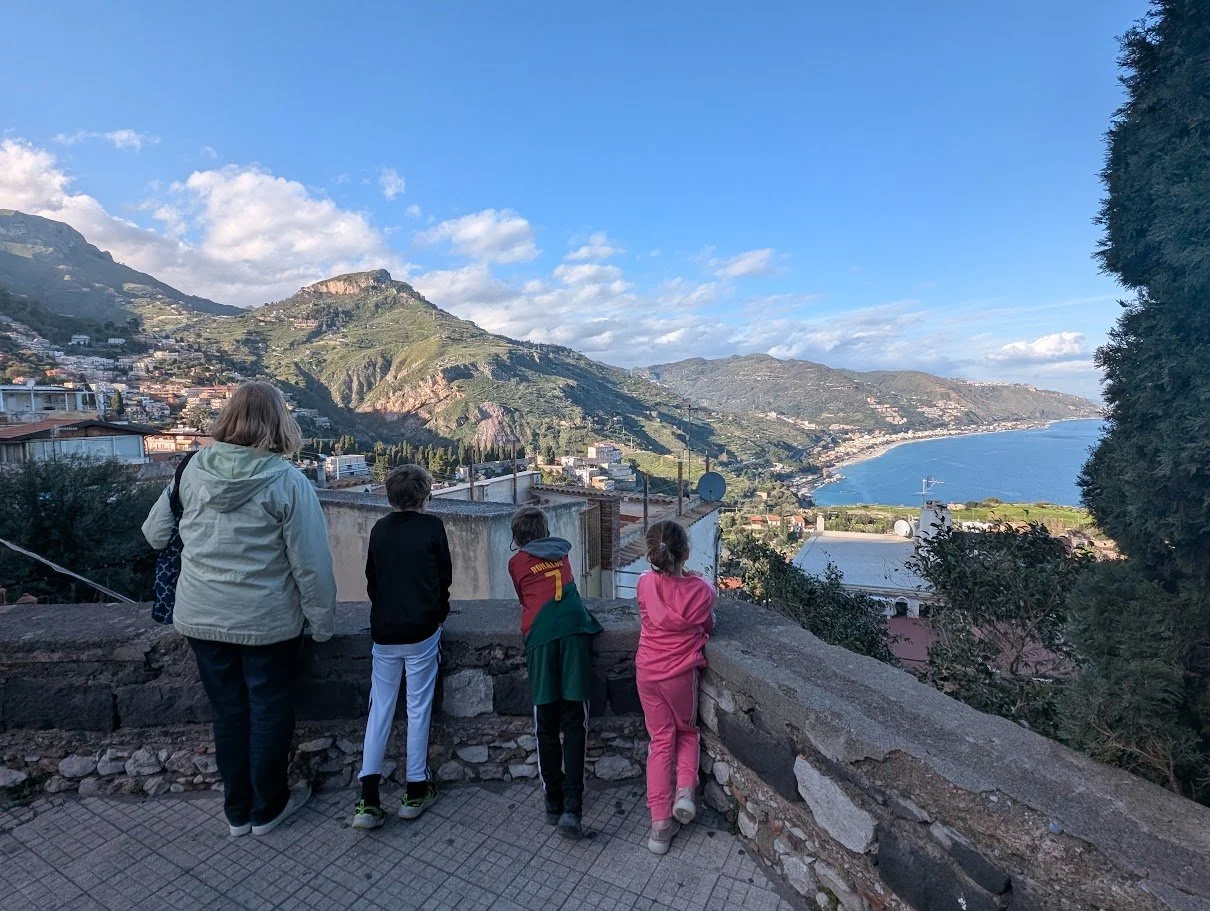
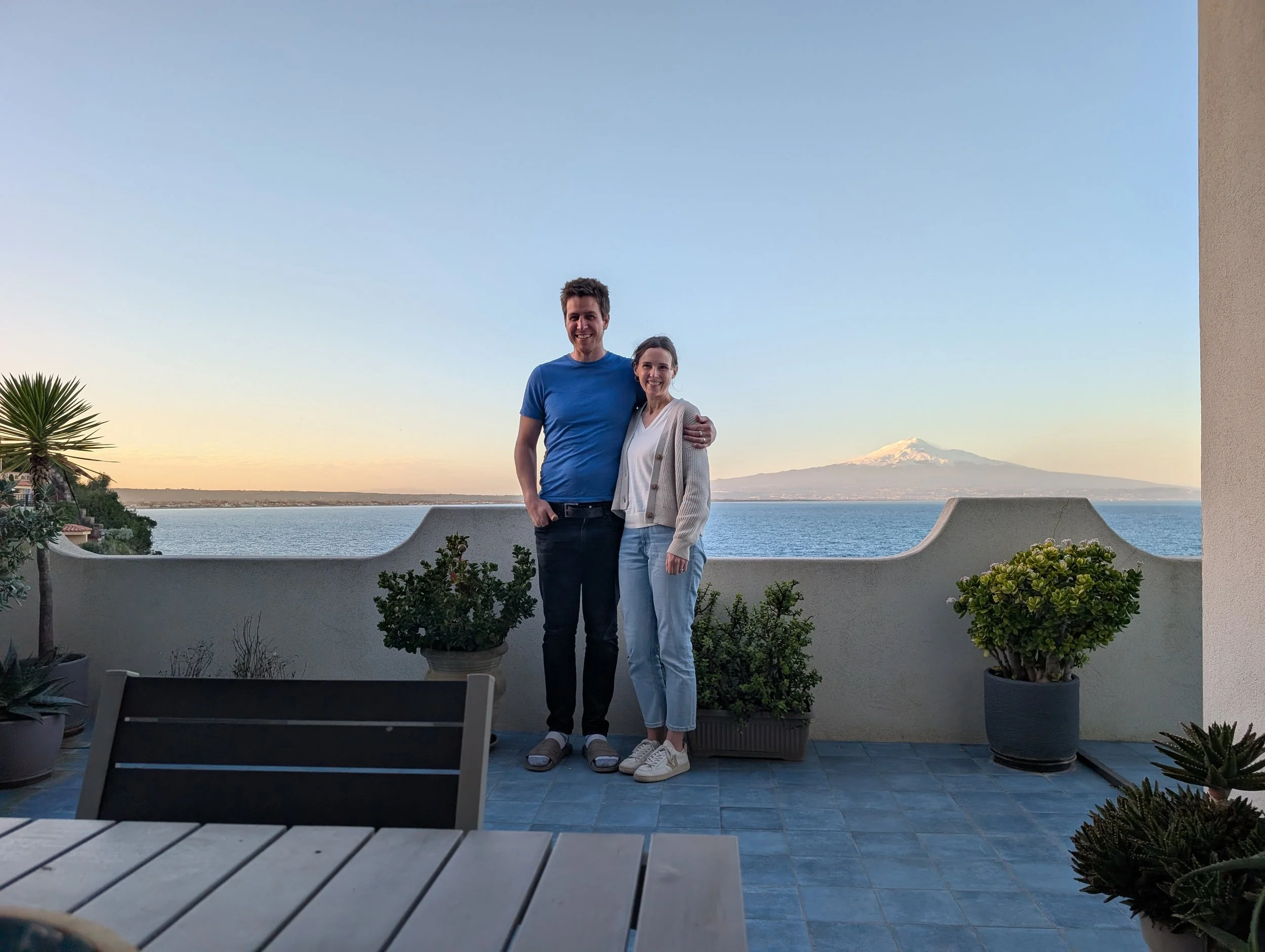
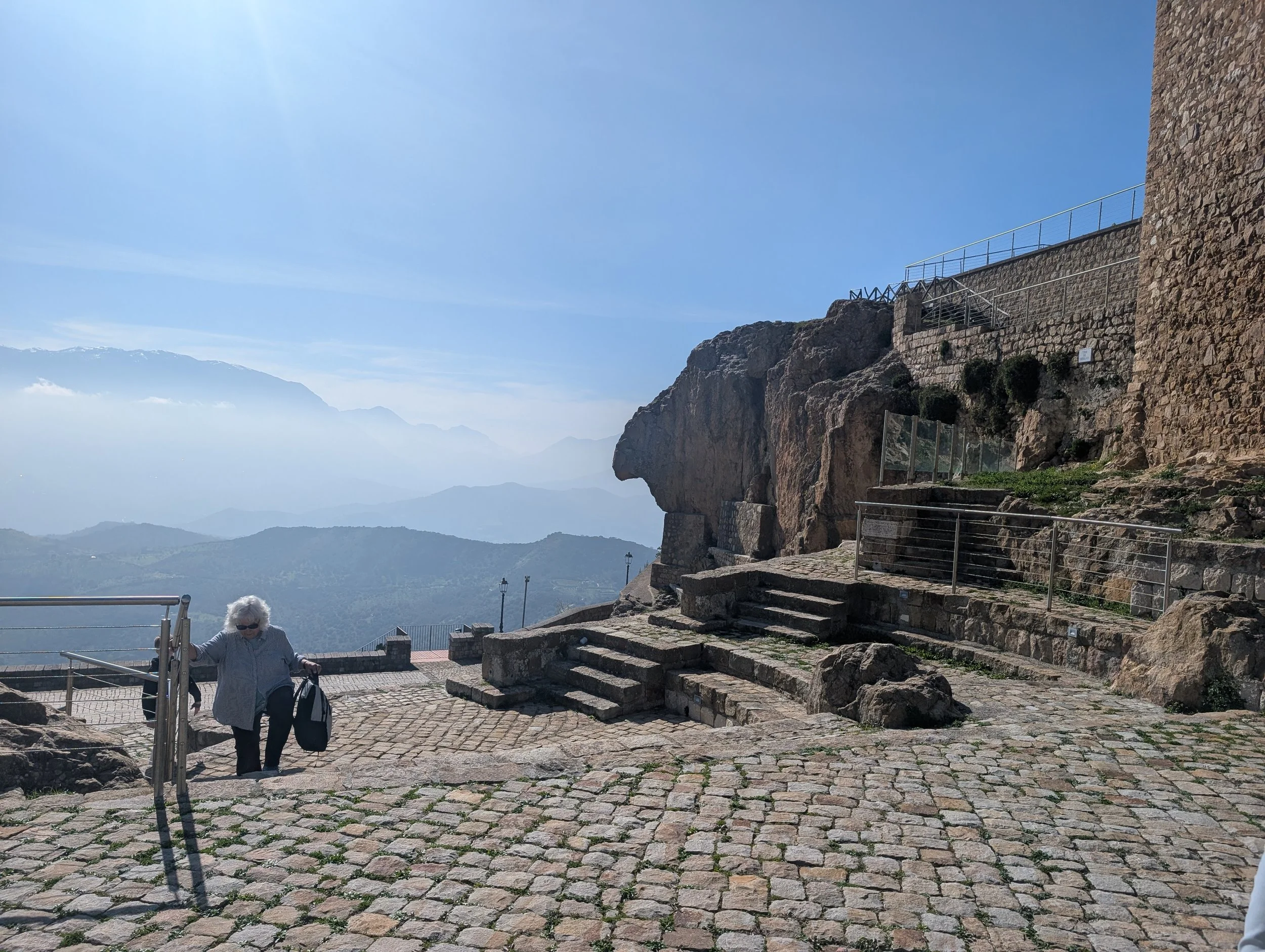
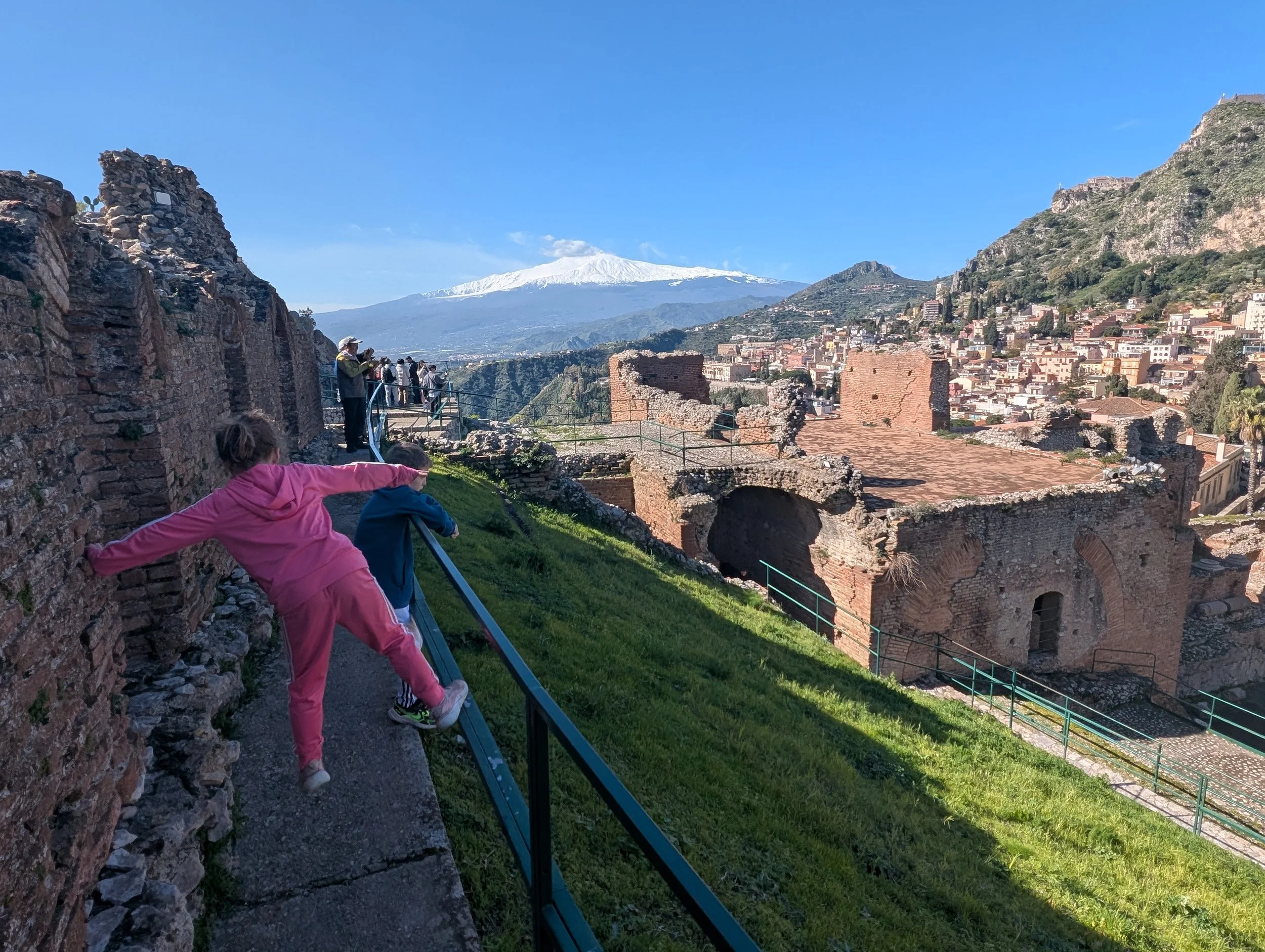
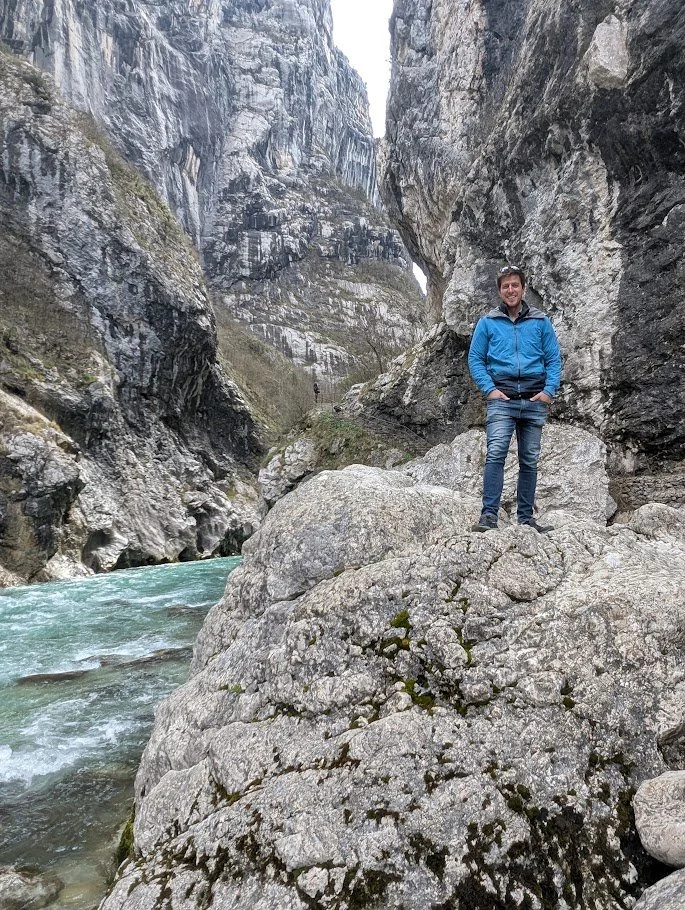
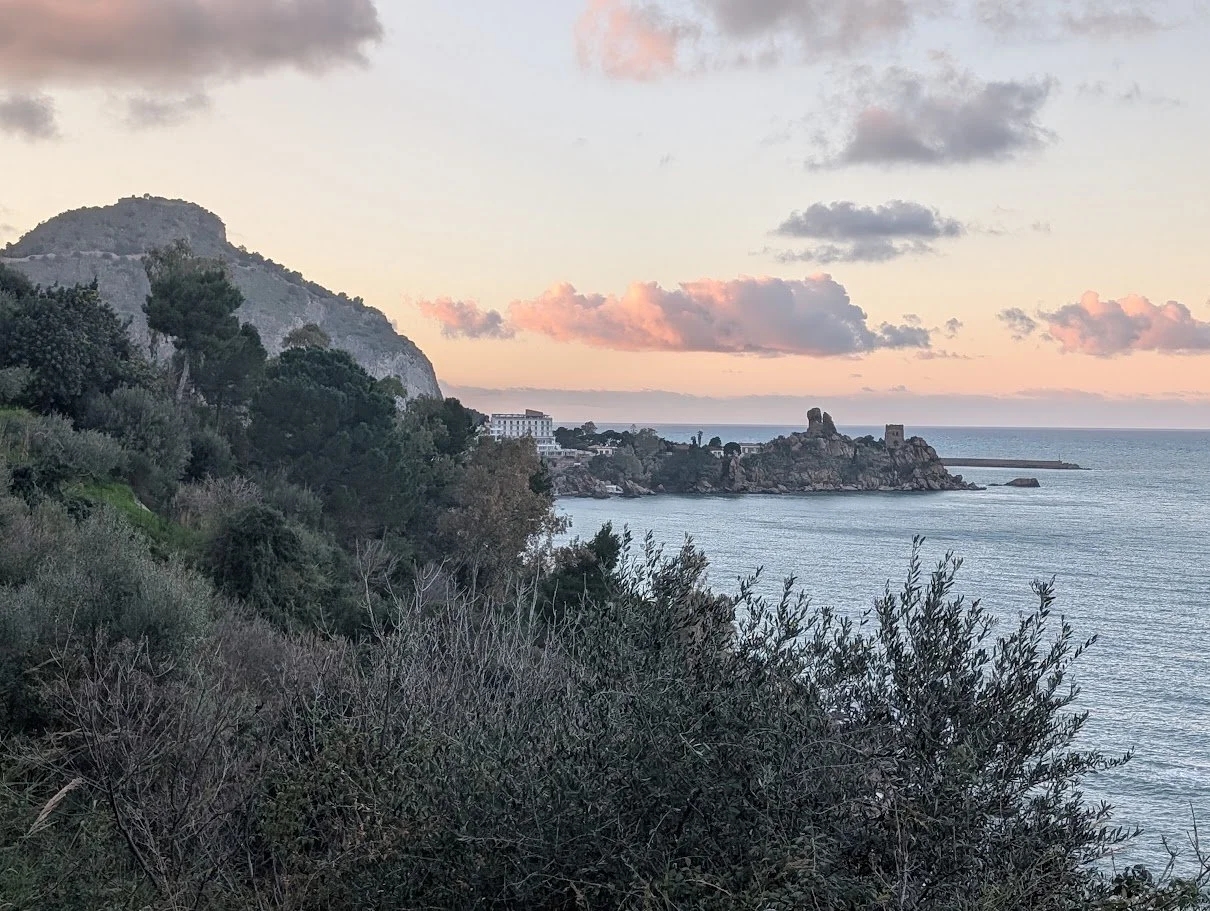
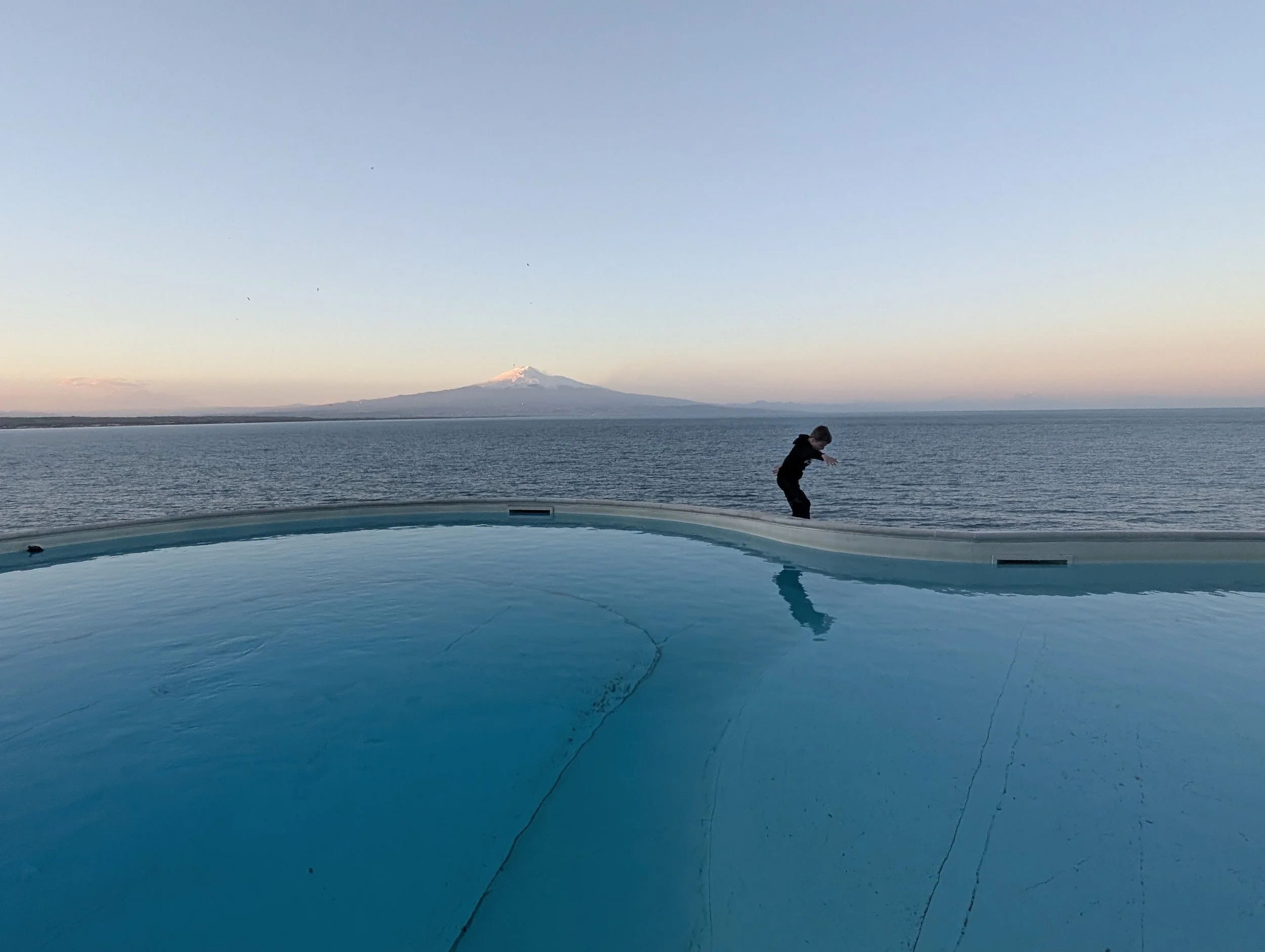
It was sunsets — from Provence to Cefalù, Etna to Salzburg to the far reaches of western Ireland. It was fish and cider with Olivia's family. It was winding around the Nimes colosseum with Ryan, Erica, and the kids. It was breakfast in the rain with Francis and Hilary. It was the joy of seeing Grandma at the door and white-knuckling Palermo traffic because I brought her to the wrong airport to go home. It was Grammy walking her 600th step down from mountaintop Taormina to Isola Bella. It was saying goodbye to her in a Provençal night.
Memory Dividends for a Lifetime
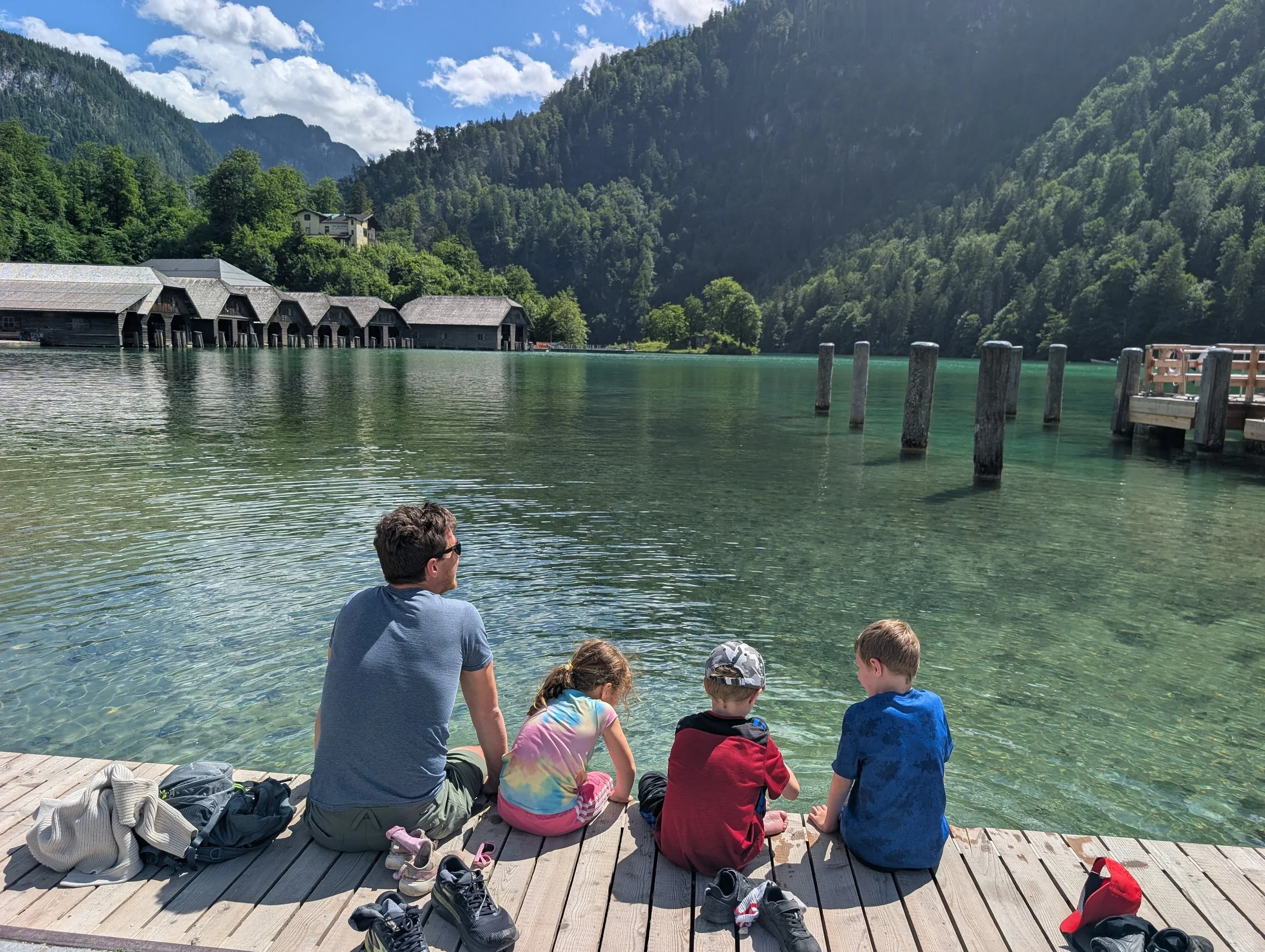
By the time a kid walks across the stage at high school graduation, they’ve already used up 90% of the in-person time they will ever have with their parents. Every holiday after that, every visit, every phone call for the rest of your life — that's the last 10%.
Our little ones are nine, nine, and seven. We're sitting in the fat part of the curve. For now.
Shared experiences are the building blocks of relationships and novelty is the tripwire for memories. Keep life steady and it flies by in a blink. Try something new and memories are made- and time slows down.
There have been a lot of hard times in my thirties. Times I wished would just go faster. Now though? We’re realizing that what feels like forever is just a few short years. How do we maximize the time we have?
The Worth of a Trip
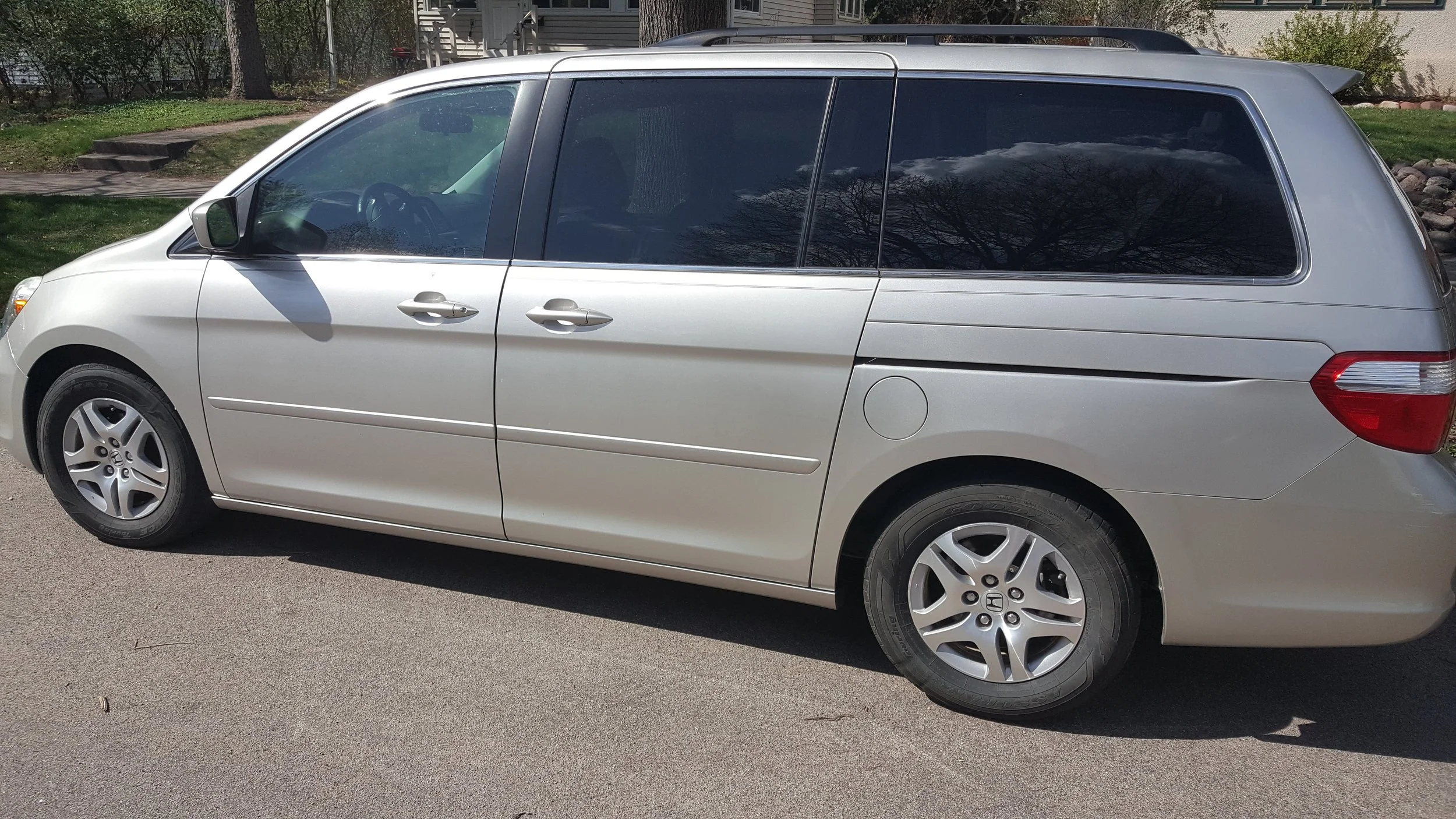
I mentioned our crappy minivan in the first post.
I wrote that the cost of this trip cost was about the same as a slightly newer model. Not a new van. Just slightly less used.
I've thought about that newer minivan since we got back. The one with a few less creaks would be nice. It’s the kind of purchase people make all the time.
But life is tradeoffs. For us, we asked ourselves a year ago what we wanted more: a slightly newer minivan or this trip in this season.
Which one would you choose? For us it is not close. It is not remotely close.
Conclusion
I'm not telling you to go to Europe for seven months. Europe’s our jam and we found ourselves in the fortunate position to do it (plus go read part two — our voyage had real challenges). This trip that was so joyful for us would be torture for most people.
What I am telling you is that whatever window you're in right now will not last. A marriage still young, parents still sharp, knees that still work, kids who still want you in the room. These don’t last forever. You already know this. We all do. But knowing it is not the same as acting on it.
We took a shot on something while our window was open. We came home tired and sunburnt and “purple” and sad and glad. We found memories that meant something to us — and will mean something to us. Did this trip cost a lot? I don’t even want to add up all the points, dollars and hours.
But for us, it was the deal of a lifetime.
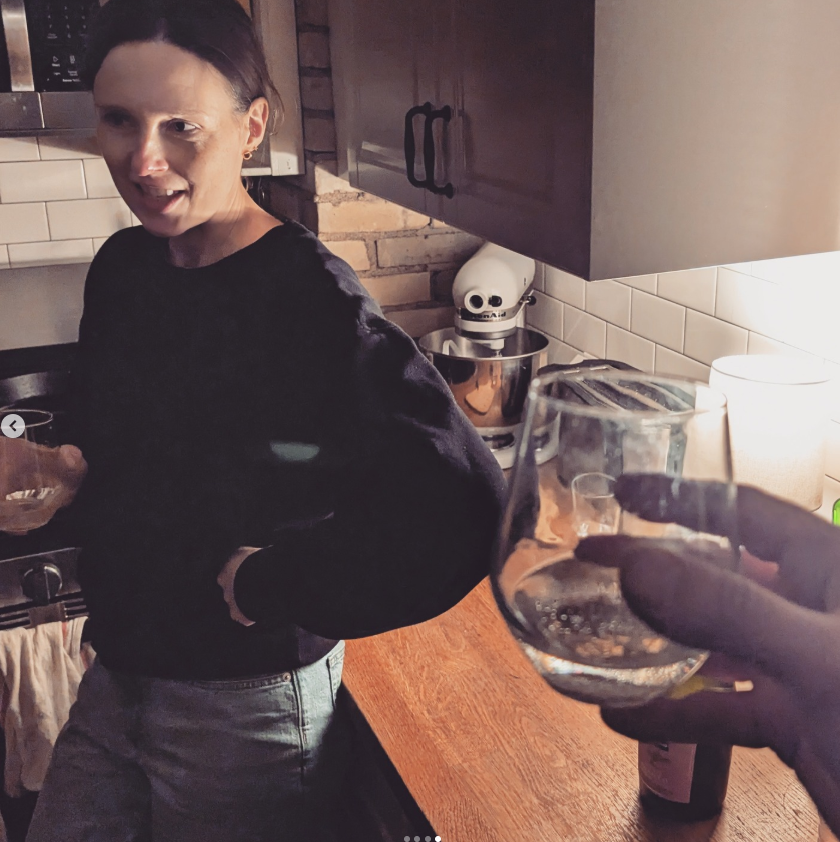
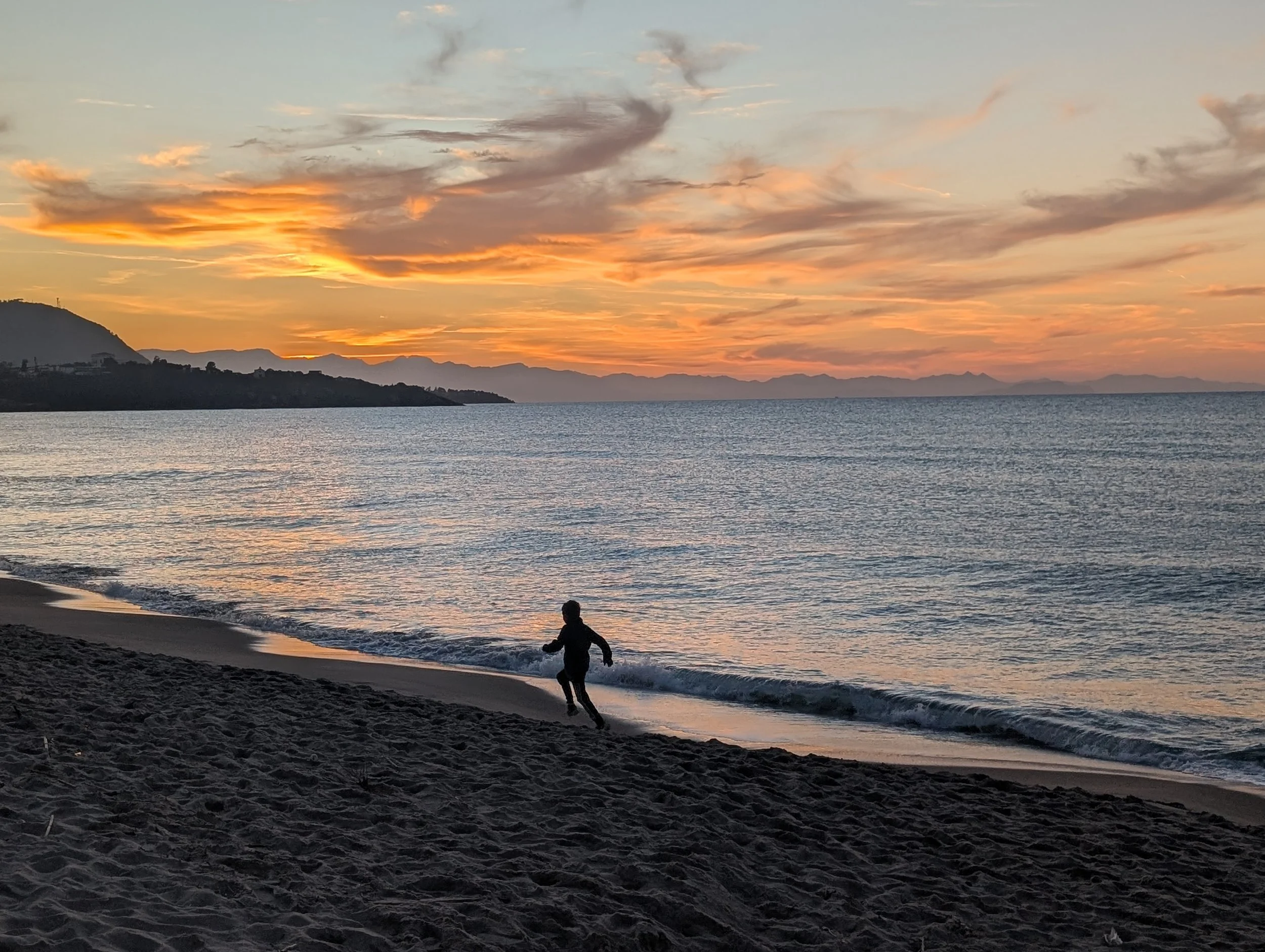
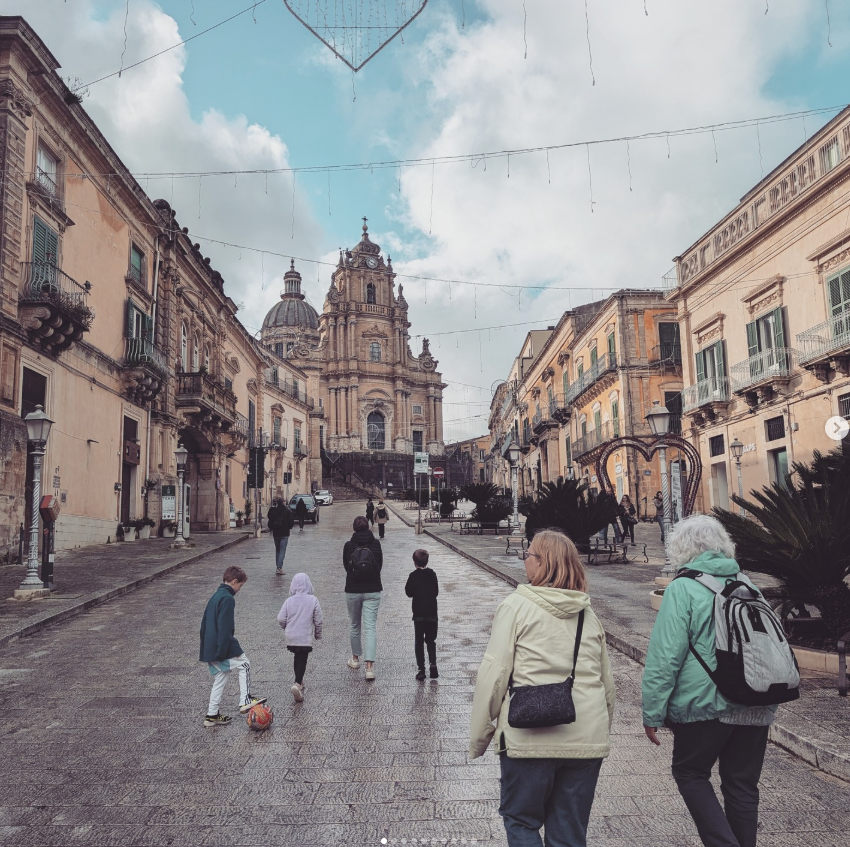
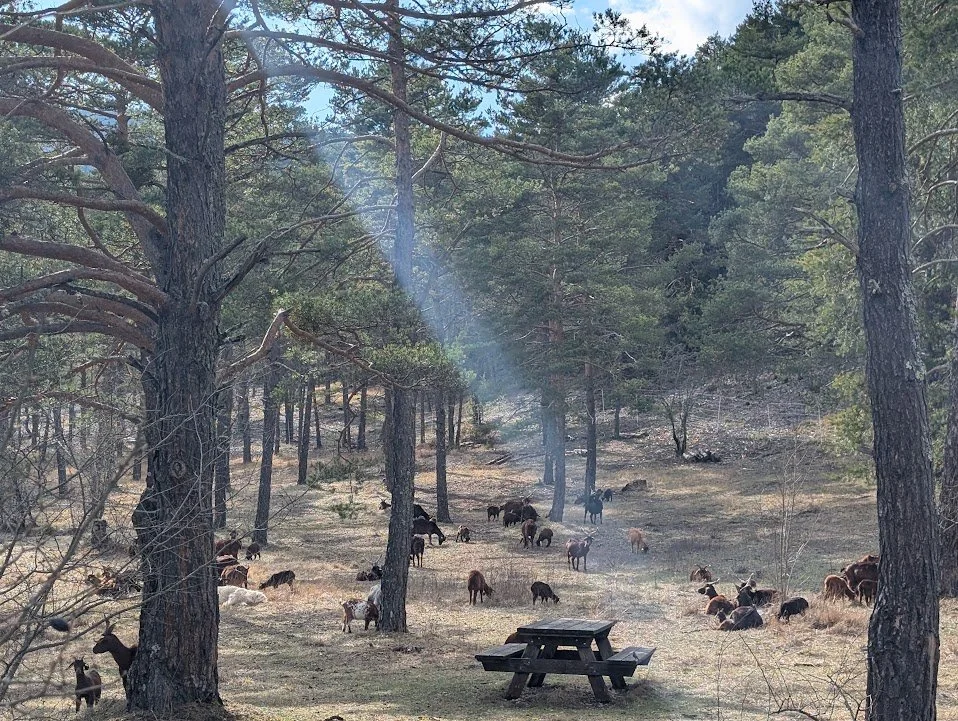
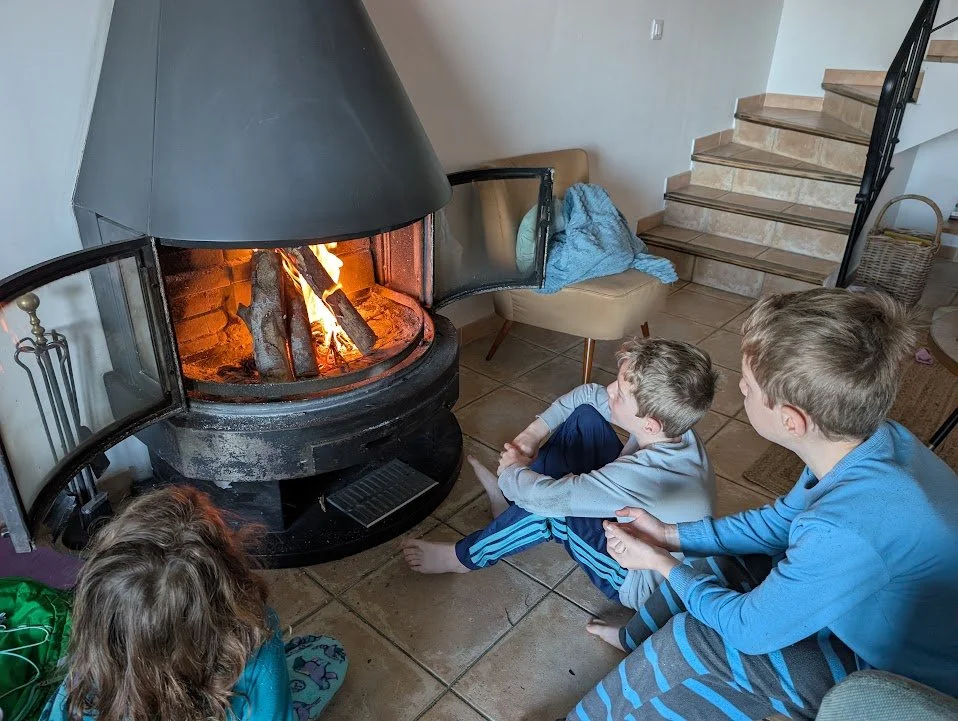
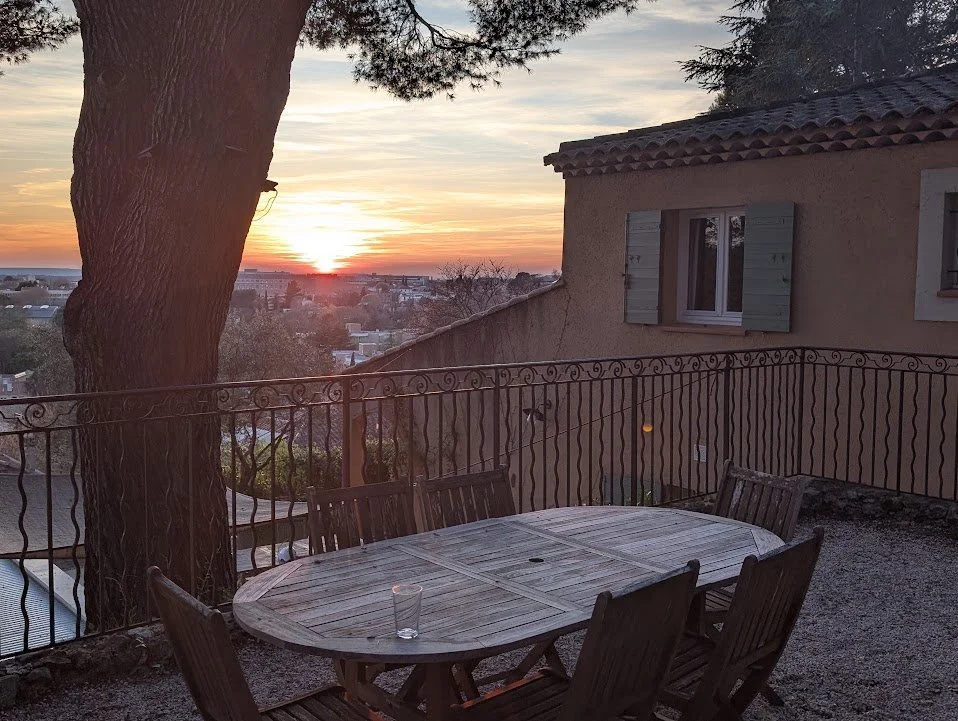
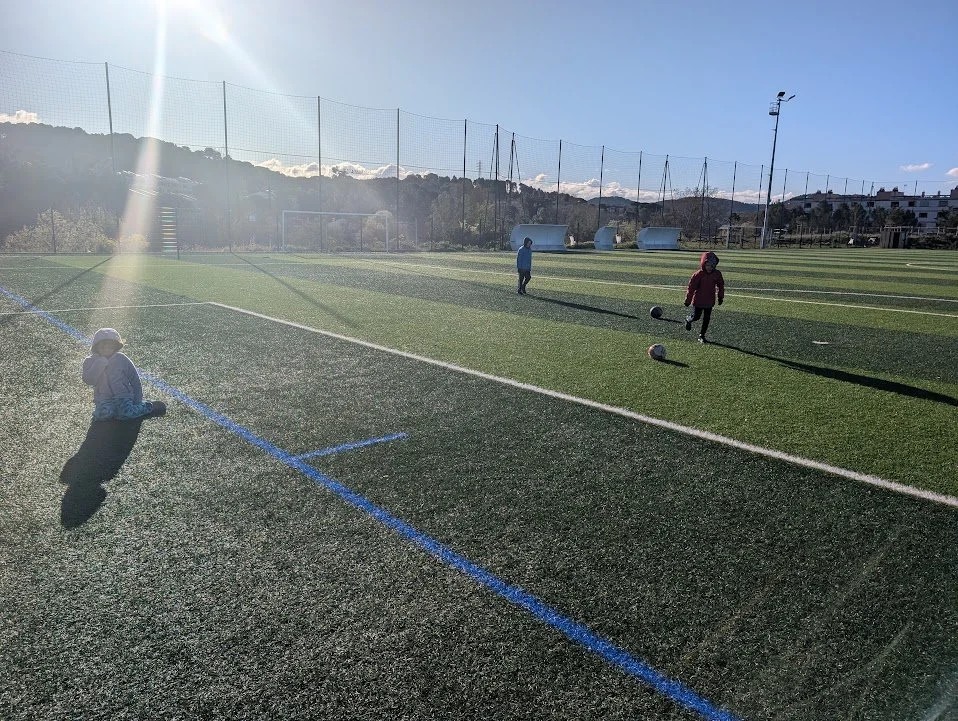
"Listen to your life. See it for the fathomless mystery it is... because in the last analysis all moments are key moments, and life itself is grace." - Frederick Buechner
7 Months Abroad: The Hard
There’s a thousand resources out there for the practical aspects of travel (points, booking, frugality, etc.). And for the good parts of travel, we all know there’s no shortage of Instagrammers showing off the best angles of their life-on-the-go. But it ain’t all croissants and rainbows. Seven months on the move with a family is no joke. So let’s get real. What were the hard parts?
These first two we expected. The second two blindsided us.
Expected
Occasional Loneliness
Being gone for seven months, we felt lonely at times. Surprisingly, I was the family member that felt it the most! Before that scares you away, here’s just a couple thoughts on temporary, planned loneliness:
Baseline loneliness: Aren’t we all a little lonely in 2026 anyway? Yes, we “Bowl Alone” these days, but even without the modern challenges, middle age is the bottom of the bottom of the U-curve for friendships anyways. Even if many friends didn’t live in far-flung suburbs, how much time would we really have for hanging out between work, childrearing, homeownership, church and all the rest? In my twenties stepping away from my rich social network would have required massive sacrifice. The calculus as I near 40 (and with my kids still in the single digits) is just different.
Small pains, big gains: We’ll be the first to tell you that long-term, “nuclear-family-only” is not a healthy setup. We’re made for community. However, temporary solo family-ing was something we were willing to embrace. Why?
In reality, temporary loneliness is the simple cost for any kind of change or adventure. Anyone who’s taken a new job, gone somewhere else to college, or moved to a new city knows: there are times where the discomfort of temporary loneliness is worth it for outsized long-term benefits.
Driving Each Other Crazy
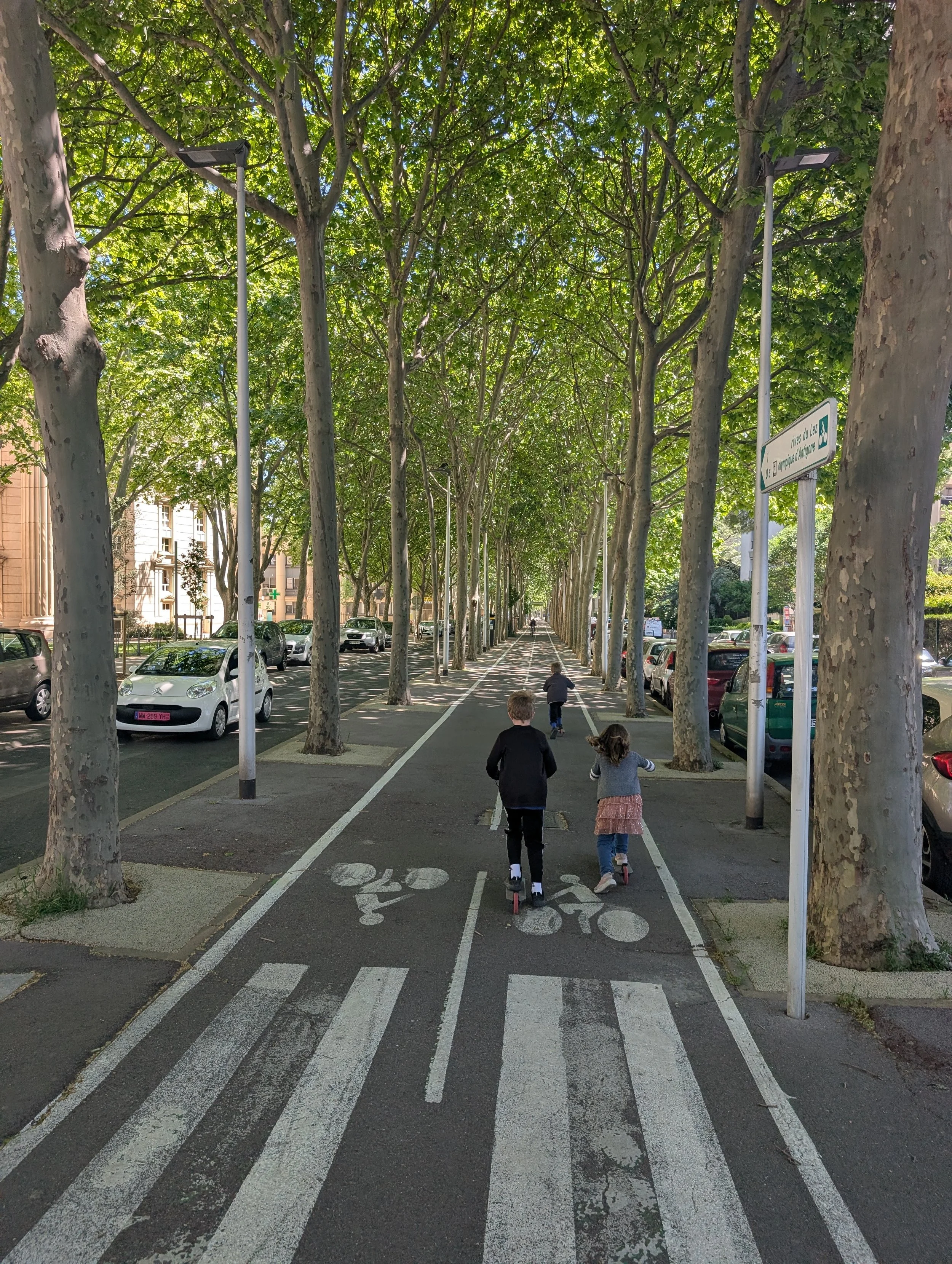
Despite having a pretty high tolerance for mass amounts of time together (lots of practice as a remote worker during a global pandemic), we drove each other crazy at times, especially at the end as time together and work intensity piled up.
We expected this and it didn’t dissuade us. Why? Relationships need good times to be sure. But what gives relationships their depth is going through hard times- and making it out the other side. It’s the good and hard together that we figured would bring us closer- and I think it did.
Disclaimer: If your family and marriage were a bridge, the ‘weight’ on the middle of that bridge increases the longer the trip goes. Be honest with the state of your family before booking any trip!
Unexpected
Family Will Fill the Container
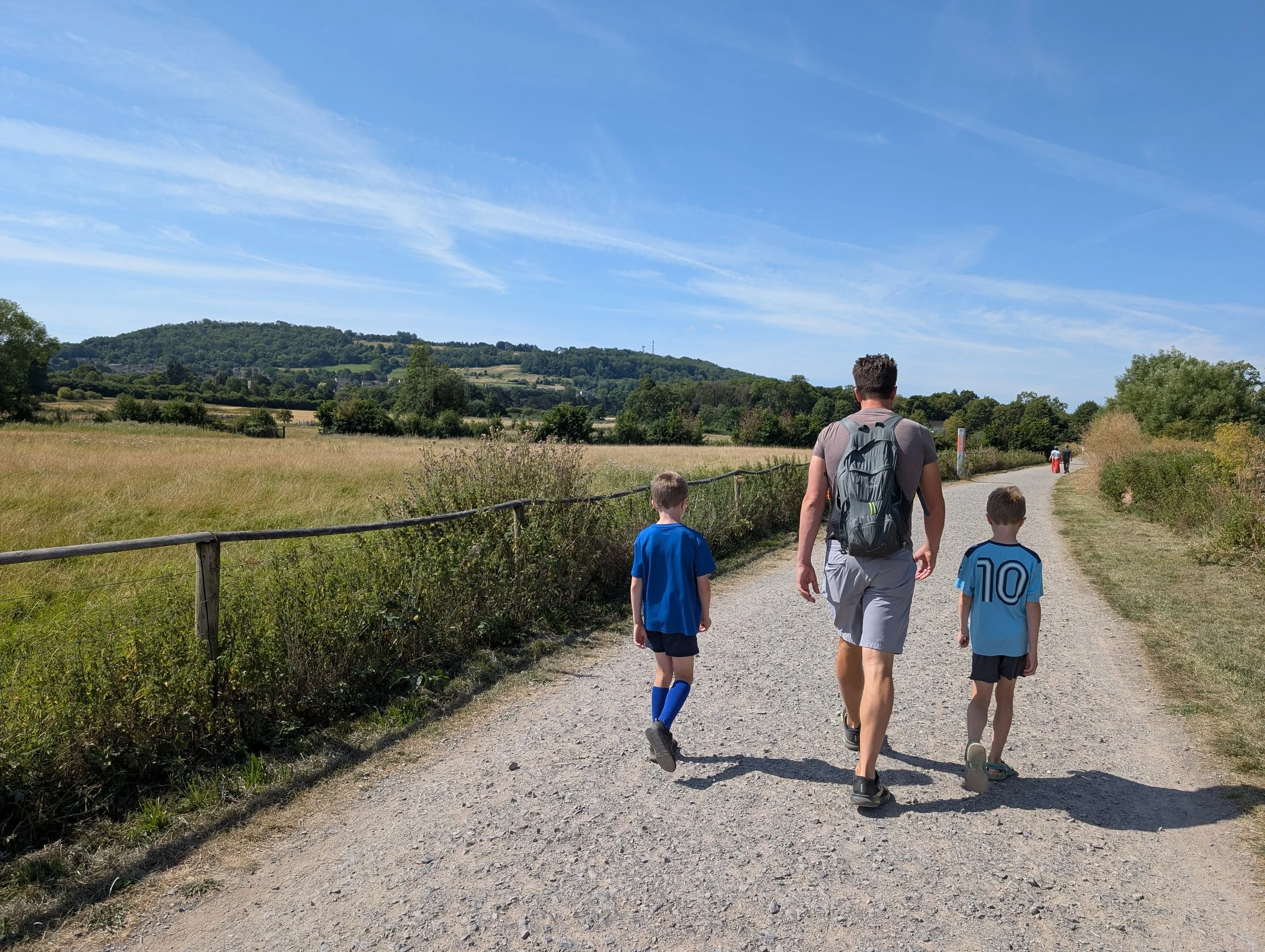
I expected (and salivated over) many of my responsibilities going away in Europe. What I didn’t anticipate was that family responsibilities on a trip like this would fill most of the space that was created.
It quickly became apparent that I wasn’t just playing after dinner and doing bedtimes. Now, I was the travel guide. The scout. The best friend. The gym teacher. The person to check in with throughout the day.
I was hoping to write while on the trip. Well here I write- after the trip back in beautiful Minnesota :)
Purpleness
Live somewhere long enough and you get a second set of eyes. Not just for the new place — but for the old one too. You come home and your own country reads differently than it does for everyone standing next to you. You can't unsee it. “Third culture kids” call this being "purple". You're not red anymore (original culture) and you're not blue (new culture). You're something different. You’re purple.
What we're feeling is a drop in the bucket compared to true third-culture kids who swap cultures for years at a time. And honestly, we like to be able to see our first culture “water that we swim in” from outside the fishbowl. But there are some real differences here.
Pace of life. Car culture. Stuff-ism. Convenient and cheap vs. lasting and beautiful. Food chemicals. Political craziness. Stress levels.
We feel the huge advantages of the US just as starkly (higher paychecks, more options, Mexican food and all the rest). But we do feel these difference in a way we didn’t before. We’re purple, and while it's good- it is also hard.
“Wow, ok,” you might say. “Thanks for being honest… but with the cost and challenges, now I’m wondering: why would anyone would go on a big long trip like that?”
I’m glad you asked.
7 Months Abroad: The Practical
This year has been a whirlwind of travel. But last year was a whirlwind of planning. Let’s lay this first one down FAQ-style.
7 Months?! Do people really do that?
Yes! By now, my Youtube algorithm is full of families who take much longer trips to further-flung places. The question for us in 2025 was was whether to watch these families go on trips - or become one ourselves.
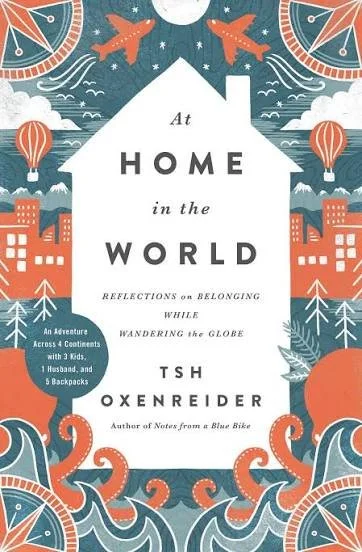
The book that ‘normalized’ the idea for us: At Home in the World by Tsh Oxenreider.
How did you pay for it?
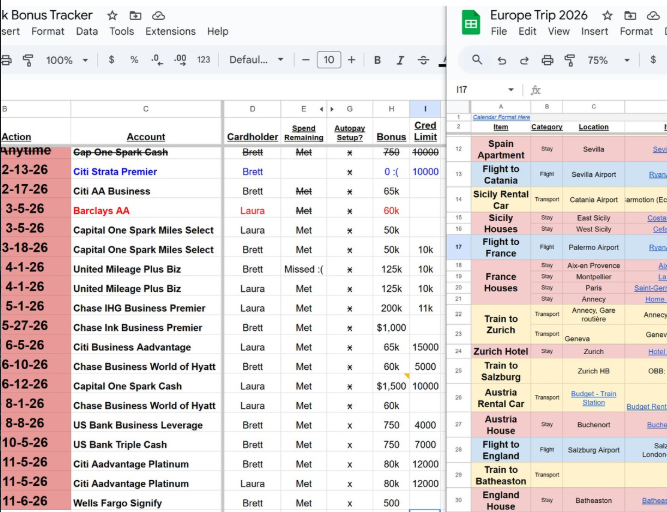
Flights: For flights between the US and Europe, we used the well-worn Cards->Points->Tickets formula. Between European cities, Ryanair is a cheap and easy way for families to get around ($40–100/ticket).
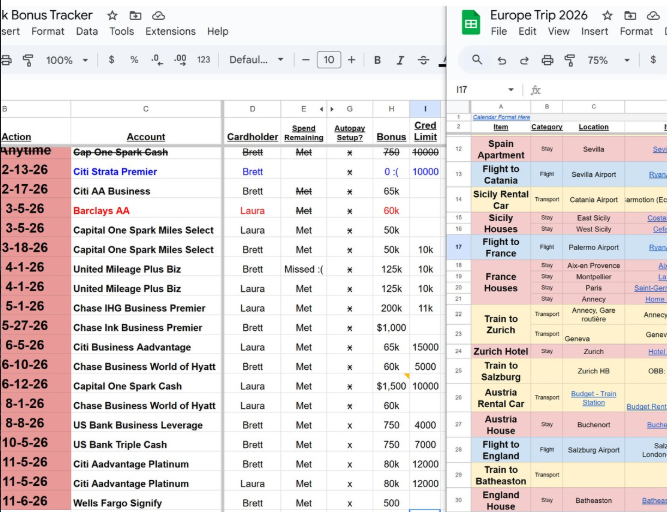
If credit card points can be called ‘art’, this is my ‘Statue of David’.
Lodging: To pay for lodging, we rented out our Minnesota house on Furnished Finder. We used the rent income as our Airbnb budget in Europe.
Rental Cars(!): The surprise expense that added up for us: rental cars! We lived most of our seven months car-free in Europe. That’s easy and preferable in the cities. The biggest lever to save money would have been to be more picky about our rural/remote stays.
Two rental car details we learned the expensive way:
The rental car insurance on your credit card won’t work in Ireland.
The Europcar desk at London Stansted will hose you- beware!
So what did it actually cost?
Just north of $20k.
The big drivers were the visa help, the delta between our Minnesota rent and monthly Airbnb costs, and those dang rental cars. Many things, like health insurance and food costs went the other way — we saved thousands of dollars there.
Let me be clear: $20k is a lot of money. It’s a lot of money to us.
But I tend to hold it next to the other things people spend $20,000 on without blinking. A newer car. A bigger house. A bathroom renovation. Heck, we did three $20k bathroom upgrades in a row on our rentals and getting out of those rentals last year cost us ten of these trips combined.
So yes. Twenty thousand dollars is real money and I’m not going to pretend otherwise. But money leaves your life in big chunks whether you decide anything or not. This was the rare one where we got to decide.
Didn’t you worry about your house burning down?
I did. But that’s why I got a big juicy landlord policy for the 7 months we were away. For peace of mind, I structured it so that if our house burnt down we’d make money.
What about school? Didn’t your kids fall behind?
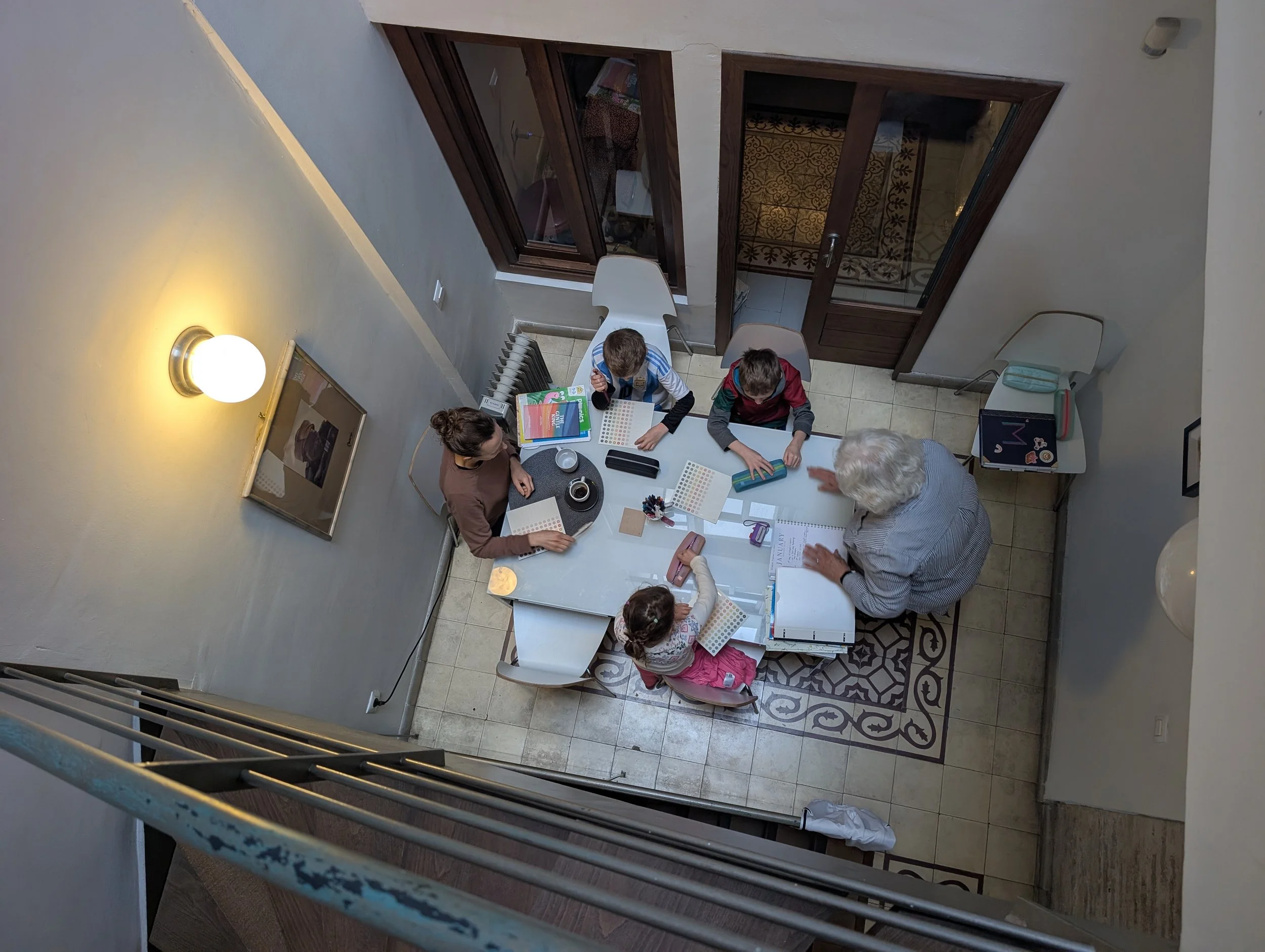
We’ll see when school starts. My hunch? No, probably the opposite.
Laura had a great plan that she worked on with the kids’ teachers before we left. Our 7 and 9-year-olds got way more attention than they did in the standard classroom (1-3 adults for 3 kids). The benefit we can’t quite measure yet is the effect all of these places, people, and experiences will have as they move forward in life.
On Homeschooling: While my wife was a teacher once upon a time, that’s definitely not a requirement. We have many friends with no background in education who are homeschooling their kids as we speak and getting great results. And if they can do it in their house, why couldn’t you do it from the Alps? The resources online these days are ‘too abundant to fail’.
How did you stay in Europe beyond the three-month limit?
Normally, Americans are limited to 3 months in the “Schengen zone”.
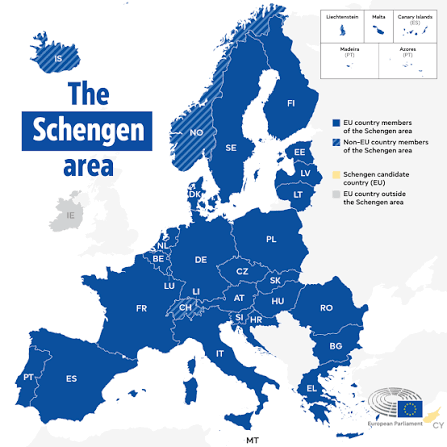
To get around it, we got ourselves a French Long-Stay Visa. We had Hector at Lexidy Law Boutique help us out. The visa involved a lot of paperwork and a trip to Chicago. The visa is cheap. The lawyer is expensive (~$5k).
Warning: there is risk and drama if you go the visa route. It has to do with timing. You have to book everything first— and then find out if you have been approved for a visa. Hence the willingness to pay big bucks for the law firm.
Pro-tip we learned: For most people, it will make more sense to simply plan a trip that doesn’t require a visa.
Simple ways to avoid the time, cost, and drama that we went through:
Easiest: Plan your Europe trip for < 3 months.
Longer Stays: Plan your Europe trip around Schengen limitations. Go to non-Schengen England and Ireland in the middle to ‘step out’, swap in Montenegro/Albania/Morocco as needed, etc.
How did you leave your life for 7 months?
Ah- this is a far deeper and more interesting question than that of paying for the trip. On a practical level, there are leaves of absence and people unenroll from school all the time (especially with younger kids). We did try to line it up with work and church sabbaticals.
On a deeper level, there is no “hack”. We built our life for this kind of freedom.
Here’s a laundry list of “weird life choices” we’ve made over the years:
Me taking a remote job in 2011 — and hanging onto it for over fifteen years!
Skipping the “dream house”
Instead, we’ve stuck with a simple, affordable house that we love but aren’t overly attached to. We don’t think twice about renting it out to make a trip happen.
Crappy cars
Our 2007 Honda Odyssey has a big ugly dent in the front. Our 2008 Cobalt is rusted out. While we wouldn’t mind a nice car, the reality is that American households spend $13,000+ every single year buying, fueling, insuring, and permitting the cars in their driveways. Skipping that to the extent we can funds our travel and more.
Stay-at-home momming vs. making more money (making both parents location independent)
Trying to keep a “stuff is just stuff” attitude
In short, when given the choice, we’ve choose freedom over more money and better stuff. We’ve done it for decades. That’s really what made this trip possible.
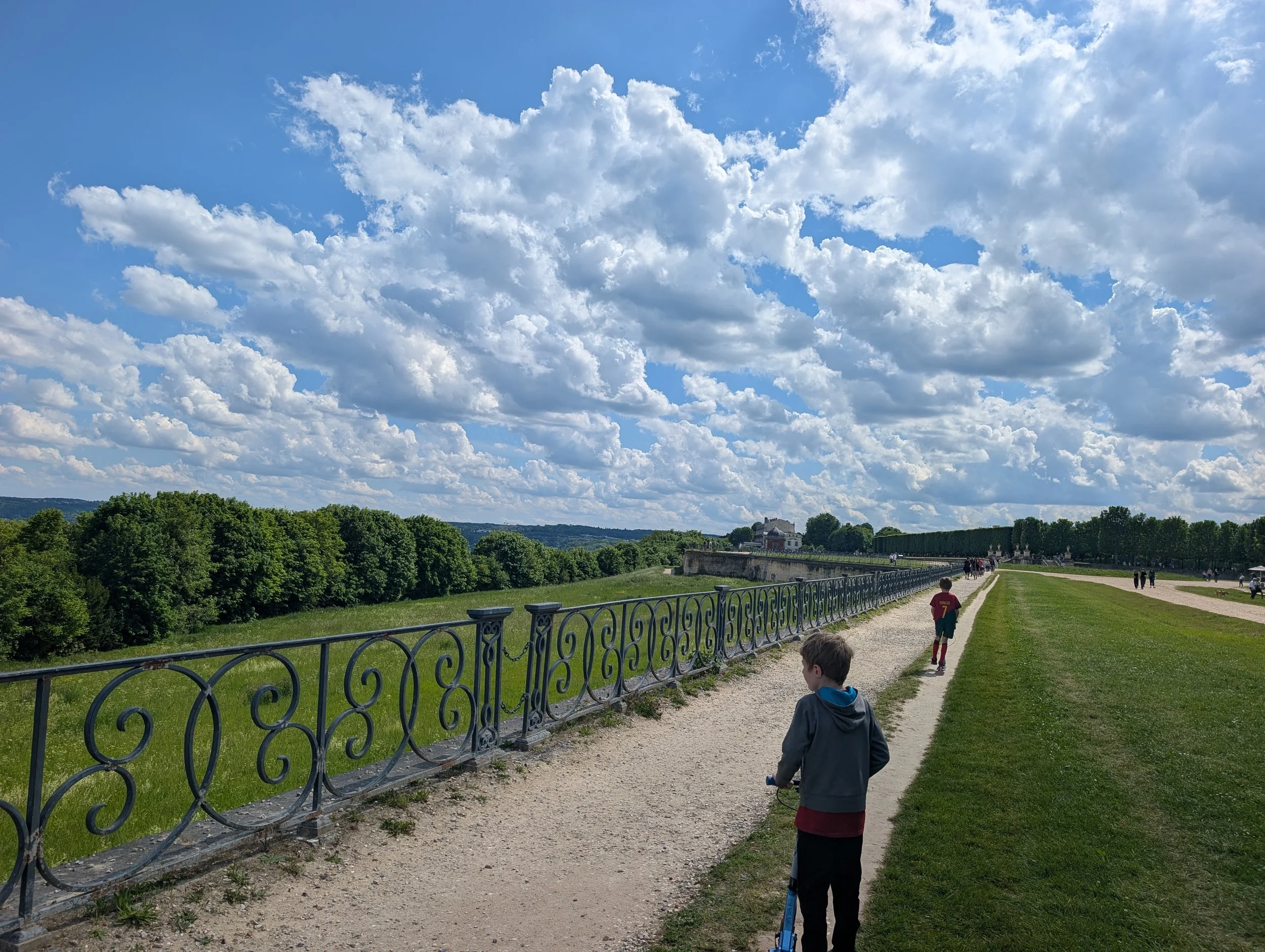
So that’s how we pulled it off. Let’s go a little deeper into the good and bad of taking a long trip. Let’s start with the hard stuff first.
7 Months Abroad: The Good, The Hard, and the Practical
In January, we pulled our kids out of school, said goodbye to our house, and climbed onto a plane headed east. Seven months later, we’re back.
Where did we go? What was it like? Why did we do it- and why might you do it?
Where we were
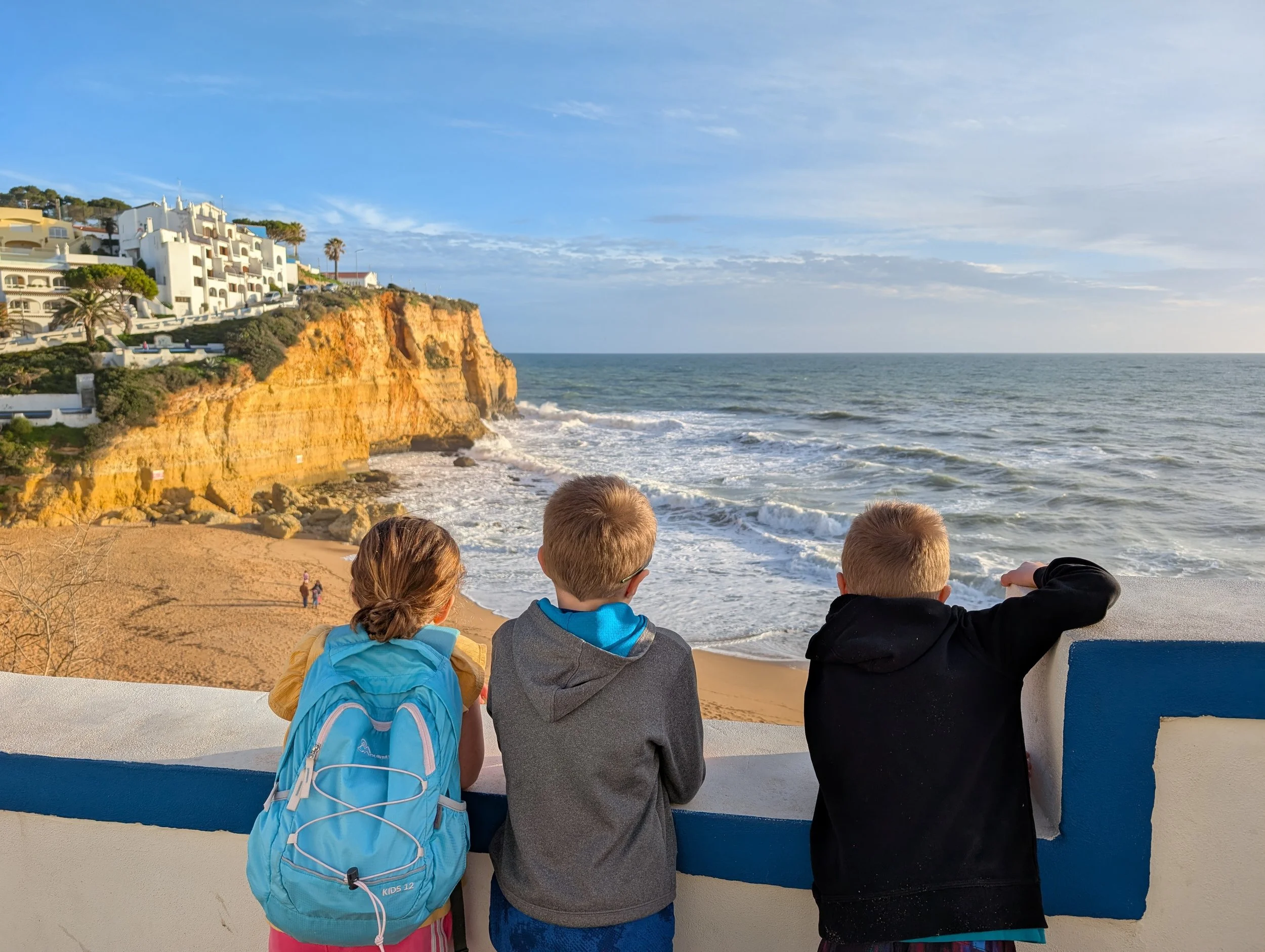
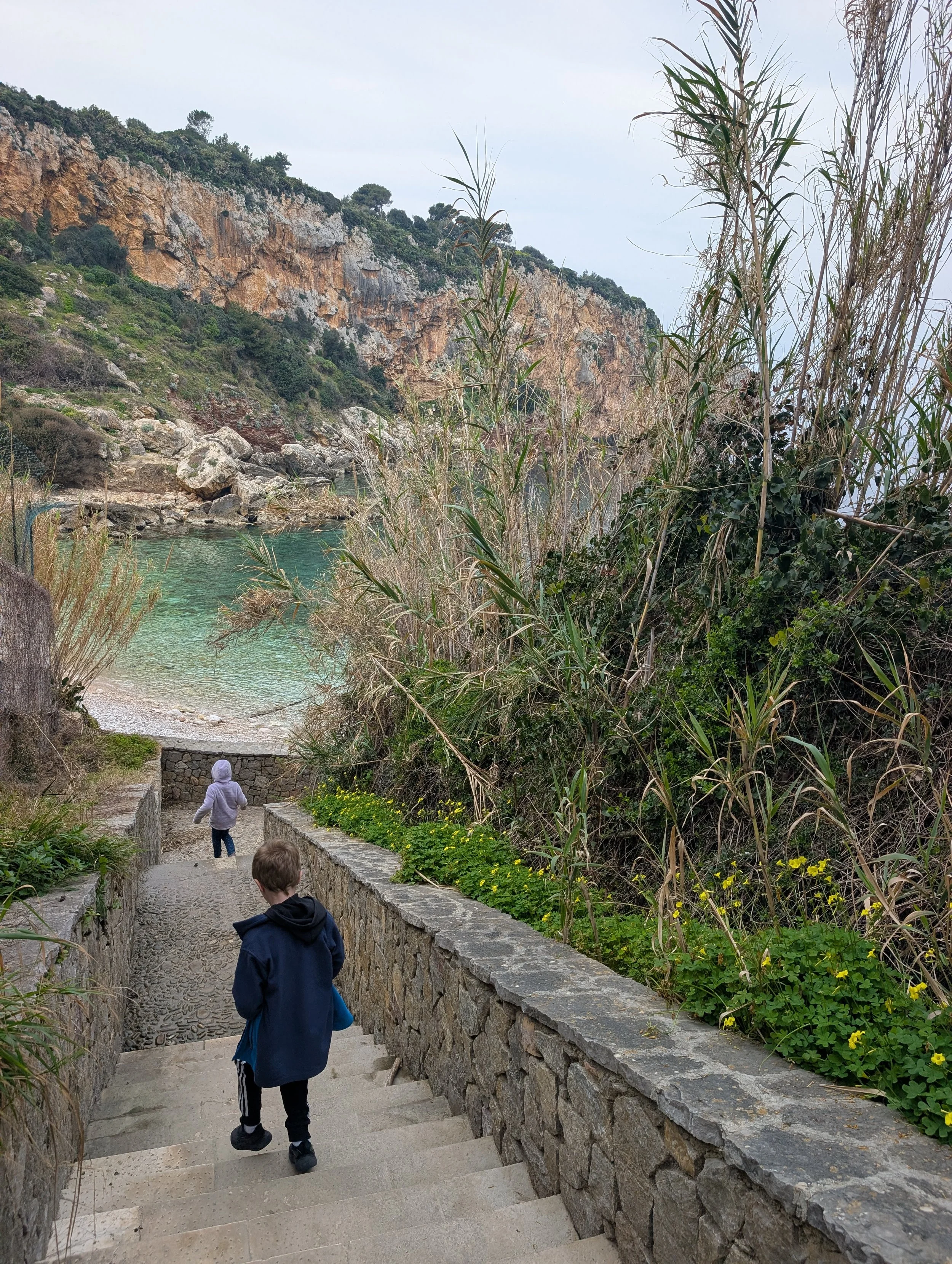
Portugal: Lisbon, Algarve - 3 weeks
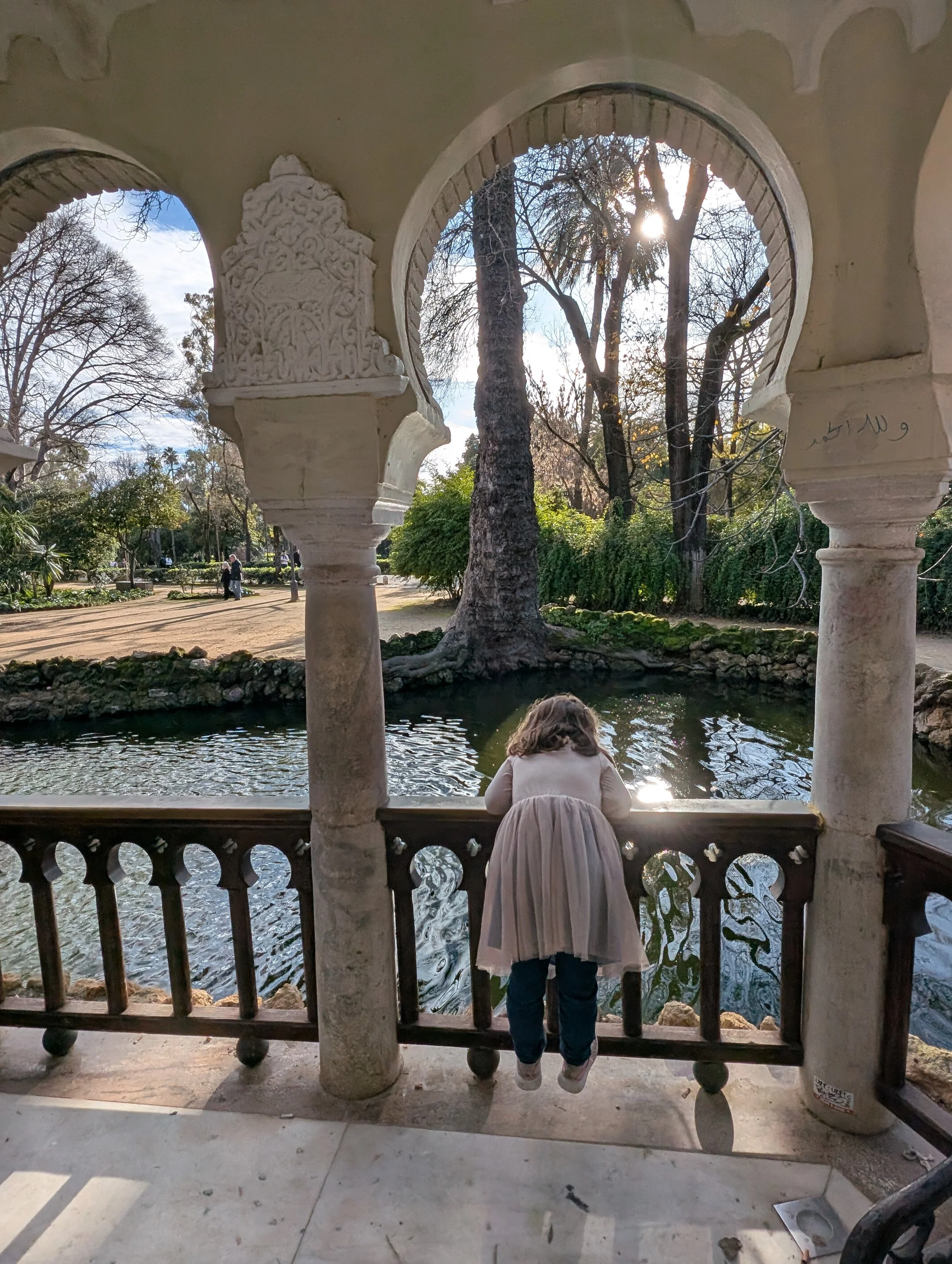
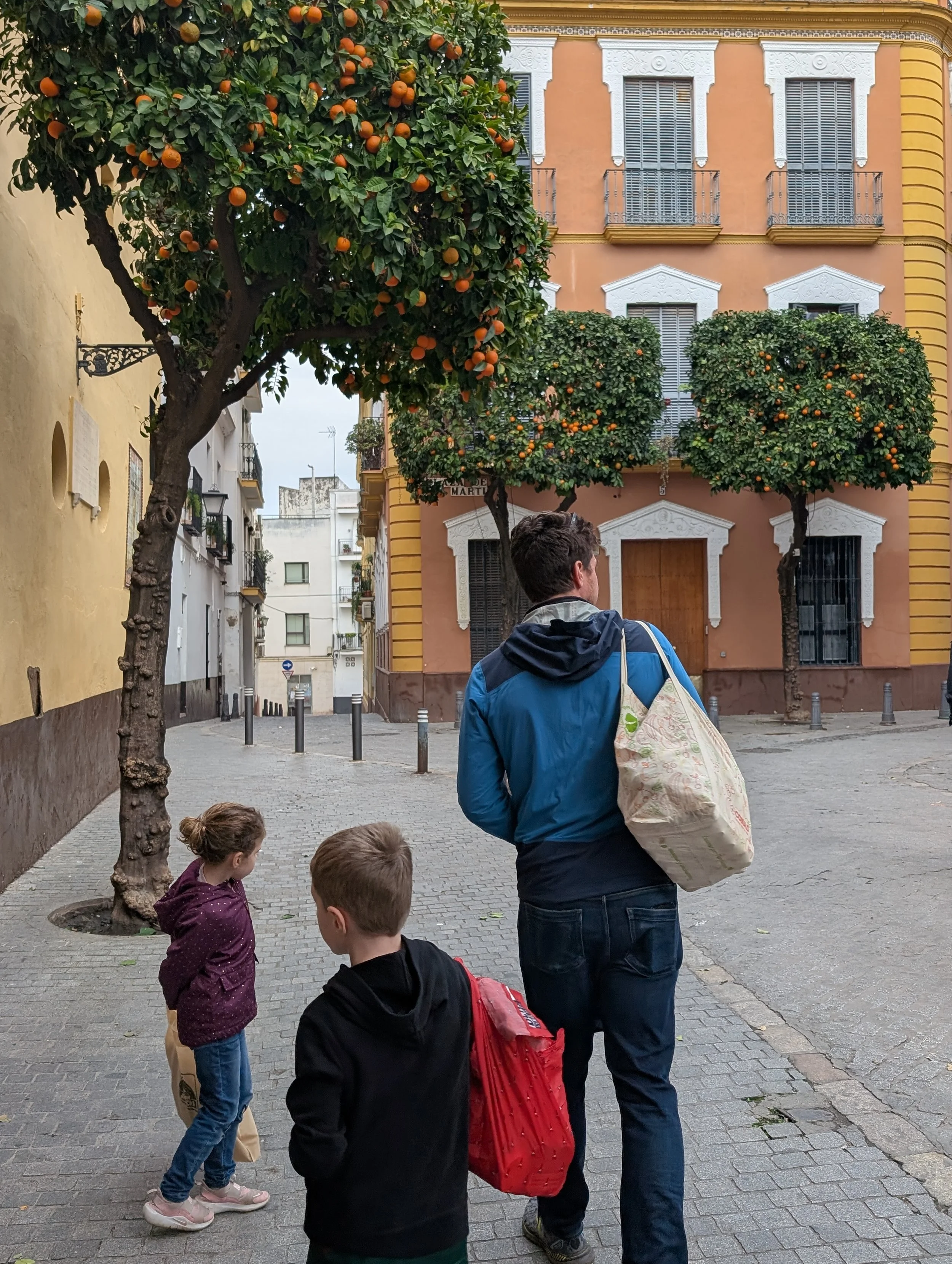
Spain: Sevilla - 1 month
Sicily: East coast, Cefalu - 3 weeks
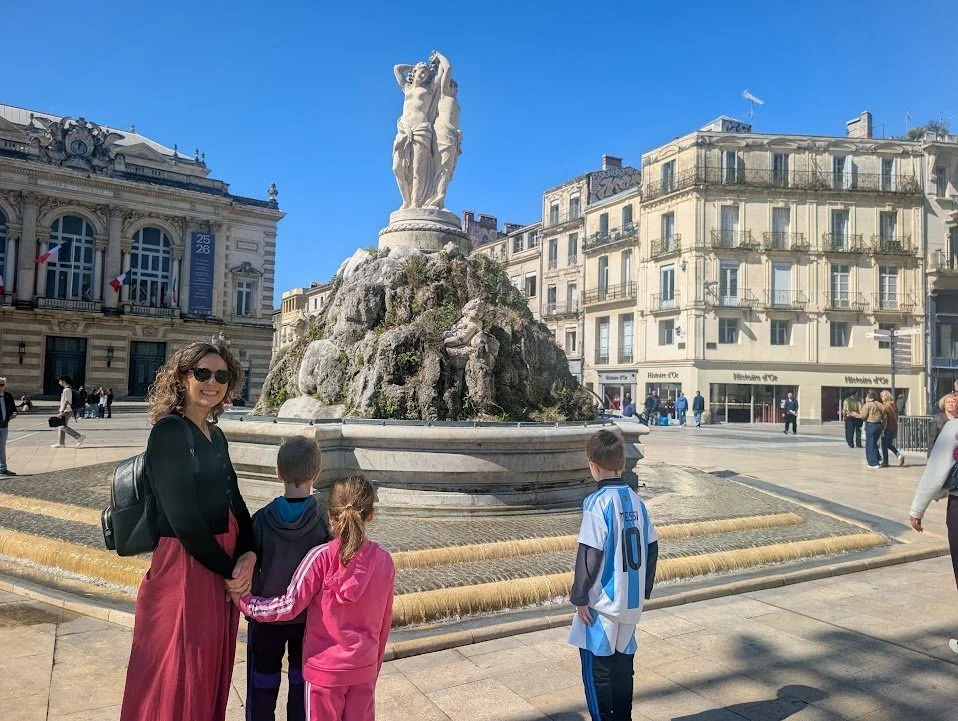
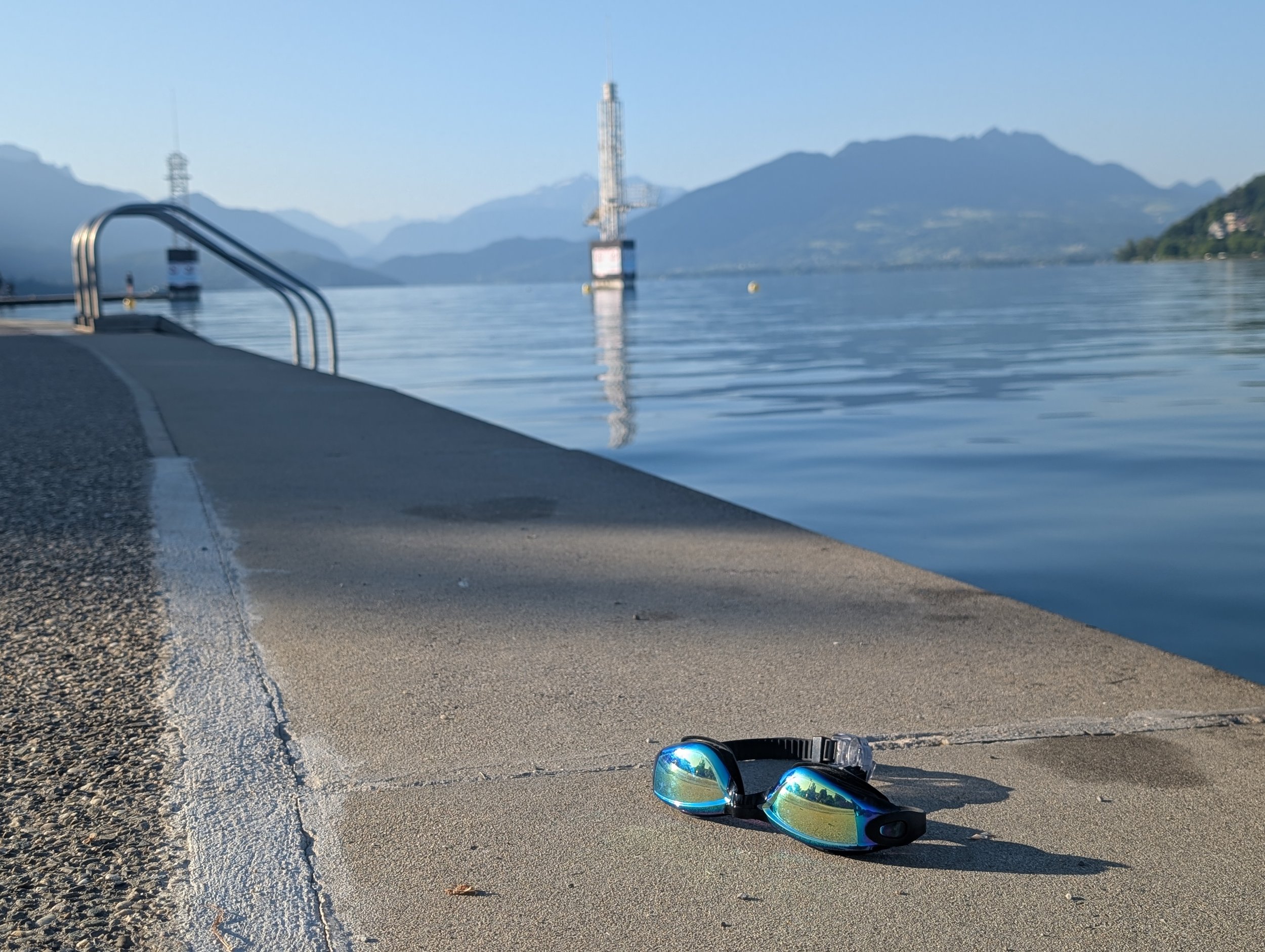
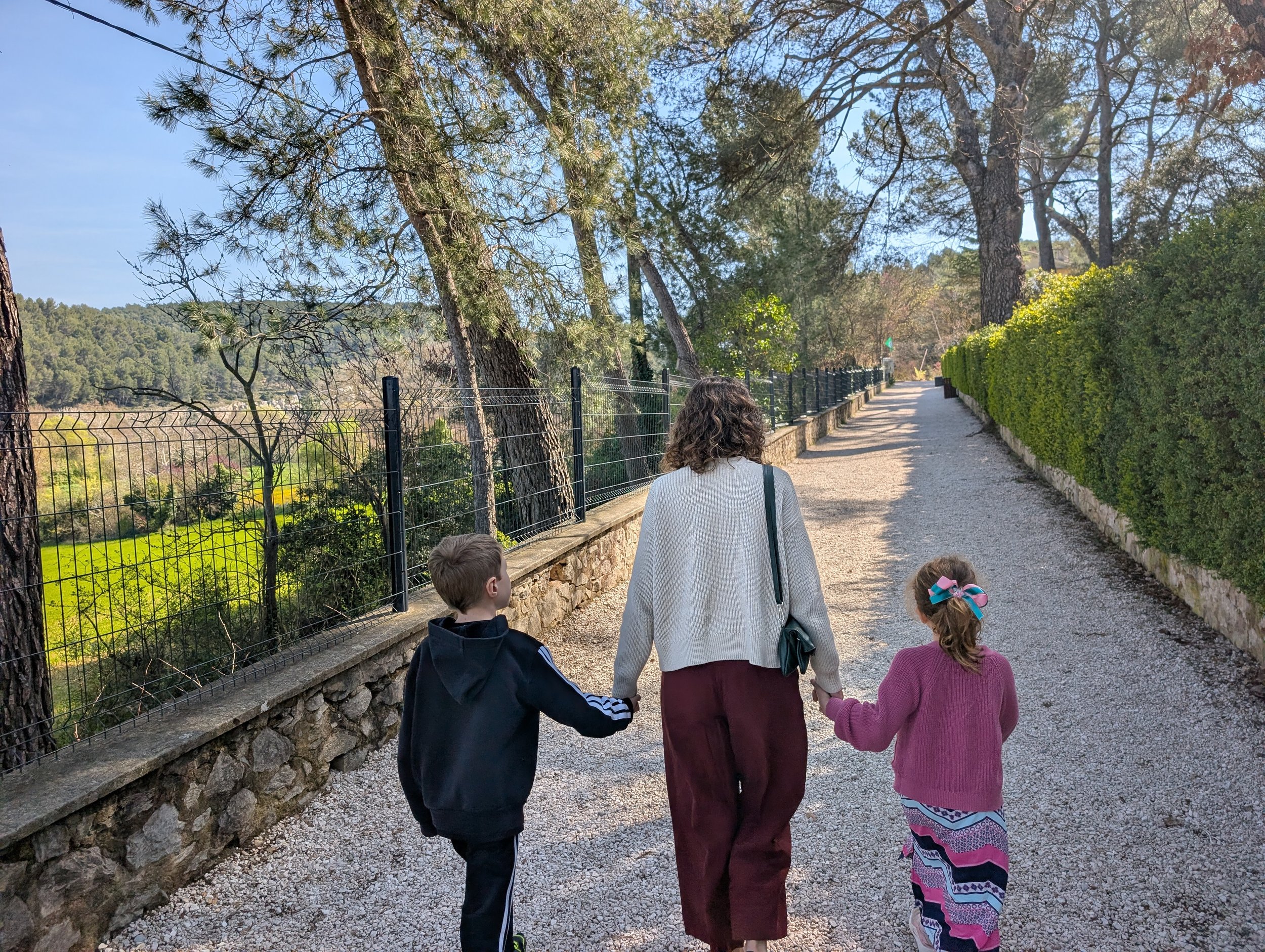
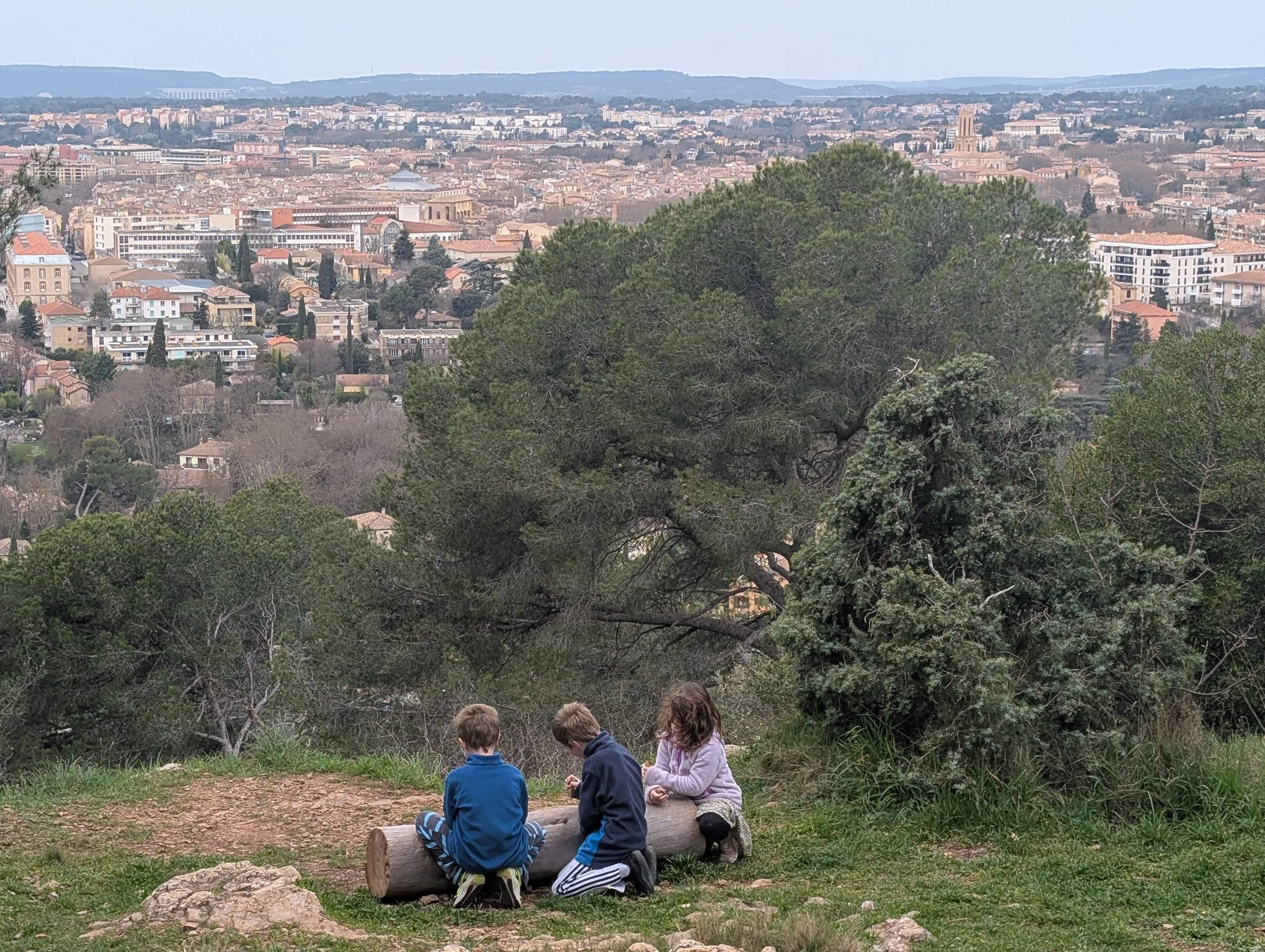
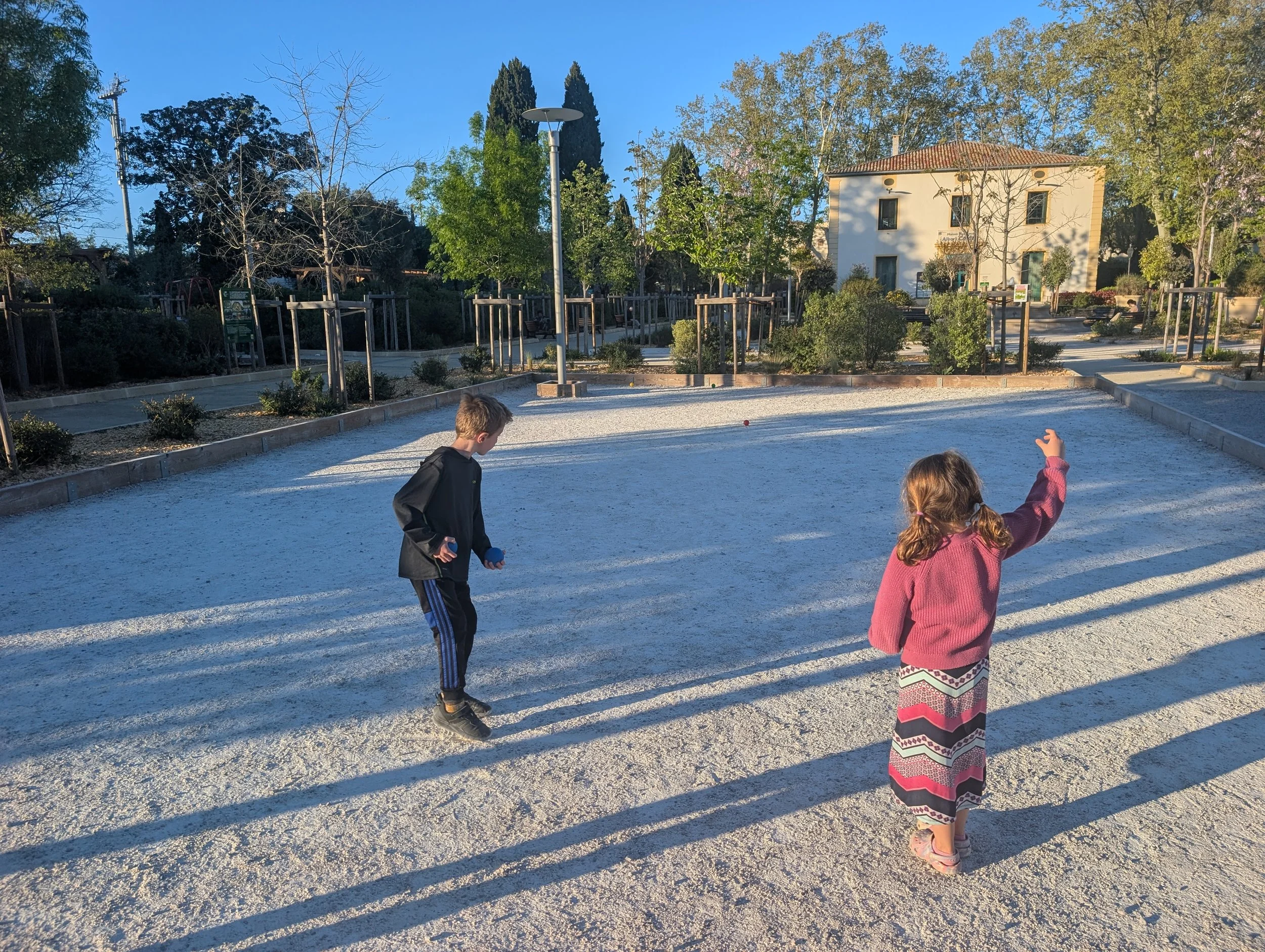
France: Aix-en-Provence, Montpellier, Paris, Annecy - 3 months
Austria: Attersee - 3 weeks
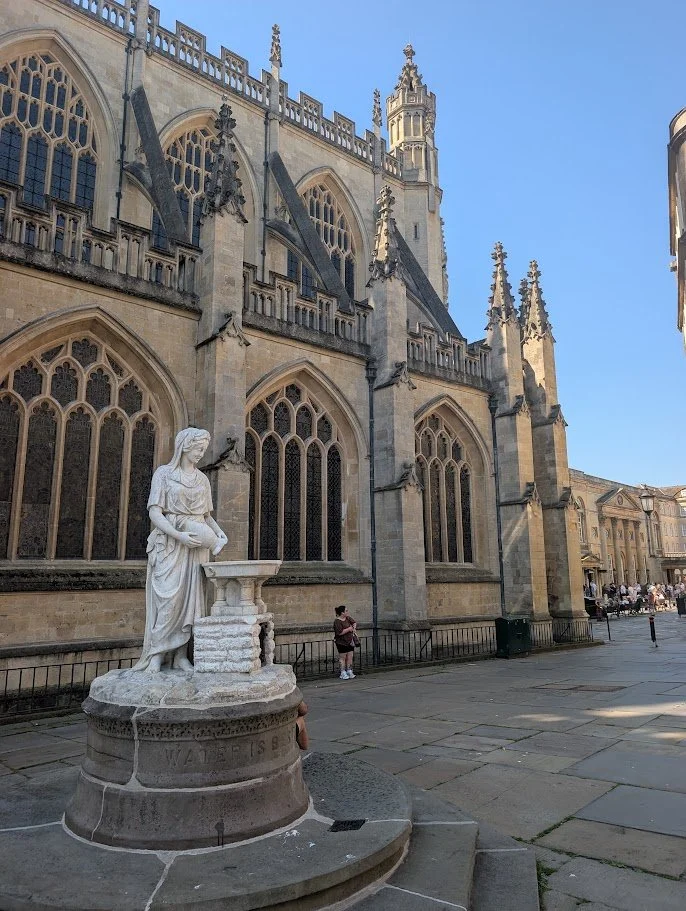
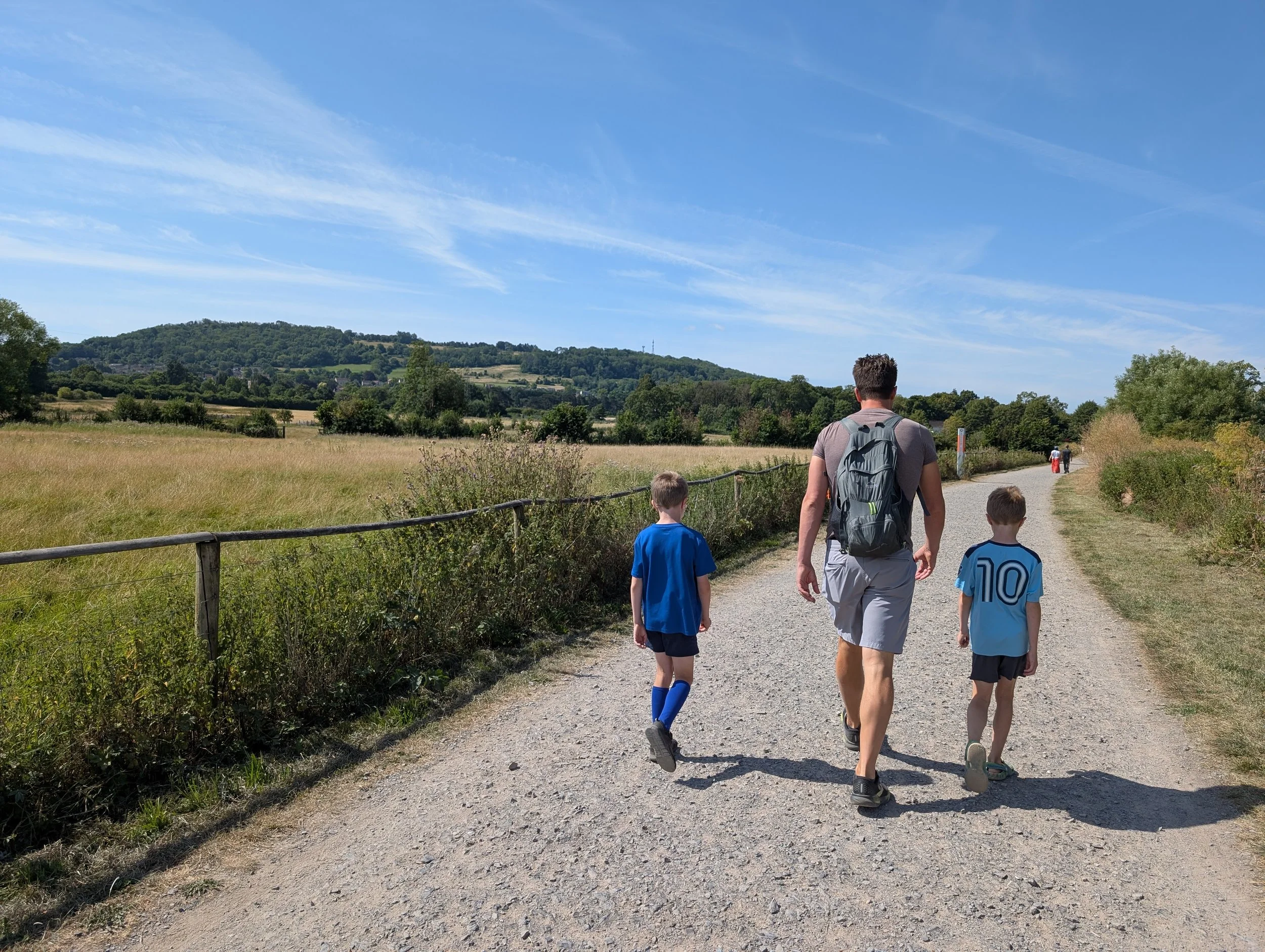
UK: Bath - 1 month
Ireland: Dingle - 3 weeks
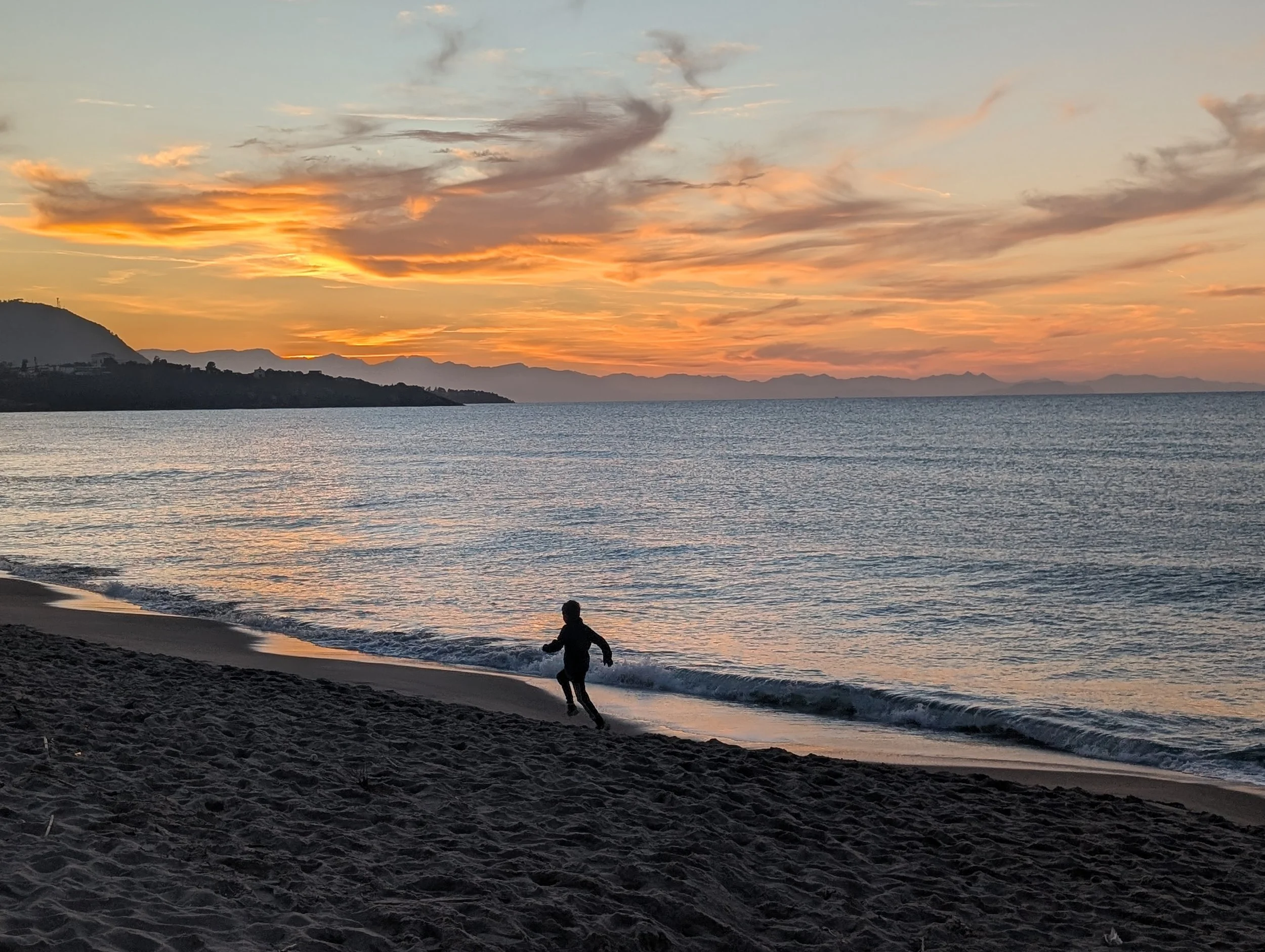
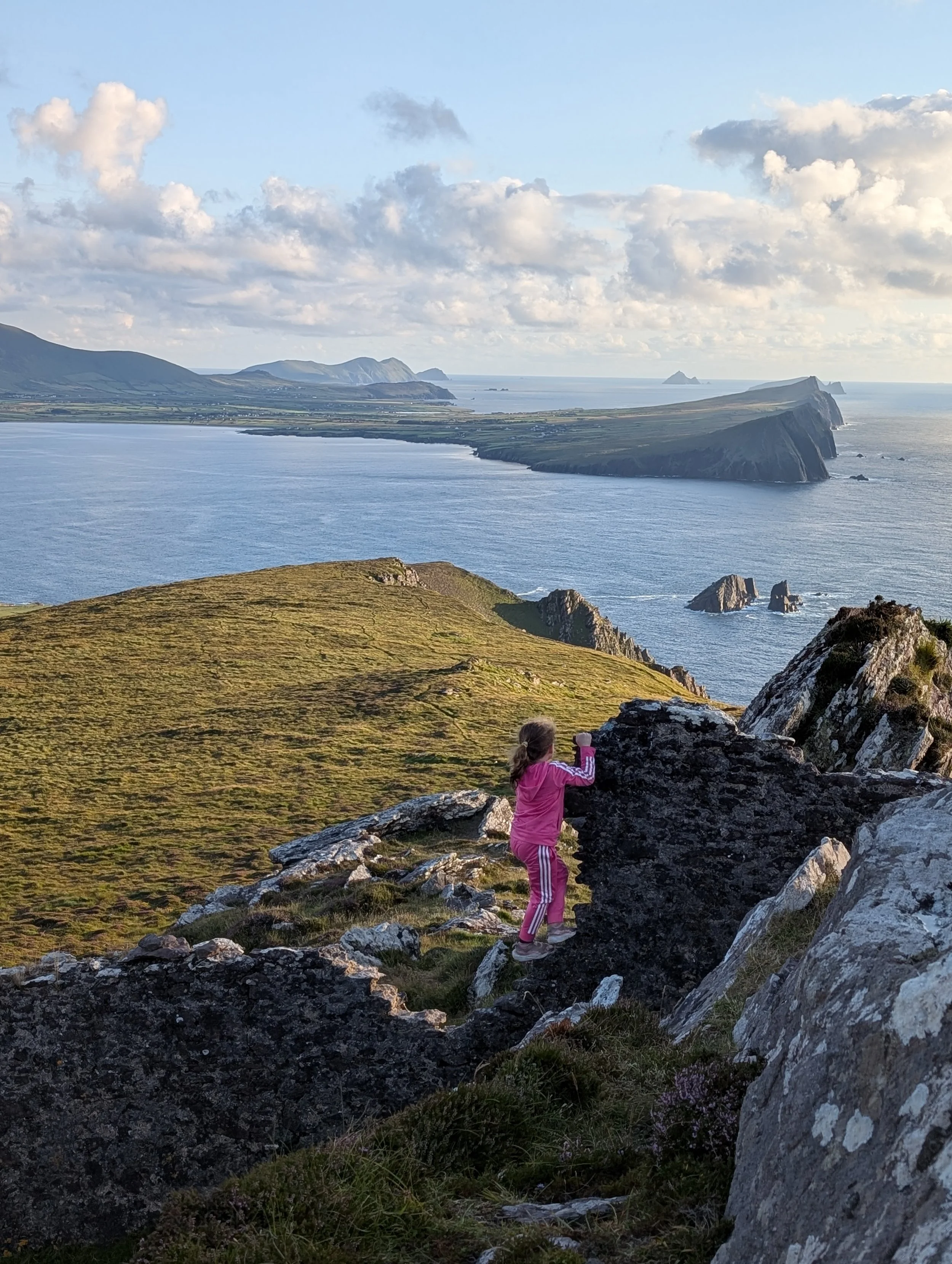
One Trip in 3 posts
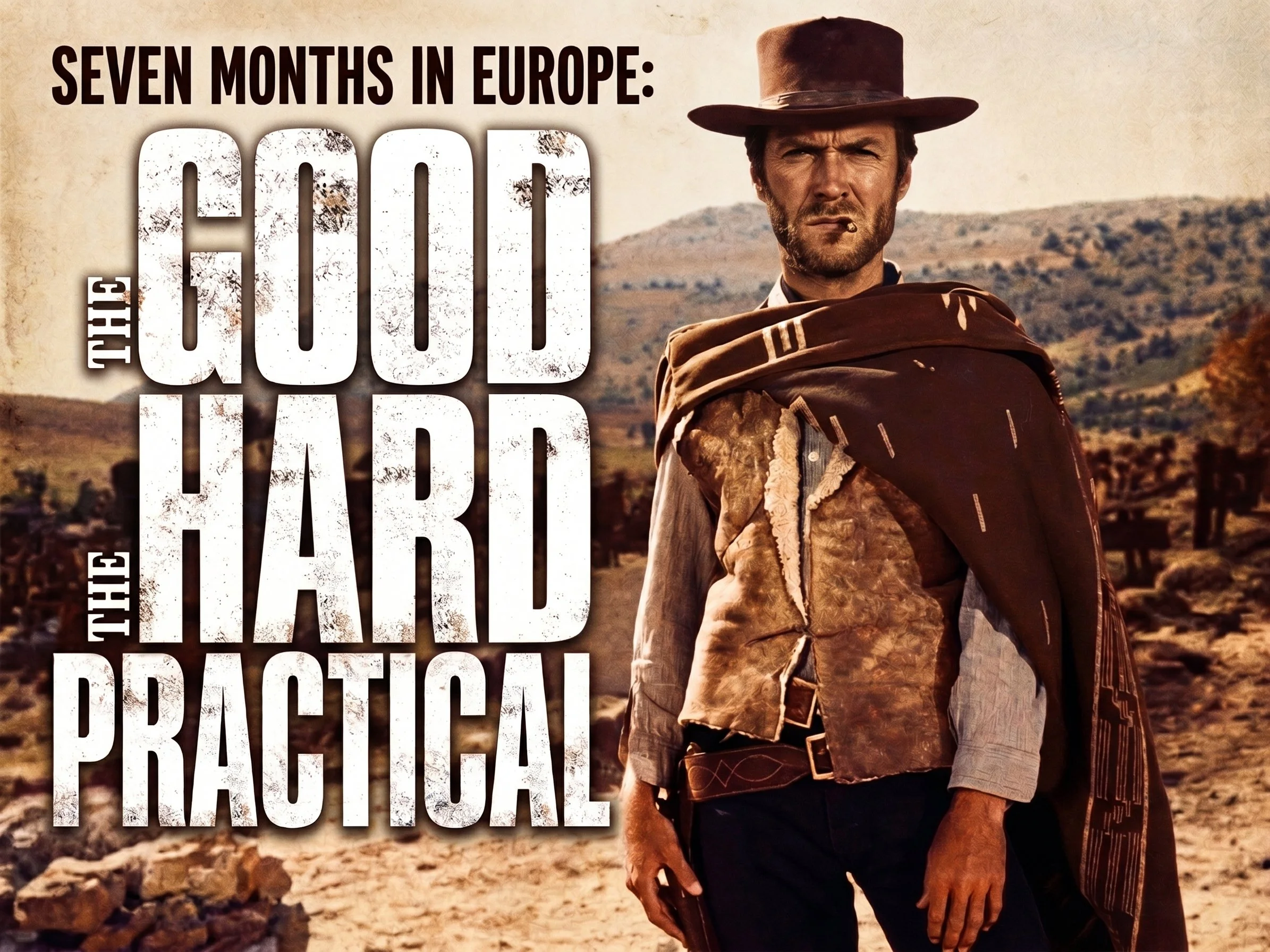
If you’ve ever considered a big trip, these three posts are my take on the experience. Let’s take it in reverse-Clint-Eastwood order: first the practical, then the hard, and finally the good.
Part 1 — The Practical
Visas. Costs. School. How to disappear.
Part 2 — The Hard
Loneliness. Craziness. “Purpleness”.
The big things. The small. The years we have.
Three Days a Monk
“Bienvenue à l'abbaye, Monsieur Brett”
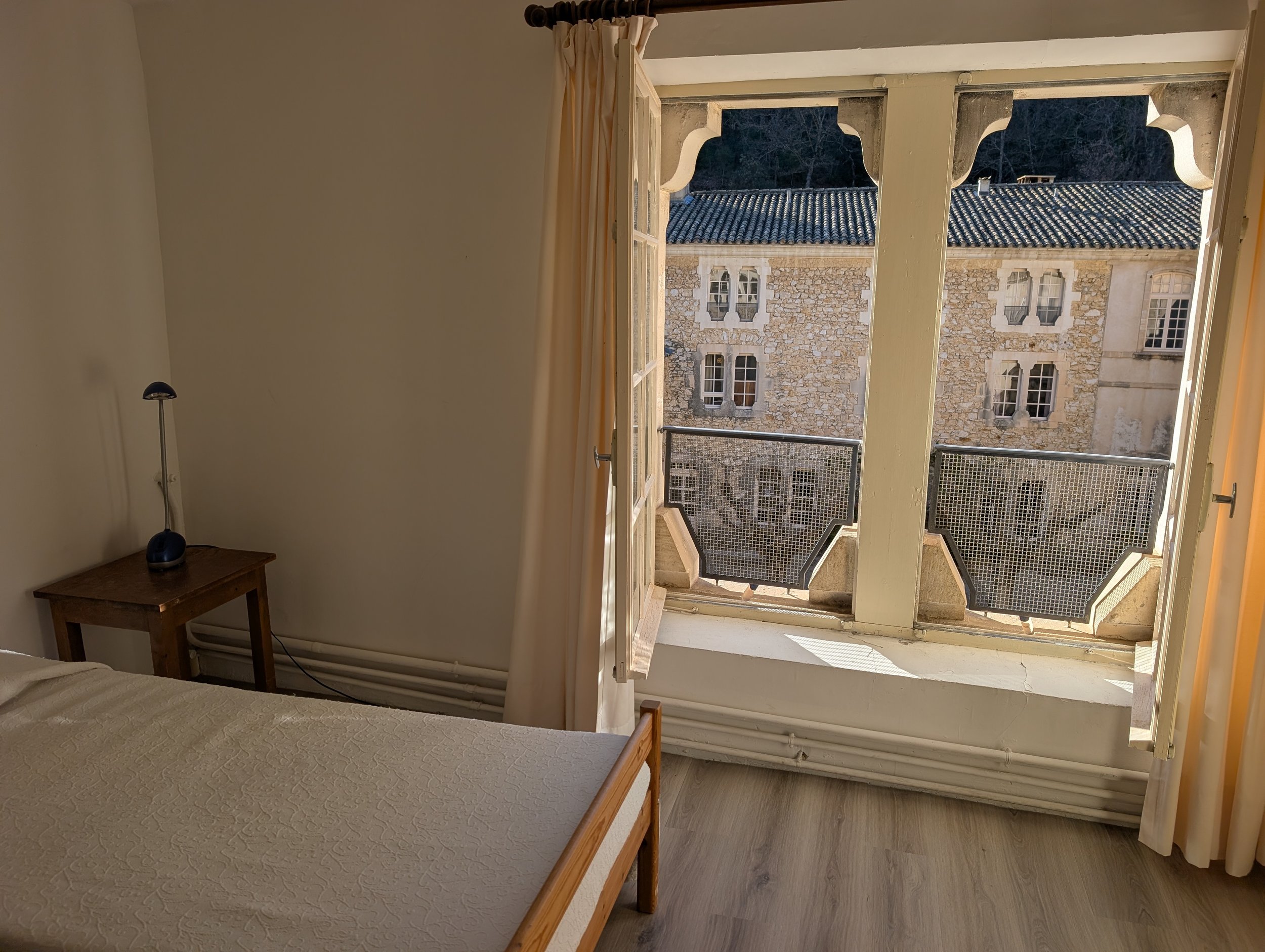
The door closed behind me with a thud. My stay at a French monastery had begun.
Feeling Nervous
A week before my upcoming silence retreat, I was still waffling. “Monks are weird, though, right?” “I’m not even Catholic- or French- what am I doing?”
In the end I recognized my indecision as the usual “fear of the unknown” that always (and must) come before any life-expanding new experience. So this past Thursday I knocked on the door of the 12th-century abbey and went inside.
The Abbey
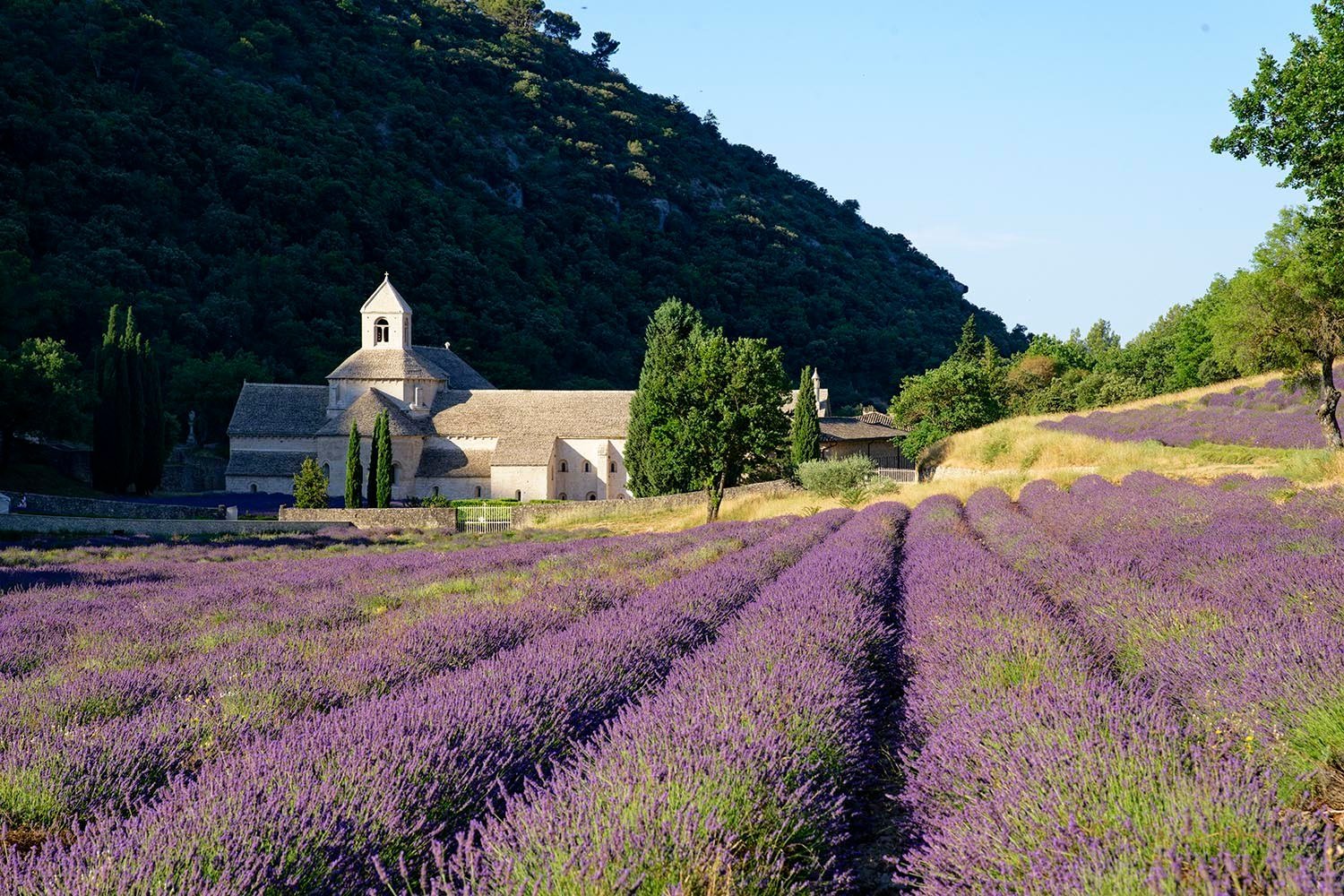
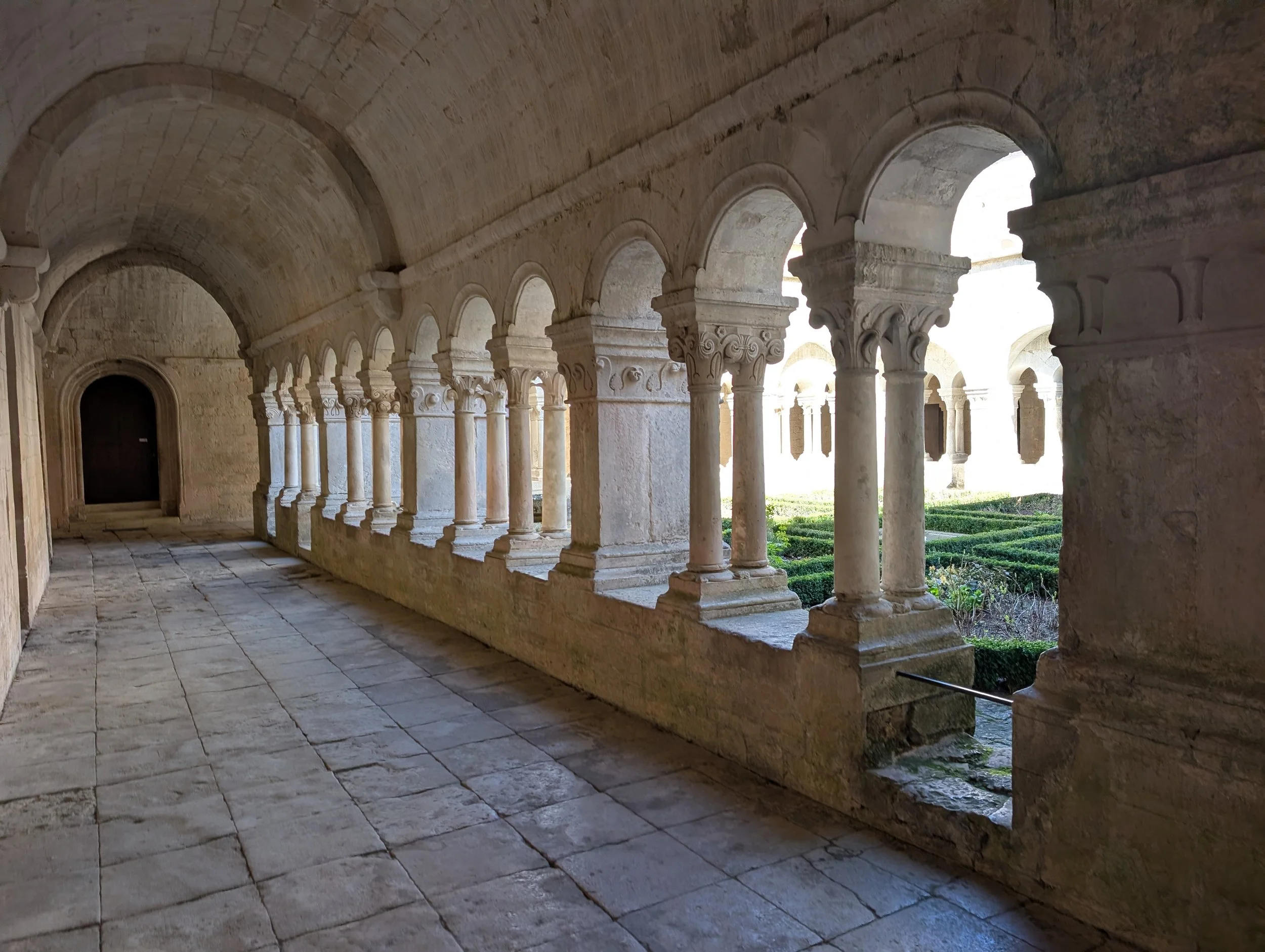
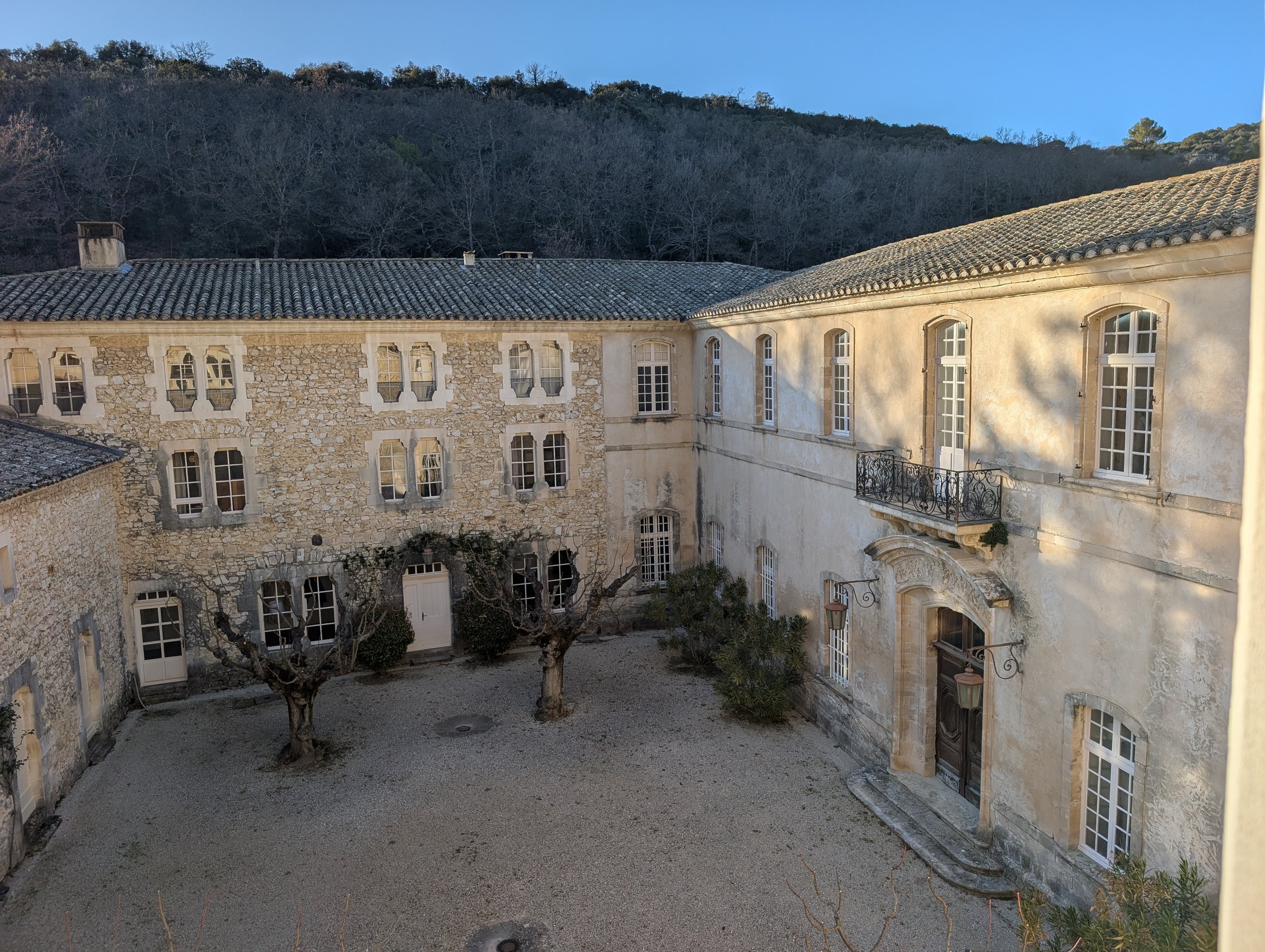
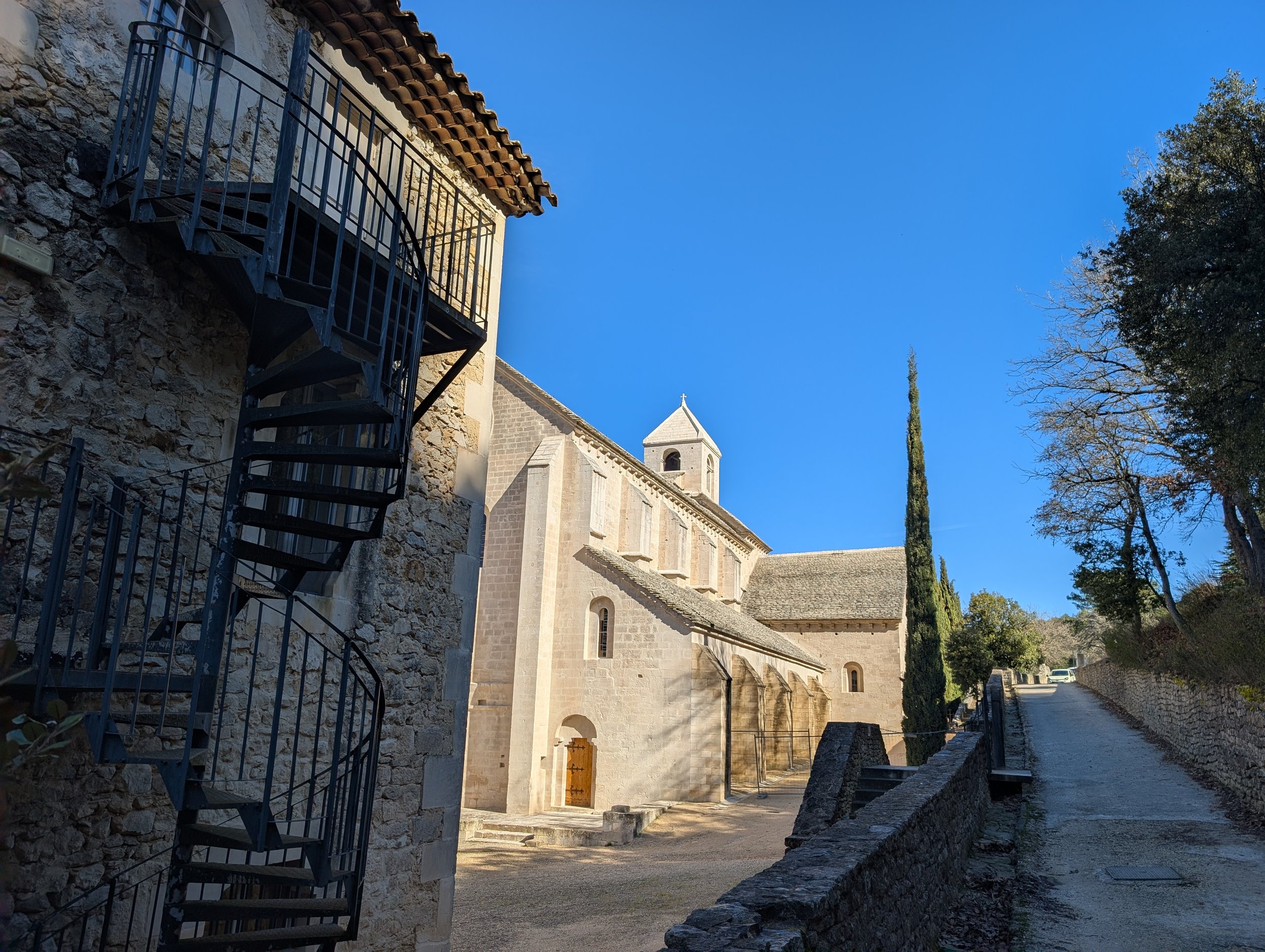
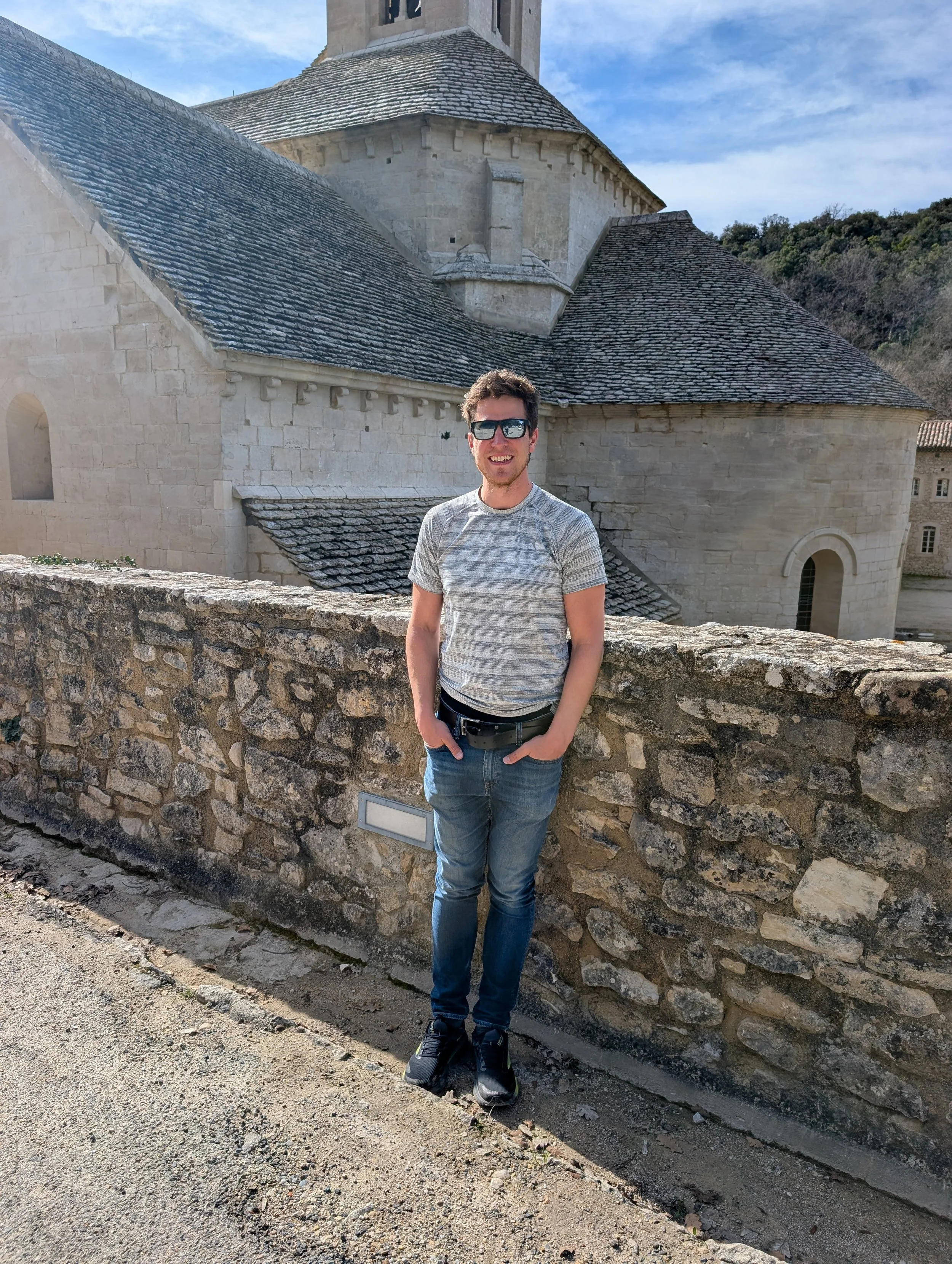
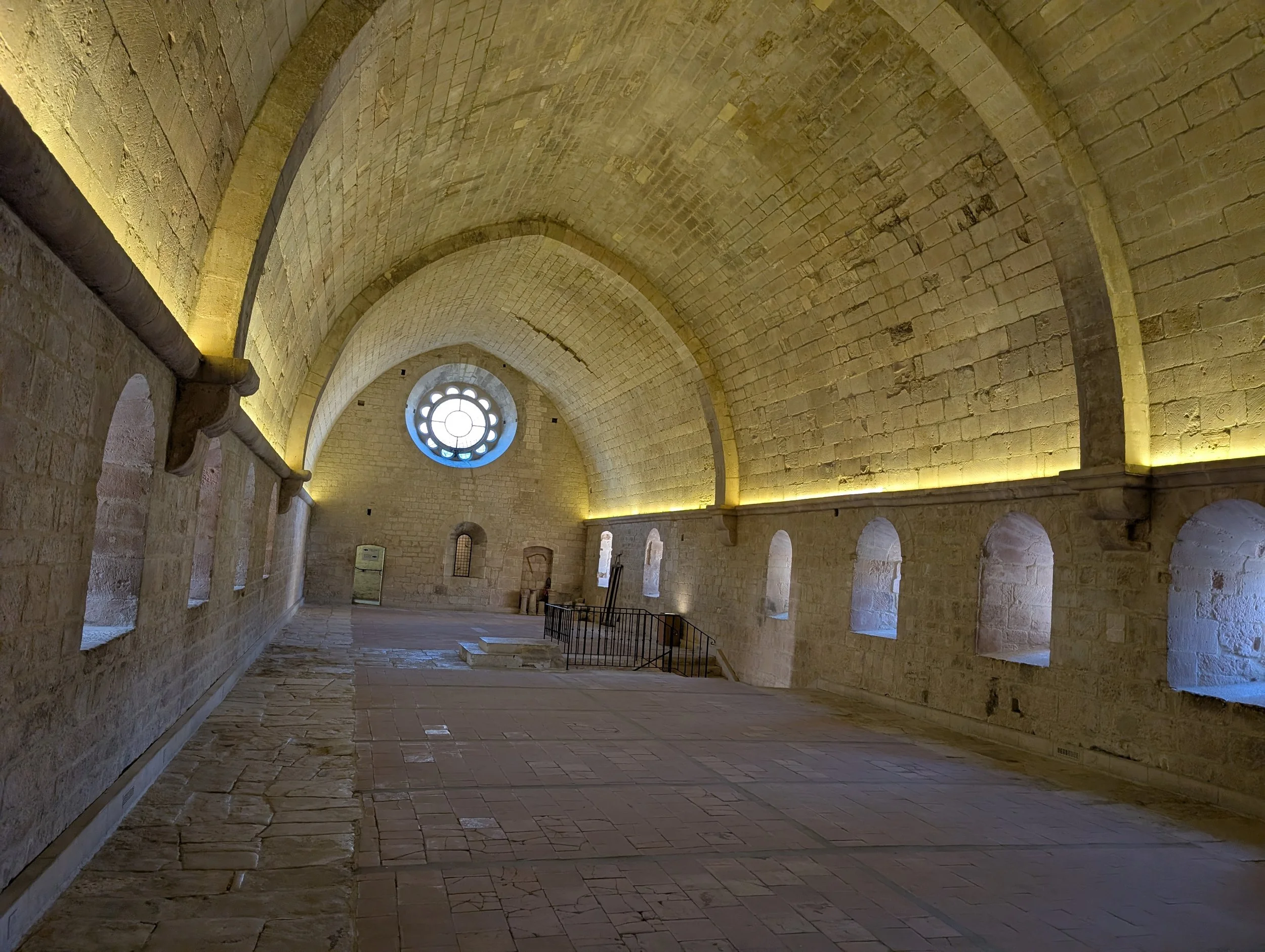
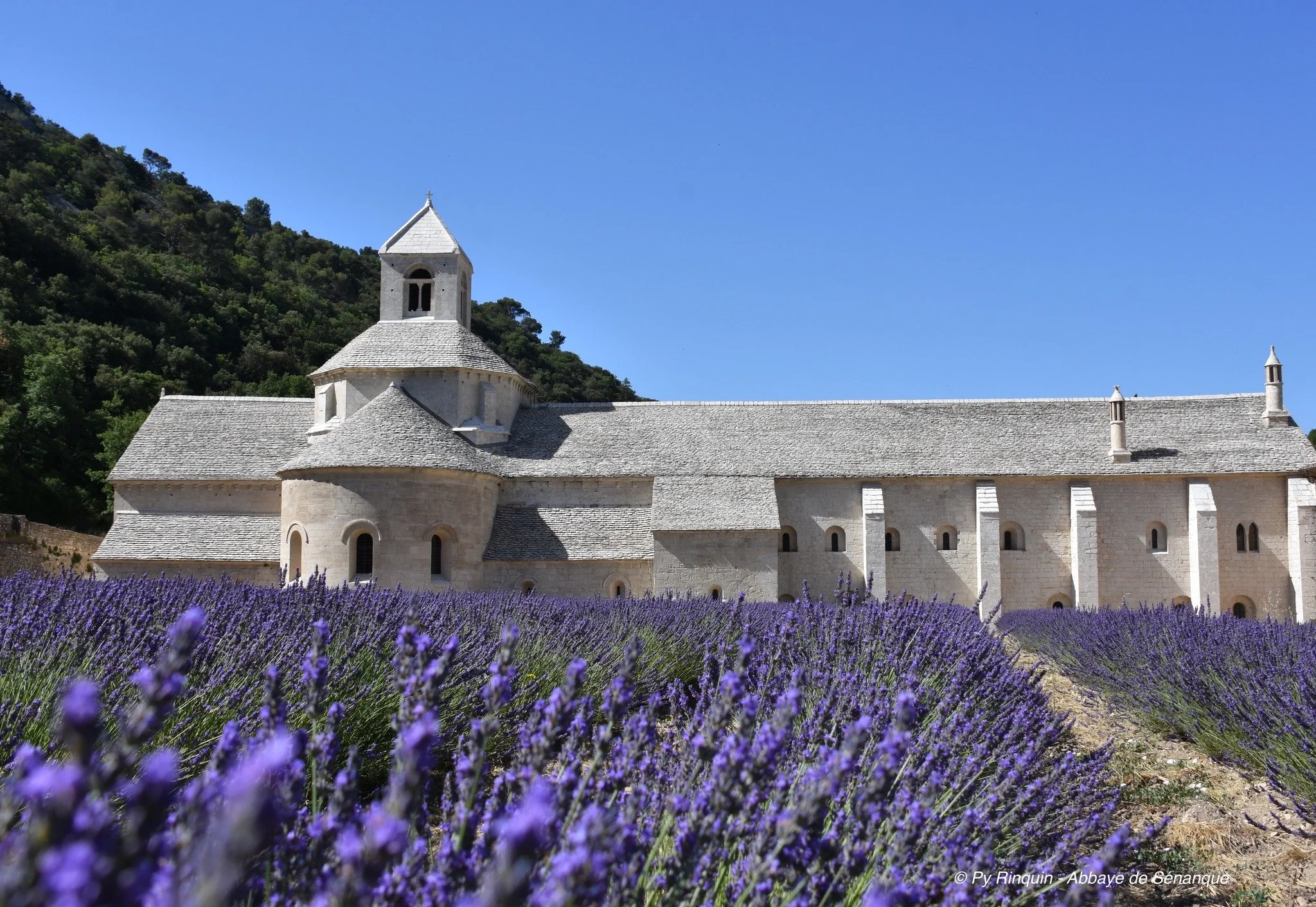
The Abbaye Notre-Dame de Sénanque is a 12th-century Cistercian monastery tucked into a quiet valley on the edge of the alps in southern France. Most people come for the tour and gift shop. Lesser known is the silent monastic retreat that’s open to the public.
For €43/day you get a simple room, three meals, and a whole lot of quiet.
A Day in the Life
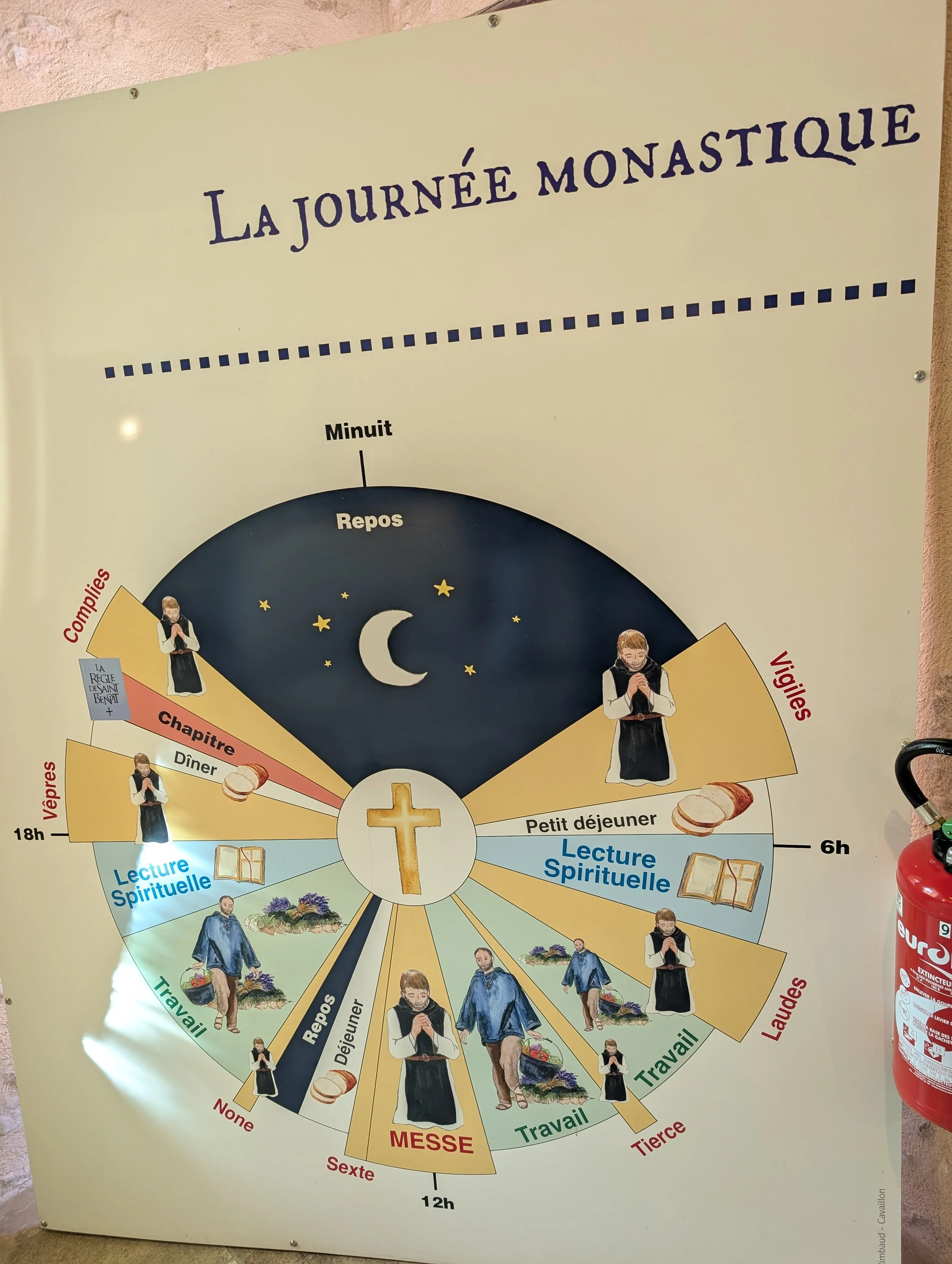
What does a day look like? In short, whatever you need it to look like.
The eight monks who run the cloister keep a consistent schedule of meals and services. You can attend as much- or as little- as you like.
For me, the schedule for success was:
Morning
7:30: Wake up Slow
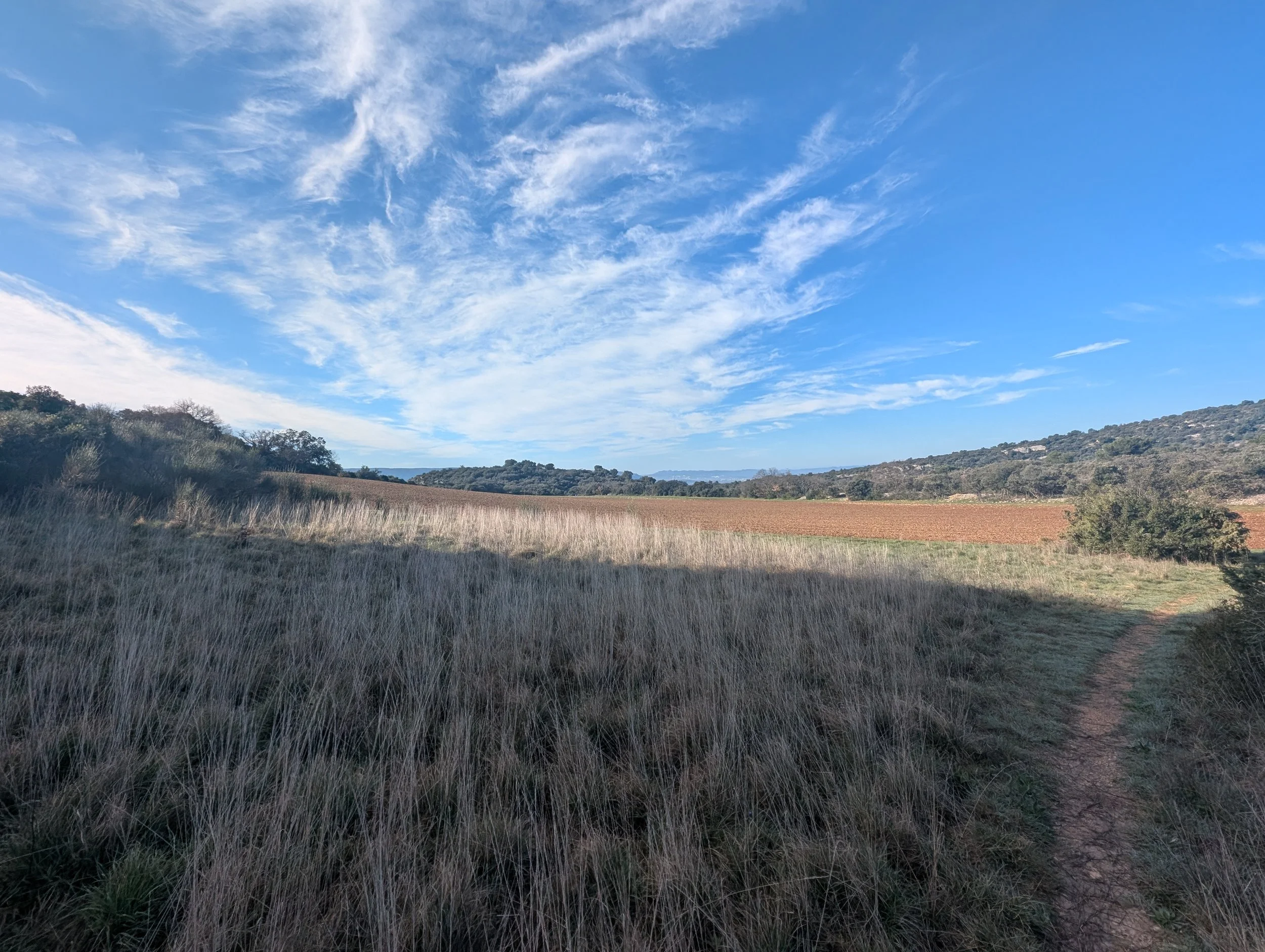
9: Walk trail into mountains
10: Think/Write/Pray
12: Come Back for Lunch
Afternoon
1: Walk different trail into mountains
2: Think/Write/Pray
6: Come back down for dinner
8: ~15m “Compline” (liturgy-ish thing in chapel)
9: Read and Sleep
Experience
“Ok,” you might ask. “Spill the beans- what did you get out of it? Why would you (or I) do something like this?”
In short: peace, clarity, and God.
Peace

Your addictions will surface within an hour. For the first day you’ll check your phone- probably a lot- even though there’s no signal. Sports scores, updates from the latest war, S&P 500 updates. Your modern brain will resist the silence in search for its regular dopamine hit.
The withdrawal will be uncomfortable. But after some time, in lieu of having to process what Bo Burnham rightly calls “anything and everything all of the time” your brain will do a funny thing. Something it hasn’t done since you put that little rectangle in your pocket. It will engage in this strange reality called the present moment.
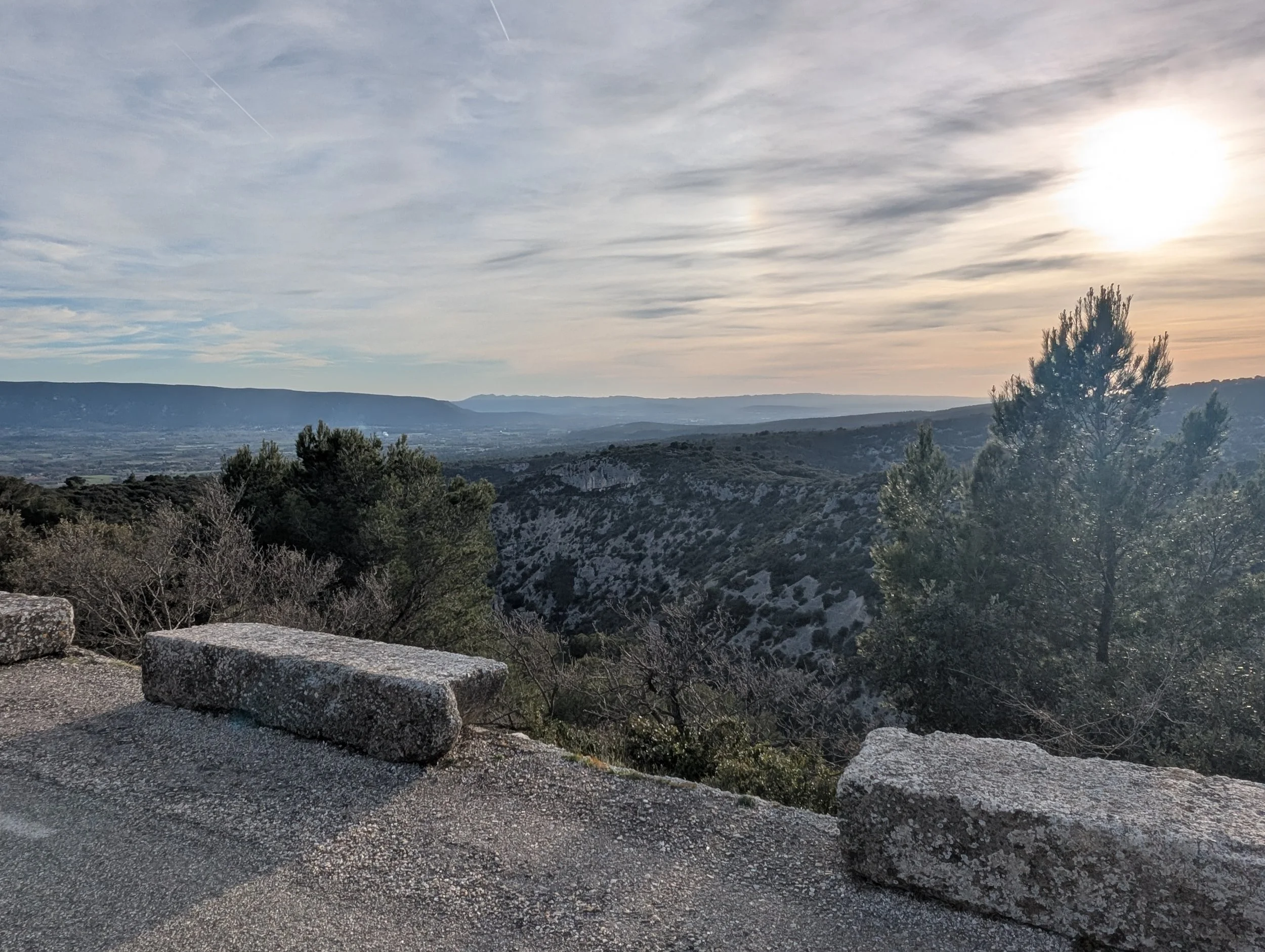
Your surroundings, your thoughts, your feelings. All the good and all the “yuck” spewing out in random fashion to recognize, put before God, and to begin to process. And as you walk down that mountain as the sun sets, there might be a new feeling at work: peace.
Clarity

For me, the volcano of repressed thoughts “ascends” throughout the day, from minutiae to meaning.
8a:“I need to get a new pair of jeans and email Ryan”
11a: (Let’s do a project inventory). “Whoa- I’m trying to do 13 different projects at the same time while leading a trip through Europe, holding down a full-time job, speaking French everywhere I go- all with three kids. Could that be why I’m a frustrated, anxious ball of stress?
2p: Man, missing my kids. Can’t believe I’ve got less than nine years left with these boys- and then they’re gone. “Lord, what do I need to focus on in this season?”
5p:Whoa- the graves of the old monks right next to the abbey. That’s a little intense. These monks were just picking lavender and leading liturgy. Now their bodies are six feet under. Just like the current monks will be soon… Just like I will be soon. Am I ready to meet God? Our time is short and we’re all just a small link in the chain of the big story.“Lord, help me to be faithful with my little link”.
You won’t have everything figured out. But by the time your head hits the pillow, there’s a good chance you’ll have organized, prioritized, and most importantly- remembered.
God
If you had to slap some labels on my theology these days, they’d be familiar. Reformed, evangelical, bible-believing. Luther and Calvin are still my guys.
But if you teased out my thoughts on how people experience God and grow, what church should look (and sound) like, what people need in the age of overstimulation … I wonder what labels I’d use?
Contemplative? Quiet?
Maybe I’d muse on how much baby the reformers threw out with the bathwater. What did we lose when we turned our back on millenia of hard-won experience in prayer and spiritual formation?
I’d probably ask if a church service could (at least sometimes) look more like a lectio divina reading than a rock concert or a TED talk.
I’d put forward the crazy idea that if we could just be still, we’d know God’s there. If we could just be quiet we’d hear his voice again.
Should you be a (temporary) monk?
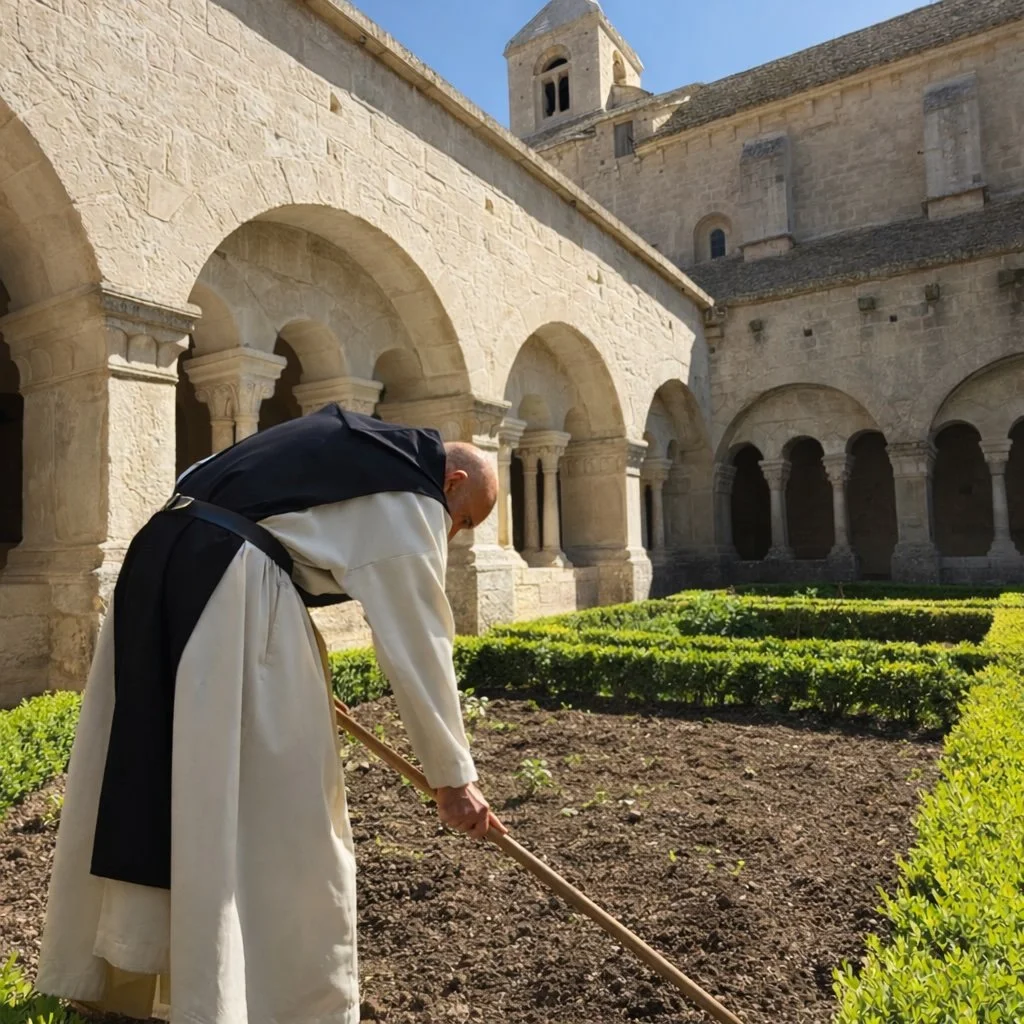
You don’t have to come to the Luberon Valley to get some quiet. There’s probably a place like this near you. (Pacem in Terris if you’re around the twin cities. I found my Abbey on Google.)
In theory, you could try this at home. In practice, between kids, tasks, wifi, and all the rest- it probably definitely won’t work.
As strange as it sounds, the best thing for your soul just might be becoming a monk… at least for a few days.
“Be still and know that I am God”- Psalm 46